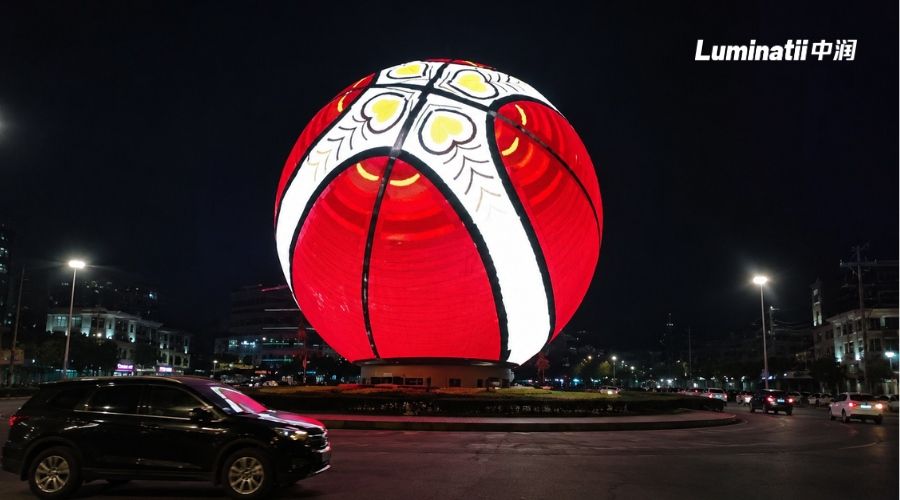
"LED ball screen" searches usually hide two very different products. Buyers who confuse them end up comparing incompatible quotations. As a manufacturer of both families — 20+ inner domes from 5 m to 60 m, and outer spheres from 2 m to 26 m — here is the plain-language comparison we give every client.
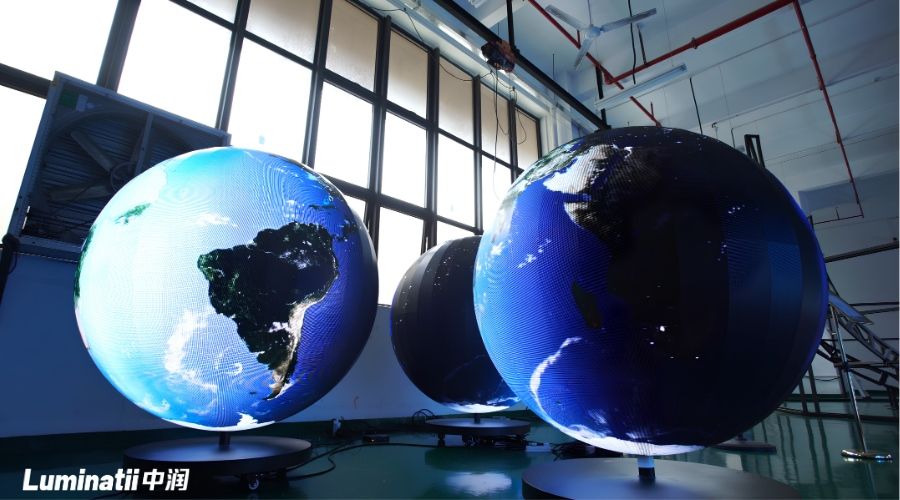
The Two Families
LED Inner Dome — the audience is inside
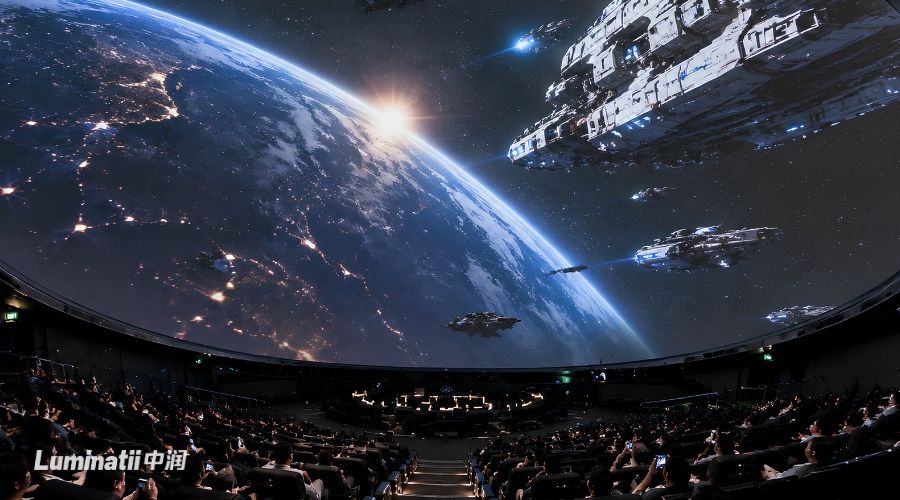
Display faces inward; viewers sit or stand inside a 360° (or with floor screens, 720°) wraparound space. This is the format for dome cinemas, flying theaters, planetariums and immersive live shows. Key technologies: curved seamless splicing, acoustically transparent LED panels (50% perforation, <5% sound loss, <0.02 s audio-visual sync on our delivered systems), lightweight panels from 8.5 kg/m², and — for flagship venues — kinetic integration: lifting screens, mechanical doors, dome-in-dome spheres.
LED Outer Sphere — the audience is outside
Display faces outward; the sphere is a 24/7 architectural icon. Used for city landmarks, commercial atriums, showrooms and museums. Key technologies differ accordingly: outdoor waterproofing and environmental resistance, day-and-night brightness strategy, custom trapezoidal PCB panels for a seamless curved surface, and structural solutions for suspended, rooftop or ground-standing spheres.
Side-by-Side
| LED Inner Dome | LED Outer Sphere | |
|---|---|---|
| Who views it | Audience inside, 360°–720° | Audience outside, single sphere icon |
| Typical uses | Flying theaters, dome cinemas, planetariums, live shows | City landmarks, malls, science exhibits, branding |
| Acoustics | Acoustically transparent panels hide surround audio | Usually no audio requirement |
| Environment | Indoor; coastal sites need salt-fog protection | Outdoor-rated, 24/7 duty, IP65 options |
| Delivered range | 5–60 m diameter (custom beyond) | 2–26 m diameter (custom beyond) |