
The first question every client asks is: "What does an LED dome screen cost?" The honest answer: there is no catalog price, because a dome is a custom-engineered system — and two "20 m dome" quotes can differ by more than the dome's diameter. This guide explains what you are actually paying for, so you can compare quotes like an engineer instead of a shopper.
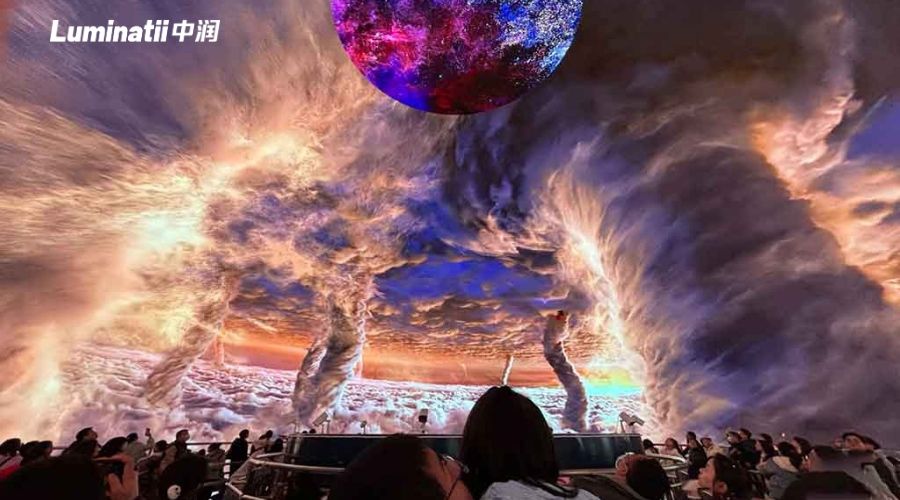
Why "Per Square Meter" Misleads
Flat LED screens use standard cabinets — area × rate gives a usable estimate. A dome cannot be quoted that way because curvature changes everything from panel shape to installation precision. Six factors drive the real cost:
- Diameter — 5 m, 20 m and 60 m domes are different engineering universes
- Pixel pitch — P2 vs P3 vs P4 changes module count, heat and control hardware
- Dome type — inner dome, outer sphere, hemisphere, ceiling dome, dome-in-dome
- Acoustic transparency — perforated panels and acoustic engineering add scope
- Steel structure & installation — panel weight, tonnage, rigging, site conditions
- Machinery & sync — lifting screens, doors, kinetic floors and show control
What Should Be Inside a Serious Quote
When two manufacturers both say "we can build a 20 m LED dome", compare the scope, not the number. One may be quoting screen + simple frame. The other — and this is what a turnkey quote looks like — includes:
- Dome screen with custom curved modules and spare-part kit
- Steel structure design, fabrication and installation drawings
- Acoustically transparent design where needed
- Playback control, geometric correction, content mapping
- Installation, commissioning, operator training
- Warranty, remote support, long-term module supply
What a Delivered Flagship Costs — in Engineering Terms
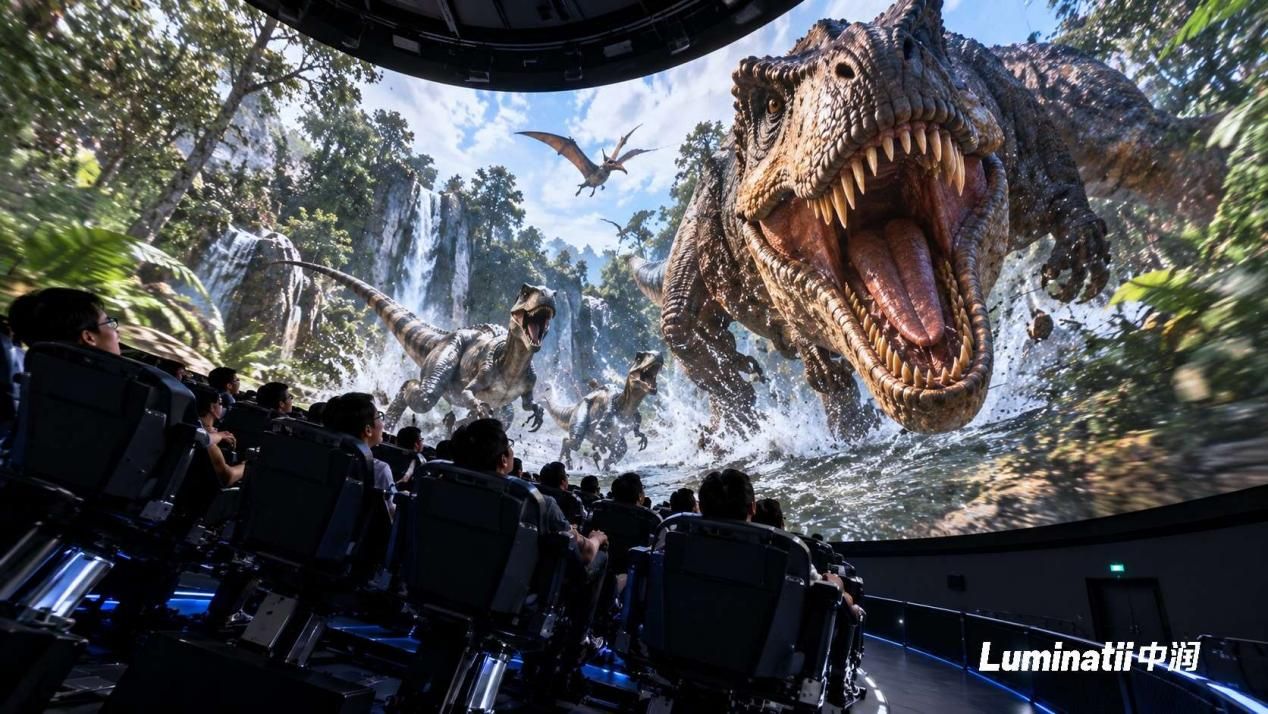
Our 60 m Kongtong dome (5,300 m², kinetic, acoustically transparent) is the most complex end of the spectrum: 8 lifting/opening screen groups, 6 mechanical doors with 12 mm seams, 10 lifting floor screens, dome-in-dome sphere, 8.5 kg/m² panel weight, 150 W/m² power. A compact 7 m flying-theater dome like our Shenzhen project sits at the other end. Between them sit cinema domes of 14–28 m, where most projects live.
The Eight Inputs to Send a Manufacturer
- Dome diameter (or venue dimensions so we can propose one)
- Dome type — inner dome / outer sphere / hemisphere / ceiling / dome-in-dome
- Use case — flying theater, dome cinema, science center, landmark
- Viewing distance — drives pixel pitch
- Acoustic transparency — yes/no
- Steel scope — screen only, or turnkey structure
- Machinery/interaction scope — lifting, opening, rotation, wire-work
- Site country and conditions — logistics, coastal climate, seismic codes
What You Should Get Back
A professional quotation is a project plan: display scheme → sphere geometry → acoustic design → control system → playback → installation → commissioning → after-sales, each with a line item. At Luminatii, every dome enquiry gets a feasibility check and an itemized budget range within one business day — because the number only means something when the scope is written down.
Send us the eight inputs above (a one-page email is enough) and we will show you exactly what your dome should cost — and why.