Factory-direct LED Dome & Spherical Displays — Shenzhen, China
✉ enquiries@luminatii.com
☎ +86 177 0402 4640

An indoor globe is a display. An outdoor sphere is street furniture that happens to be a display. IP65 sealing, salt-spray treatment, wind-load calculation and a maintenance route that does not need a crane — engineered together, delivered to 26 m diameter.
Every outdoor LED sphere looks the same in a photograph. The difference appears in year three, when one still reads as a clean circle and the other has water marks behind the panels and a row of dead pixels at the equator.
Water gets into an outdoor display through the cable entries, the module joints and the condensation inside the cabinet — not through the front face. That is why our outdoor spheres route AC and network inside the cabinet, seal the power boxes, and use gasketed joints that can be re-closed after a module change.
IP65 is the rating; the design decisions behind it are what actually keep the water out.
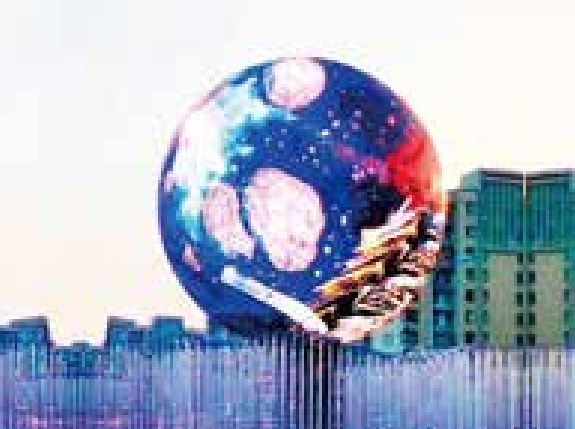
At 26 m diameter a sphere has a projected area of over 500 m². That is a sail. The structure, the anchors and the foundation are engineering decisions that have to be made before the display is specified.
| Load case | What we calculate |
|---|---|
| Wind load | Design wind speed for the site, projected area, shape factor for a curved surface, and the resulting overturning moment |
| Dead load | Screen panels, internal frame, service walkway and any maintenance imposed load |
| Seismic case | Calculated for the project location where required by local code |
| Thermal movement | Expansion of a large steel shell between day and night, and how the panel joints absorb it |
| Corrosion allowance | Galvanising or coating specification matched to the site's corrosion class |
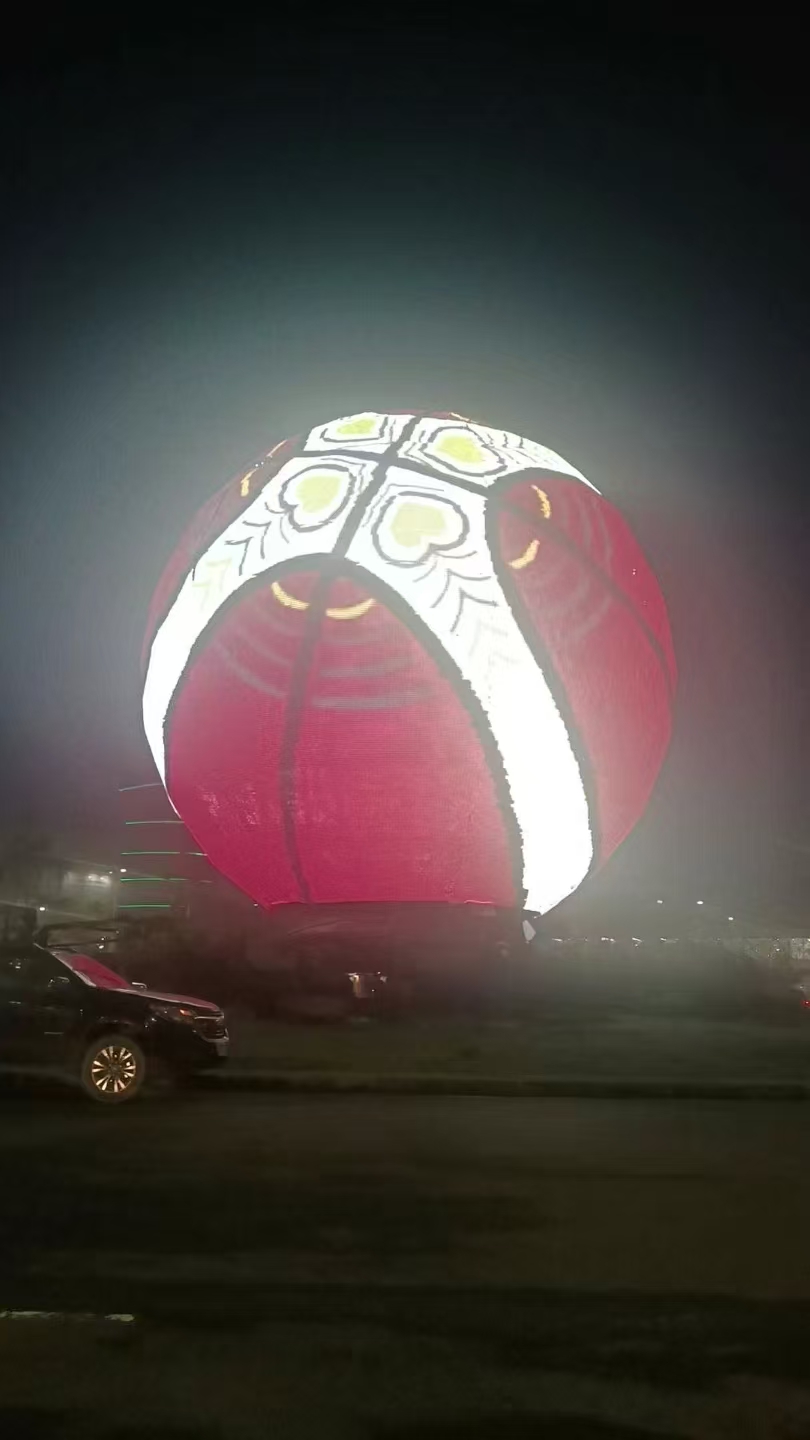
Our largest outdoor sphere is 26 m in diameter, delivered in the Philippines. At that scale the access strategy is as important as the sealing: the client has to be able to reach any module without renting a crane, or maintenance simply stops happening.
That is why we design front service into the panel system and rear walkways into the structure — the display should be maintainable by the venue's own team, on a normal working day.
An outdoor sphere runs at full brightness in direct sun, in summer, for years. The thermal design and the LED lifetime are what decide whether the tenth year looks like the first.
Our platform baseline is 1,200 nit at the screen face, with higher-brightness configurations for direct-sun orientations. The right value depends on the sphere's exposure, not on a datasheet maximum.
Sealed against water, but not airtight — the internal airflow path is designed with the shell so heat leaves through the structure rather than cooking the modules behind a sealed face.
Rated LED lifetime above 100,000 hours. Parallel drive design means a single failed lamp never takes its neighbours down, so a fault is a service item, not a black patch.
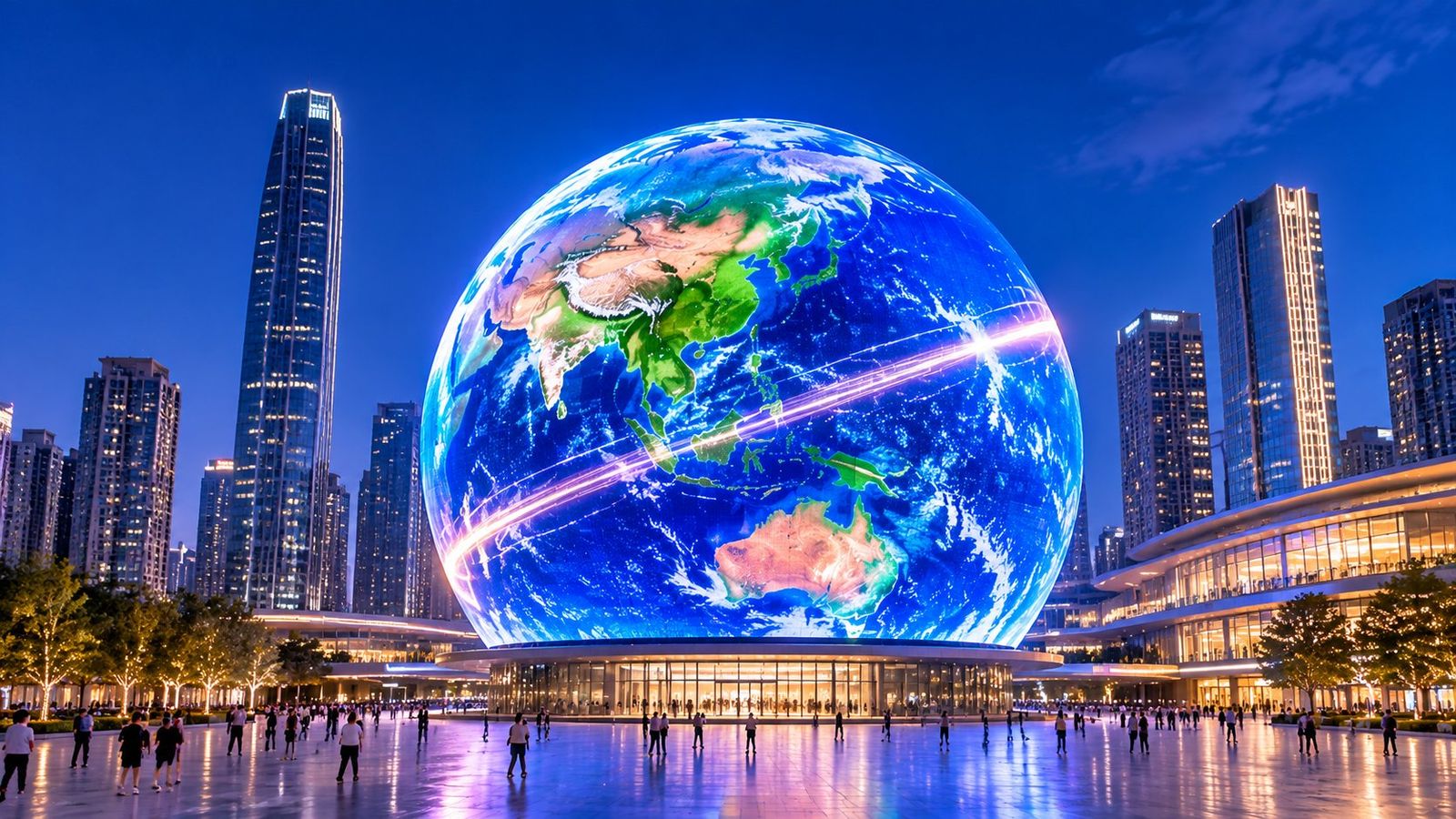
An outdoor sphere that runs at full output from dusk until midnight, 365 nights a year, is an energy decision as much as a display decision. The right specification is the one matched to how the sphere is actually operated.
Most outdoor spheres only need a fraction of their peak output after dark. A scheduled brightness profile — full output at dusk and at events, reduced after 22:00 — cuts power consumption and extends the LED's useful life without anyone noticing a change on the street.
The same logic applies to the panel design. Our platform runs at 150 W/m² at 1,200 nit full white on the indoor dome; an outdoor sphere with higher brightness draws more, which is why the power distribution and the heat path are specified together with the brightness target rather than after it.
How these spheres are built and tested → · Spherical display technical platform →
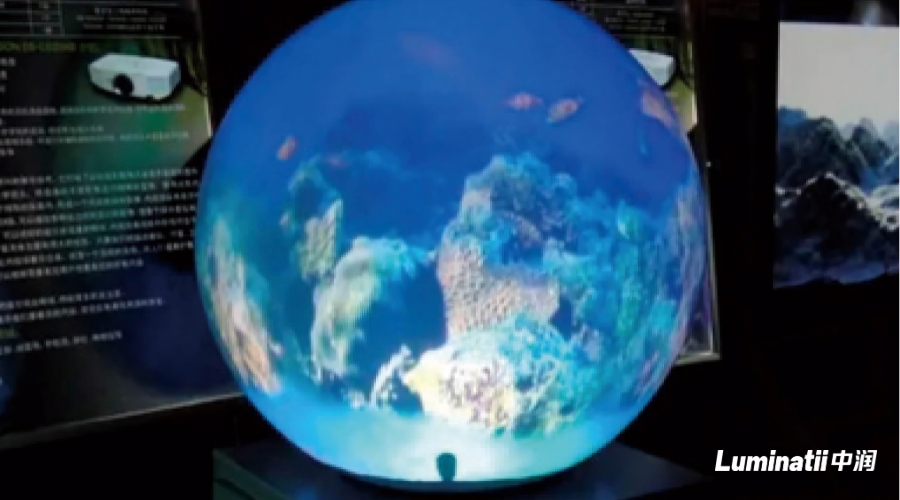
Outdoor spheres and indoor globes share the module geometry and the calibration method; they differ in sealing, brightness headroom, structure and access. That common platform is why a client who starts with an atrium globe and later wants a landmark outside the building is not starting over.
Delivered outdoor spheres reach 26 m in diameter; indoor globes start from 2 m. Between those two ends the engineering changes, but the method does not.
The outdoor sphere is chosen when the building needs an address — a shape people navigate by and photograph.
| Setting | What the sphere has to do | Design emphasis |
|---|---|---|
| City landmark / plaza | Be visible from 200 m, day and night, and become the meeting point | Brightness, wind load, foundation, content scheduling |
| Mall or mixed-use exterior | Identify the entrance and carry brand campaigns | Mounting on the façade, service access without closing the entrance |
| Transport hub | Run continuously with high uptime and remote monitoring | Redundancy, monitoring, module-level diagnostics |
| Theme park / attraction | Carry a show, often synchronized with lighting and audio | Show control integration, weatherproofing, night brightness |
If your site is coastal, elevated or in a high-wind region, send the location with the enquiry — the structural and corrosion specification changes with it, and it is cheaper to design for the site than to retrofit for it. Talk to our engineers →
IP65. Modules and cabinets are gasketed and sealed, power and control boxes are enclosed, and all cabling is routed internally so nothing is exposed on the visible surface. For coastal sites we add humidity, dust and salt-spray treatment to the screen assembly and specify the corrosion class for the structure.
The structure is calculated for the project location using the local design wind speed, including the projected area of the sphere and the dynamic effects of a curved surface. The calculation is issued as part of the approval drawing set, because on a roof or a pole the sphere's foundation and anchors depend on it.
Yes. The 1,200 nit figure is our indoor platform baseline; outdoor configurations run higher brightness with a different power and cooling design. The right figure depends on the orientation of the sphere, the amount of direct sun it receives, and whether it must be readable in daylight or only at dusk.
Front service from a lift or platform, with single-operator module replacement. Gaskets are re-usable and the power boxes open with a large buckle rather than screws, so a module change does not require a dry day or a temporary shelter. Rear access is designed in where the mounting allows.
Not if it is specified correctly. For coastal projects we treat the screen assembly for salt spray and specify galvanised or coated steel for the structure, with the corrosion class agreed at design stage. Kongtong Island, where we built the 60 m dome, is an offshore site — salt-spray treatment there was a design requirement, not an upgrade.
Both, and each has a different structure. A roof-mounted sphere needs a load path into the primary structure and usually a rear walkway; a pole-mounted sphere needs a foundation designed for overturning moment. We design the connection, not just the display.
Send your venue drawings, dome diameter and content plan — our engineers reply within one business day with a tailored configuration.
Get a Free Quote