Factory-direct LED Dome & Spherical Displays — Shenzhen, China
✉ enquiries@luminatii.com
☎ +86 177 0402 4640

A science center needs exhibits that work without staff, survive school groups, and run all day under real lighting. A walk-in LED dome does all three: it is a self-running immersive theater, a photo landmark and a classroom at once. We have delivered them from 5 m school-hall sizes to 20 m regional landmarks.
The best museum exhibits teach without a docent. A walk-in dome is the rare exhibit that keeps a full audience immersed for ten minutes at a time, on repeat, all day.
Science centers ask a different question than planetariums: not "how dark can it get?" but "how much teaching can it do per day?" That changes the specification — brightness that survives gallery lighting, content that loops gracefully, and hardware that takes school traffic for years without a lamp change.
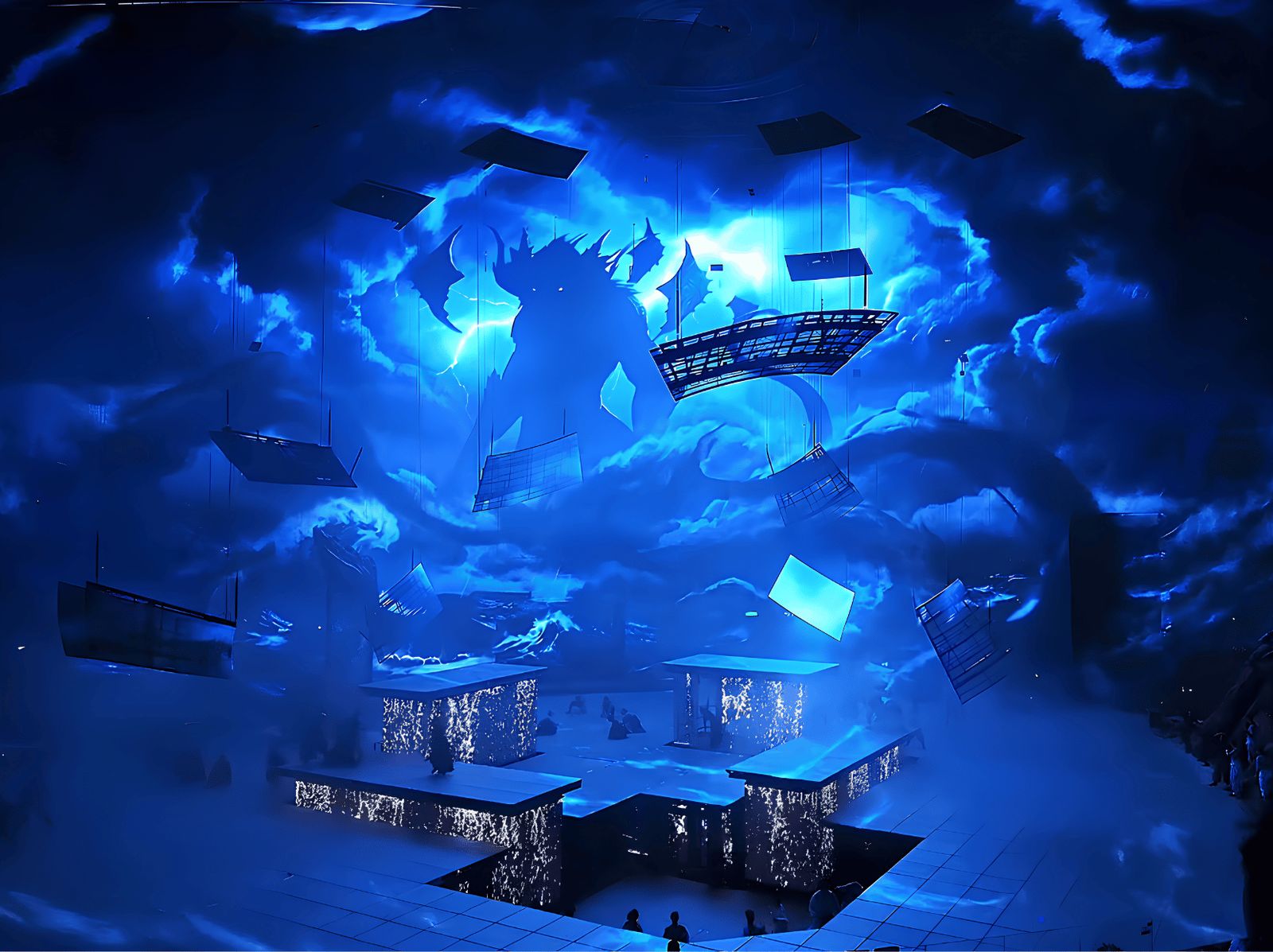
Two delivered domes in one Beijing venue show how the format scales with group size — the 5 m dome for small classes, the 8 m for public sessions.
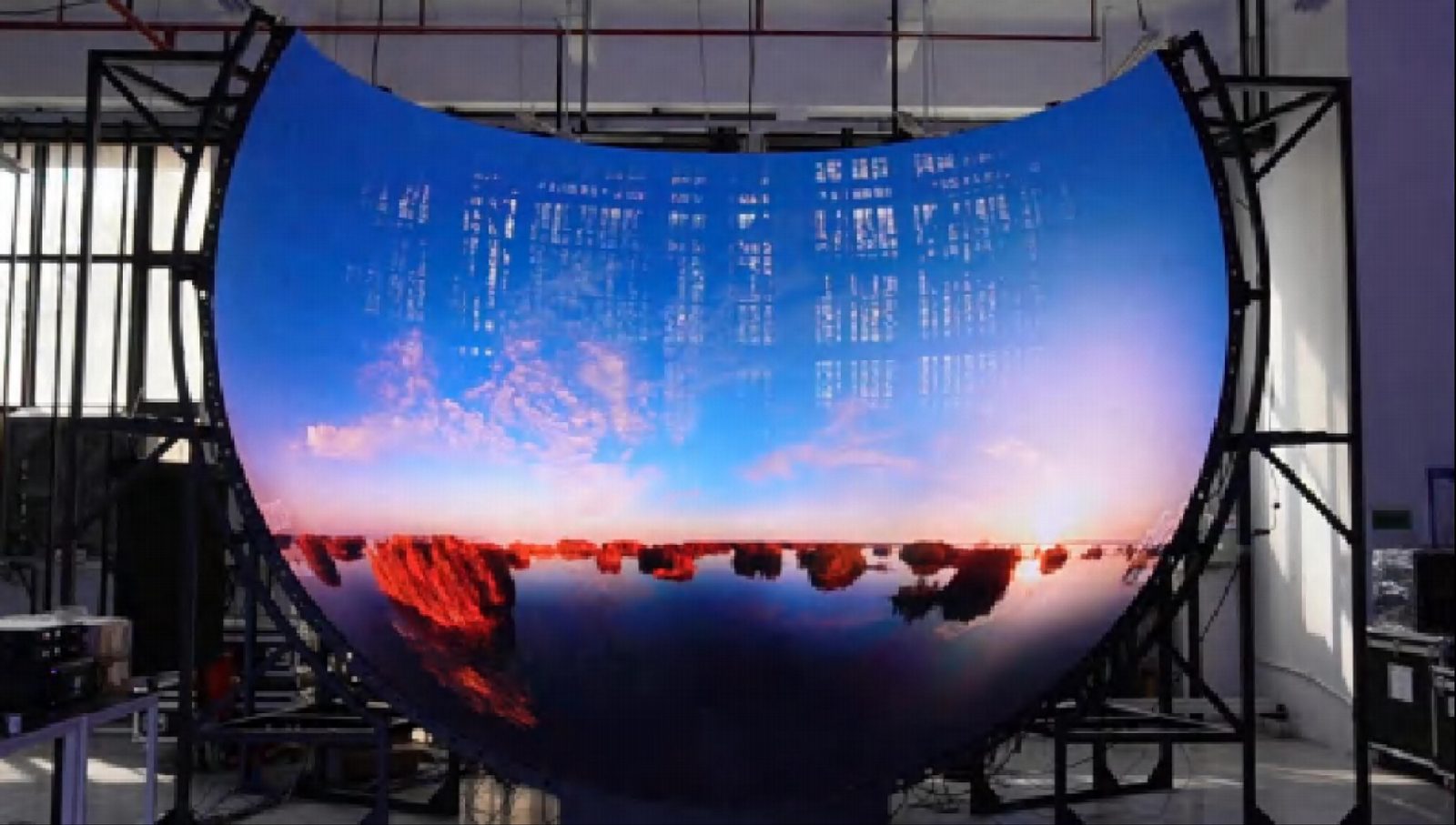
Both Beijing domes run P2 pitch — fine enough that a child in the front row cannot see pixel structure during a star or earth-science show. The 5 m dome hosts a class-size audience with continuous entry; the 8 m dome adds seated rows for public sessions. Same control system, same content pipeline, two capacities.
This is the template we recommend for education venues: start with the diameter that matches your teaching group, and expand capacity later by adding a second dome or stepping up to 14-20 m.
Four delivered sizes bracket the education range — from a single classroom experience to a regional landmark theater.
| Diameter | Audience per session | Space needed | Reference |
|---|---|---|---|
| 5 m | Class size, standing or limited seating | Standard gallery floor, modest height | Beijing twin dome 1 |
| 8 m | 20–40 seated | Dedicated gallery room | Beijing twin dome 2 |
| 14 m | 40–80 seated walk-in | Purpose-built hall | Guiyang science venue |
| 20 m | 100+ seated | Regional landmark theater | Changzhi venue |
Above 20 m the economics shift from education to flagship attraction — our largest delivered dome is 60 m. What a 60 m dome taught us about the format →
Two practical notes for venue planning. First, structure: domes up to 8 m usually sit on a standard gallery floor with a concealed base ring — no special reinforcement, and the installation is measured in days once the shell is ready. Second, budget honesty: the screen is roughly half the project; the structure, access, playback and installation make up the rest, and we quote all four lines itemized so your board sees the whole number, not a screen price with surprises attached.
Your team runs the dome after handover — so the control layer is built for educators changing playlists, not technicians re-calibrating screens.
The daily experience is a playlist: pick the school program, pick the public loop, adjust the brightness schedule. Warping, mapping and calibration sit underneath and do not change when content does — because the mapping is commissioned against the as-built panel layout and stored, so any fulldome master plays correctly the day you receive it.
How an immersive dome works, end to end → · Astronomy-led planetarium domes →
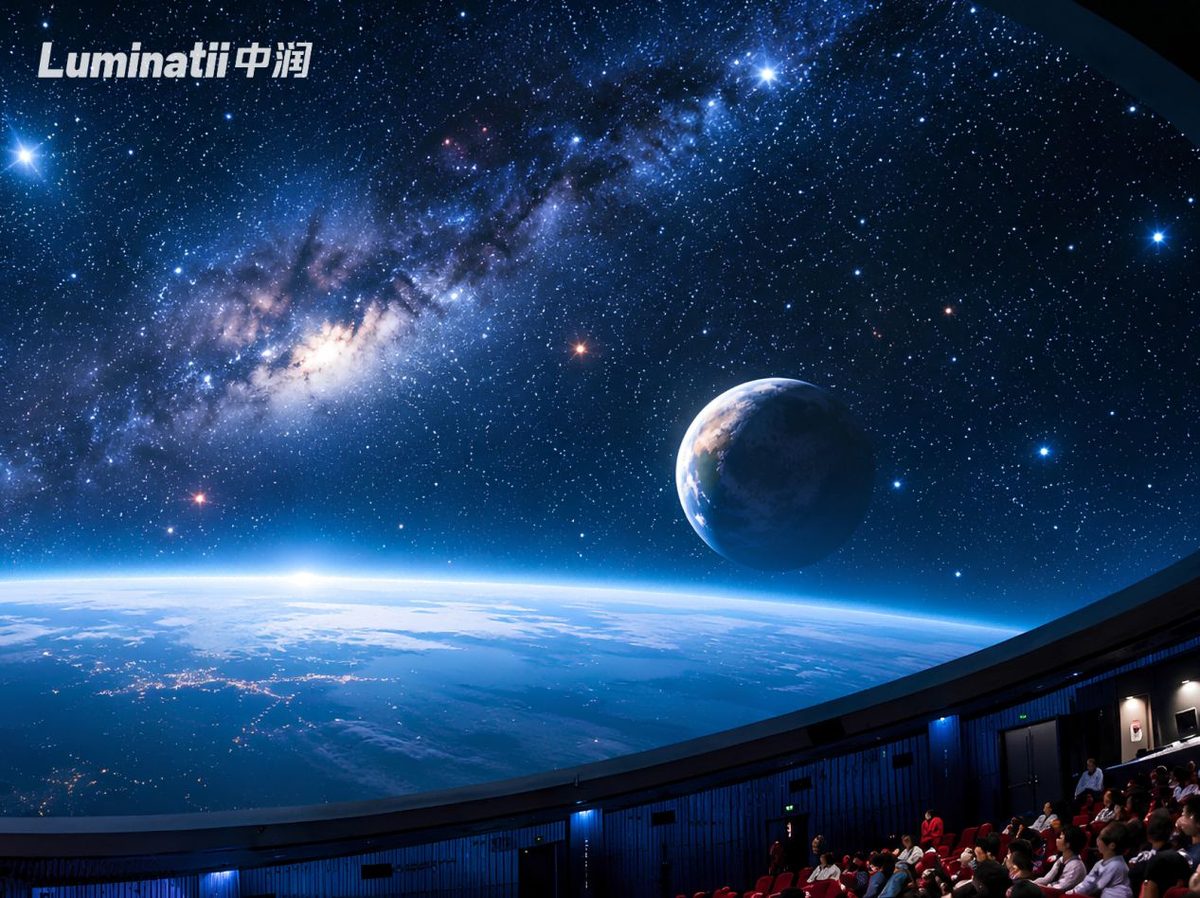
The value of a museum dome shows up in the schedule: what it does at 9 a.m. with a booked class, at noon with walk-in families, and at 4 p.m. with a birthday group.
Morning is the booked slot: a class of thirty enters on schedule, the playlist switches to the curriculum-aligned program, and an educator runs it from the playlist interface with a quiz segment at the end. Midday is walk-in traffic — the loop plays continuously and visitors enter and leave as they please, with no staff cost beyond the usual gallery coverage. Afternoon can be anything: a private group, a science-club session, a themed event.
The point is that the room never resets. Between sessions there is nothing to clean, re-set or re-boot — the dome goes from a class of thirty to open walk-in traffic in the time it takes the door to open again. That operational profile is why education venues get more teaching hours out of a dome than out of any scheduled theater of the same footprint.
Four inputs are enough for a first configuration. Everything else follows.
| Input | What it decides |
|---|---|
| Gallery dimensions | Maximum diameter, walk-in vs seated format, entry and exit placement |
| Group size you teach | Seating count, standing capacity and the pitch visitors actually need |
| Daily operating hours | Brightness class, thermal design and the service schedule |
| Content plan | Resolution, interactive features and the playlist structure for your programs |
One more planning note for school authorities: accessibility. Because visitors enter at ground level through a portal rather than climbing steep rows, a walk-in dome accommodates wheelchairs and mixed-ability groups far more naturally than a raked theater — worth weighting in the funding case, and a detail we design into the entry geometry from the first drawing rather than retrofit later.
Send us the gallery drawings and your typical group size. We will reply with a dome diameter, a seating plan and a first configuration — before any commercial discussion. Start with your floor plan → · All applications →
The audience and the schedule. A planetarium runs timed seated shows in a dark room; a science center dome usually sits in an open gallery, takes walk-in visitors all day, and runs under real ambient light. That pushes the design toward higher base brightness, looped or interactive content instead of scheduled films, and service access that never closes the gallery. If your program is astronomy-led with timed shows, start with our planetarium page instead.
Smaller than most buyers expect. At 5-8 m a dome holds a school class of 20-30 comfortably and fits an ordinary gallery floor; our Beijing twin domes run at exactly those sizes. Regional science centers step up to 14-20 m for a seated walk-in theater. The dome should fit the group size you teach, not the ceiling you have.
That is what it is built for. LED modules have no lamp to age, brightness is stable across thousands of hours, and the surface withstands the traffic, dust and daylight of a gallery. Content runs in a loop or on an interactive playlist, so the exhibit runs itself between school visits.
Anything authored for fulldome: earth and space science, biology journeys, physics visualizations, plus interactive segments where visitors vote or steer the scene. We commission the warping and mapping, train your educators on the playlist system, and the exhibit runs without outside support.
A 5 m dome is a real immersive theater, not a toy — it is the most affordable entry into fulldome education, and it fits a standard hall with modest structural work. Several of our delivered domes are at exactly this scale, running daily programs for schools and public visitors.
Send your venue drawings, dome diameter and content plan — our engineers reply within one business day with a tailored configuration.
Get a Free Quote