Factory-direct LED Dome & Spherical Displays — Shenzhen, China
✉ enquiries@luminatii.com
☎ +86 177 0402 4640

Right now, in a round building at Chengdu Happy Valley, a 22 m diameter LED dome is climbing its steel structure panel by panel: triangular and trapezoidal modules tiling a sphere, motion platforms to follow, audio behind the screen at the end. Most case studies start after the ribbon-cutting. This one starts in the scaffolding.
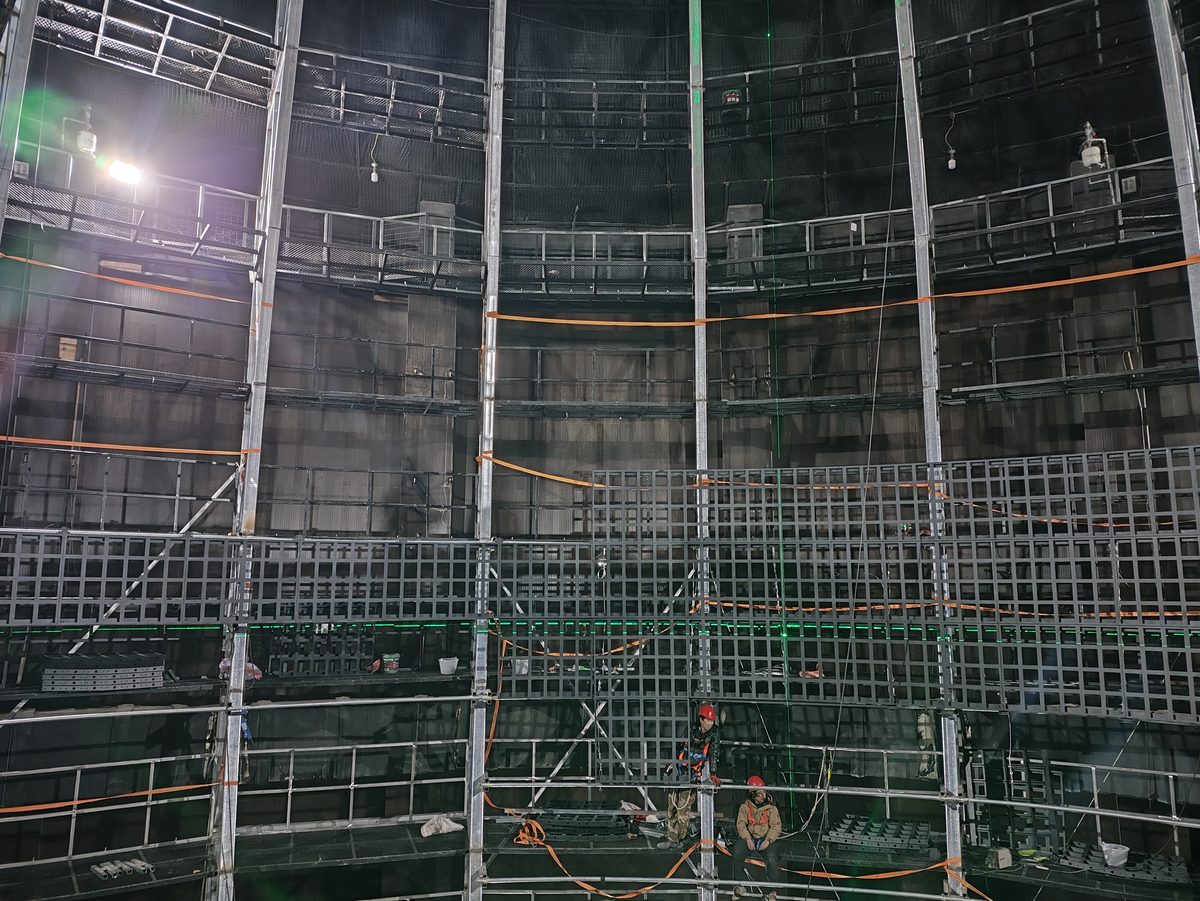
At Chengdu Happy Valley in Sichuan, Luminatii is delivering a 22 m diameter flying-theater dome: a seamless spherical LED screen, a motion-platform ride system and show audio, engineered as one attraction. This page documents the build in progress — the photos here are from the site during installation, not renders and not stock. When the venue opens, this page becomes what most case studies pretend to be from day one: a record of how it actually went.
A flying theater sells a simple promise: the audience leaves the ground. Rows of motion seats face a curved flight screen; the platform pitches and banks with the film while the audio moves with the picture. The dome format wraps that promise across a 22 m sphere — image overhead, image beside you, no exit from the scene.
Construction photos are only useful if you can read them. Here is what to look for in the images on this page — and why the same details should be on your own project checklist.
One more thing the pictures cannot show but the schedule reflects: coordination with the park's other trades. A dome inside an operating theme park is built alongside civil works, electrical fit-out and ride installation from other suppliers, so sequencing is negotiated daily on site. Our crews plan their installation windows around the venue's overall program — a discipline that has kept our theme-park deliveries on schedule without disruption to neighboring works.
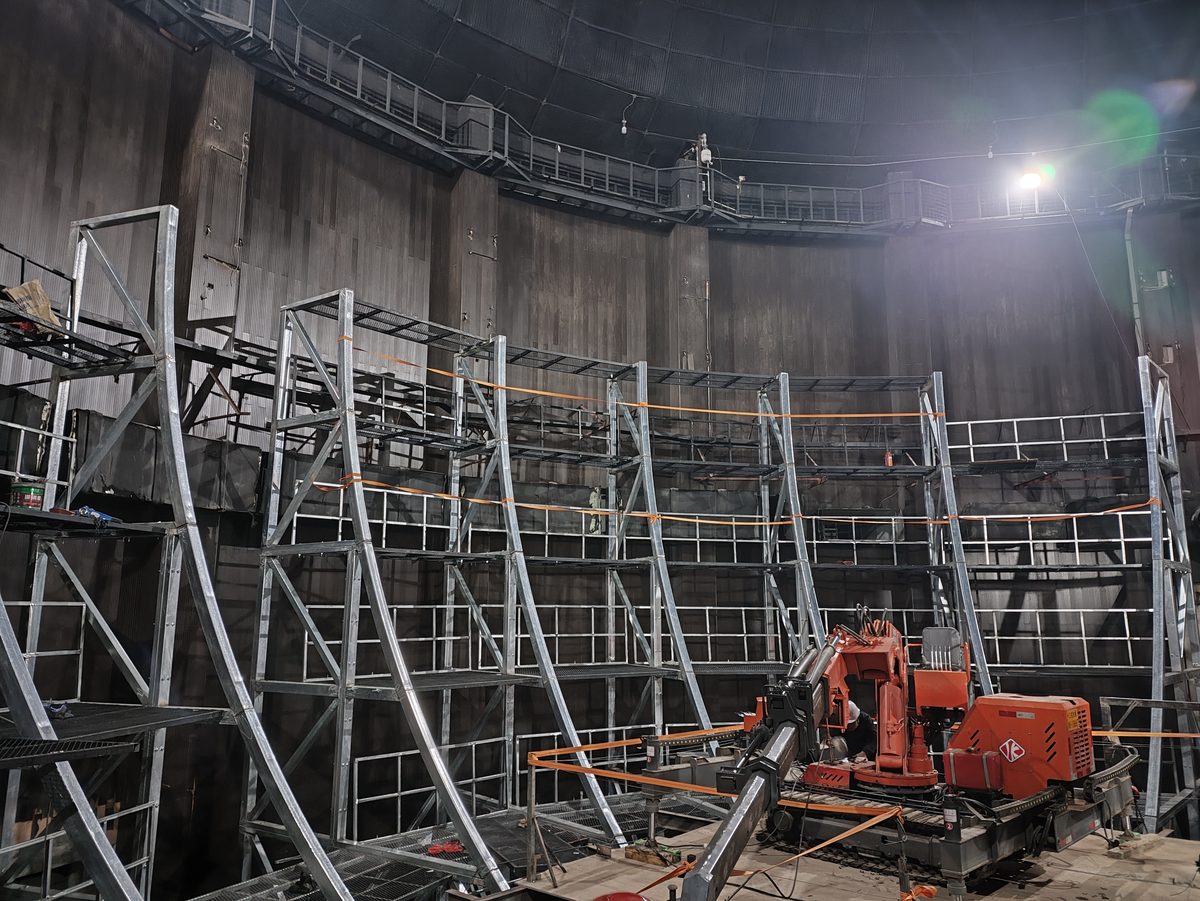
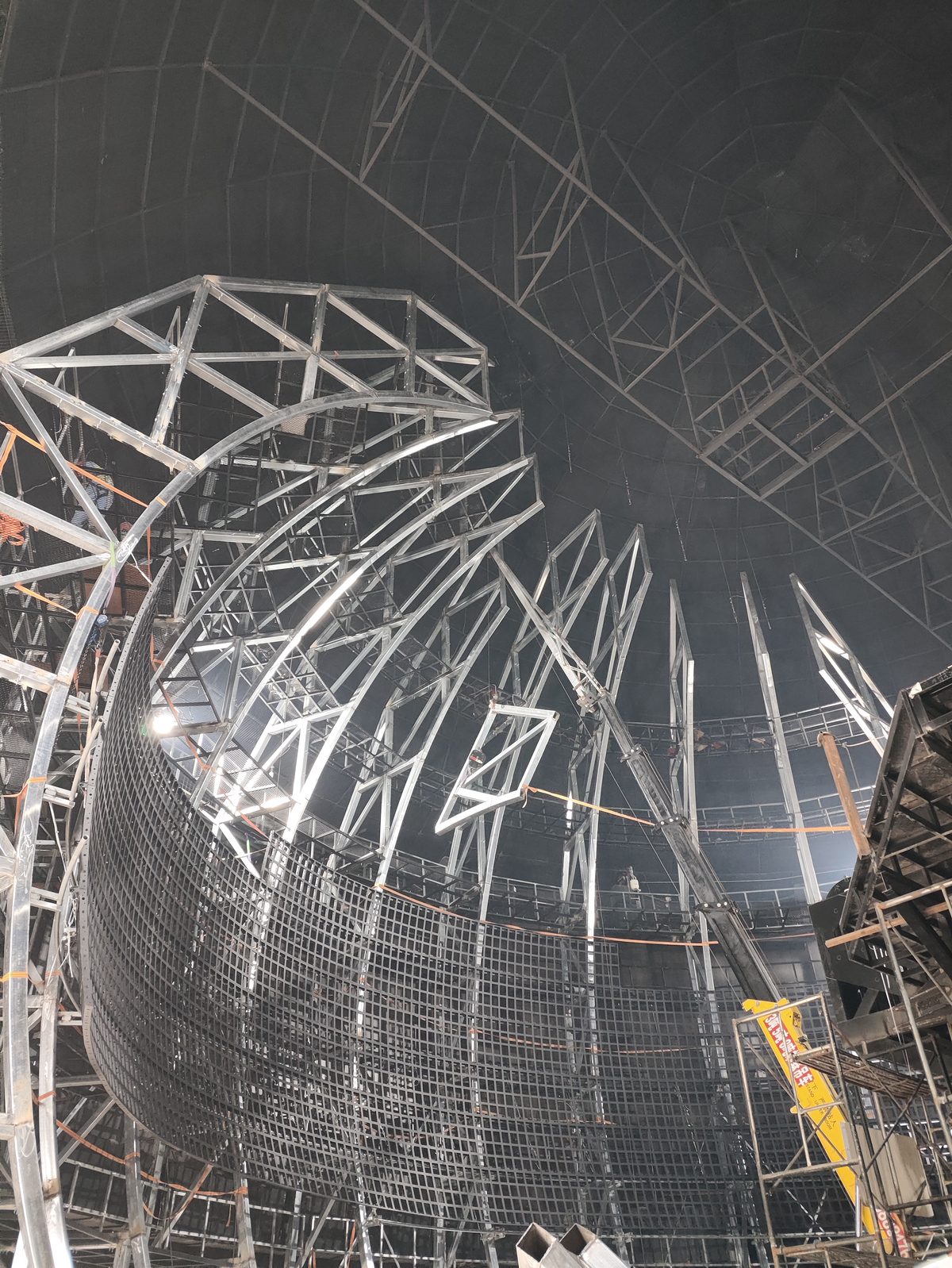
Three things to notice. First, the curved steel follows the sphere, not a cylinder — every truss is positioned from the surveyed geometry of the building, because a dome is only seamless if its structure is true first. Second, the LED modules are triangular and trapezoidal, cut so they tile the curved surface without visible seams; flat panels "wrapped" onto a sphere show joints at every row. Third, crews work at height on purpose-built access — sphere curvature defeats ordinary scaffolding, and safe, fast access is one of the quiet differences between an installer who has done this twenty times and one who has done it twice. Flying theater engineering →
A flying theater is where integration discipline pays for itself, because three systems must agree frame by frame.
| System | Role in the ride | Why one supplier matters |
|---|---|---|
| LED dome screen | 22 m spherical image, high refresh for fast flight pans | Geometry, pitch and brightness are fixed first — everything else hangs off them |
| Motion platform | Pitch, bank and heave of the seats, driven by the film | Platform cues must land on image cues; latency budget is designed across both, not argued between vendors |
| Show audio | Sound localizing with the picture, synchronized to platform motion | Audio behind a sound-transparent screen keeps the soundstage inside the image, and the sync stays under hundredths of a second |
When screen, motion and audio come from one engineering pipeline, the sync conversation happens at design time and commissioning is a calibration session, not a negotiation. That is the difference buyers feel in the seat: on a well-integrated flying theater, the banking turn, the engine sound and the horizon arrive as one event — no smear, no echo, no arguing systems. On a three-vendor build, the ride software spends its opening months compensating for exactly this.
The build sequence from here is the same one that carried our delivered domes — including two theme-park domes handed over by a single crew in a single season with zero safety incidents.
Once the last modules land, the sphere is surveyed and calibrated in place: brightness uniformity and color tuned across the surface, dark-scene content checked against real viewing positions. The screen leaves the factory calibrated and finishes calibration in the room.
Platform seats, show audio and playback systems are commissioned together against the finished screen — cue timing, latency budget and failure-mode behavior tested as one ride, including the recovery scenarios every cinema eventually meets.
Park technicians are trained on startup, show scheduling, module swap and recovery — front-and-rear access design keeps routine service inside the venue's own team. The dome then moves to the only phase that matters: daily shows, every operating day.
We will keep this page current as the Chengdu venue progresses. If your project calendar is tighter than a documentation page, the delivered references below are running today. Huangshi dual domes, daily since June 2024 → · Changzhi 20 m sound-transparent dome →
| Chengdu Happy Valley 22 m Dome | |
|---|---|
| Location | Chengdu Happy Valley, Sichuan, China |
| Format | Flying theater — dome screen + motion platform |
| Diameter | 22 m spherical LED dome |
| Scope | LED dome screen, motion system and show audio, delivered as one package |
| Status | Installation in progress — photos on this page are live site records |
A 22 m dome is squarely inside our delivered range, which runs from 5 m compact theaters to the 60 m Kongtong flagship — the largest LED dome screen in Asia. Kongtong 60 m — the flagship case → · Planning a park dome →
Every flying theater on this website began with the same three inputs: the building geometry, the target hourly capacity, and the ride experience the operator wants to sell. From those three answers we return the diameter, pitch, platform specification and audio architecture — sized to the room, with a delivered reference attached.
If you are evaluating suppliers, ask each of them the same two questions we ask ourselves: which delivered domes can I visit tomorrow? and who owns the sync between screen, motion and sound? The answers separate a ride that opens on schedule from one that opens eventually. Turnkey dome delivery → · All projects → · Talk to the dome team →
Not yet. As of this writing the project is in active installation — the photos on this page are from the site, showing the spherical LED screen rising on its structure. We will update this page as the venue moves through commissioning into daily operation, and we deliberately show the unfinished state: it is the part of a dome project nobody else publishes.
A 22 m diameter flying-theater dome: a wrap-around LED screen, rows of motion-platform seats suspended in the image, and show audio synchronized to the picture and the platform. The screen, the motion system and the audio are engineered and delivered as one package — one integration standard, one crew, one service contact.
Because the install phase is where a dome project is actually won or lost. Curvature tolerance, module access, cable routing, crew safety — the decisions that decide how the venue runs for the next decade are all made in this stage. Buyers who have never watched a dome go up tend to under-plan exactly these items.
Every building differs, so we schedule from your structure's survey rather than a generic calendar. What we can say from delivered projects: our crews install with purpose-built access equipment, work in parallel with other venue trades, and have handed over theme-park domes with zero safety incidents — including two in the same park, delivered by one team in one season.
Yes. Delivered references are open daily — the Huangshi park domes, the 60 m Kongtong flagship, and others in the 5–60 m range. Seeing a finished dome before your own build starts is part of how we prefer to work.
Send your venue drawings, dome diameter and content plan — our engineers reply within one business day with a tailored configuration.
Get a Free Quote