Factory-direct LED Dome & Spherical Displays — Shenzhen, China
✉ enquiries@luminatii.com
☎ +86 177 0402 4640

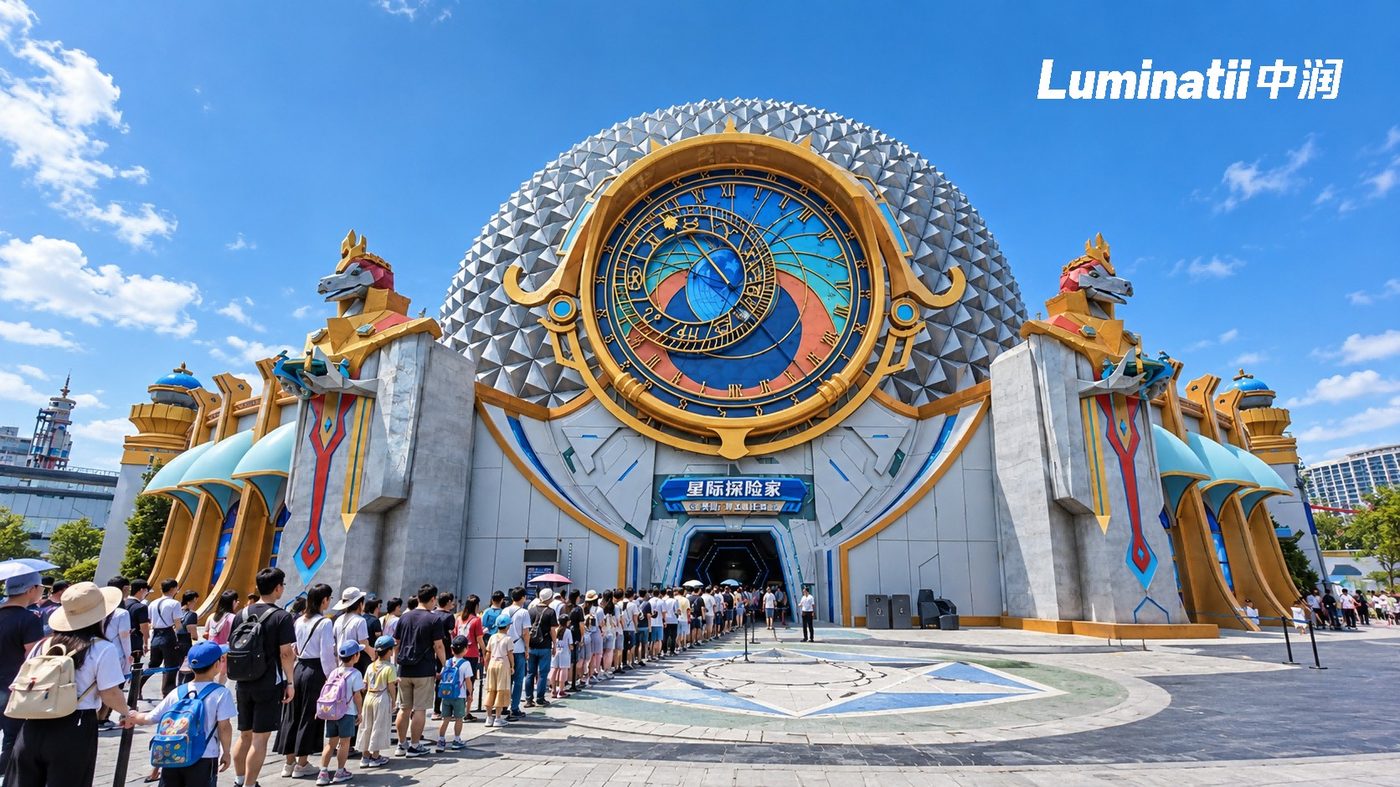
A dinosaur-theme park in Huangshi, Hubei runs two of our domes side by side: a 28 m full-sphere Land Sky Theater with digital floor screens, and a 22 m hemisphere Motion Flying Theater. Both have shown daily since June 2024 — and the queues outside tell the commercial story better than we can.
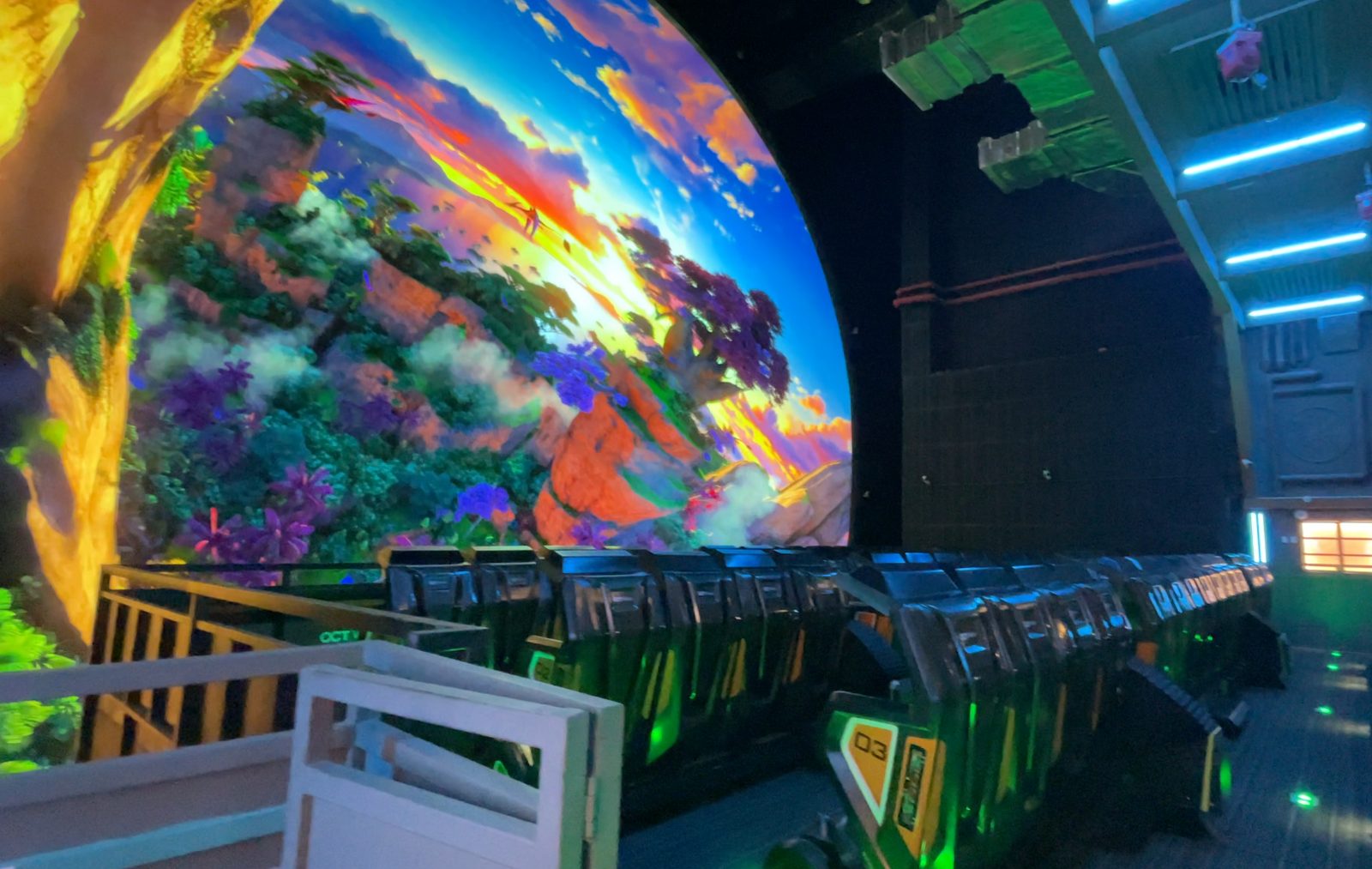
The dinosaur park in Huangshi, Hubei opened two Luminatii domes in the same season: the Land Sky Theater — a 28 m diameter full sphere, P4, roughly 2,400 m² of interior LED wrapped in true 720° with digital floor screens completing the underfoot image — and the Motion Flying Theater — a 22 m diameter hemisphere, P4, about 630 m², sound-transparent, carrying a motion-platform flight ride. Both venues have run daily since June 2024.
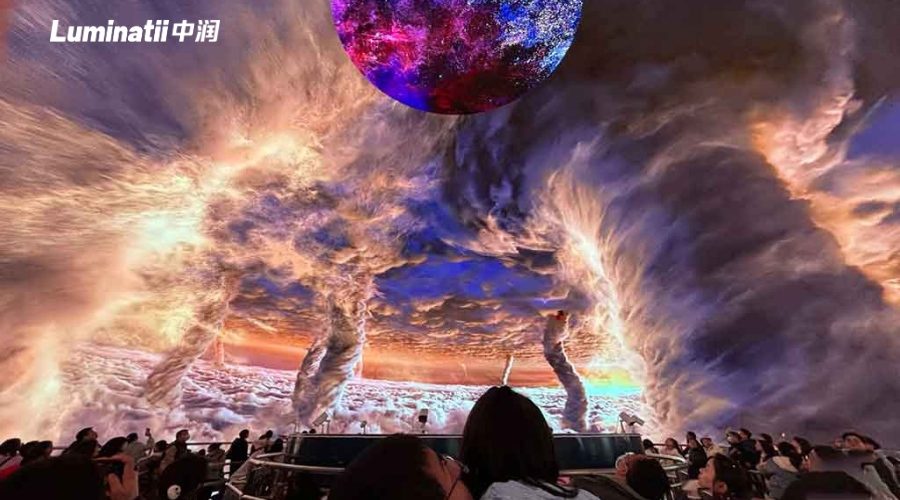
The 28 m sphere is a walk-in theater: visitors step into a complete world, the image overhead and around them, the floor screens extending it beneath their feet. The 22 m hemisphere is a ride: rows of motion seats facing a curved flight screen, the audience suspended in the image while the platform pitches and banks.
Theme parks measure attractions by what they do to the day. The queues at Huangshi — morning, midday and again at night — show what a dome does.
There is a fourth effect that only shows up in the annual numbers: a dome is weatherproof revenue. When rain closes the outdoor coasters, the dome's line gets longer, not shorter — the park sells the day anyway. For visitor economies that depend on a long season and unpredictable weather, that resilience alone has paid for screens.
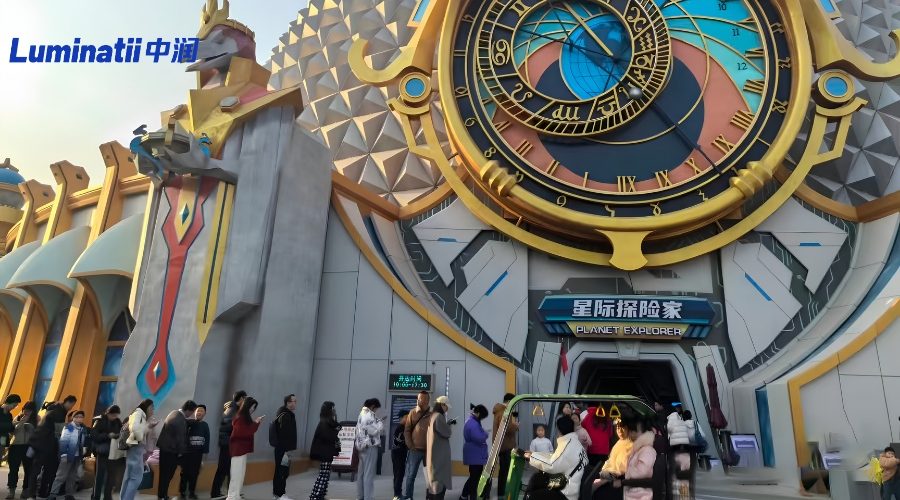
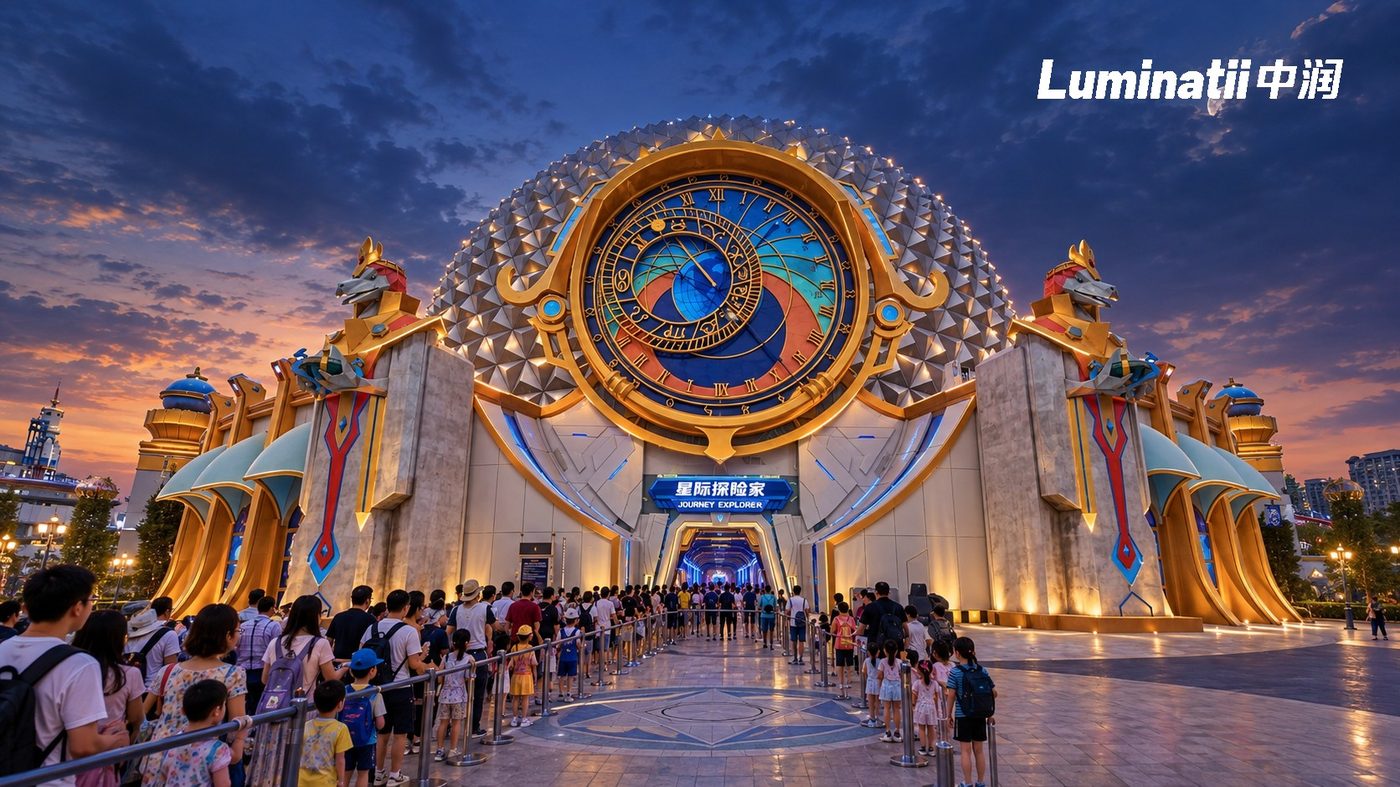
Three effects repeat at every park that installs a dome. First, dwell time: a 6-minute show becomes a 40-minute sequence once you count queue, pre-show and the exit retail path. Second, schedule resilience: domes play in rain, heat and after dark — hours when open-air rides go quiet — which flattens the park's daily curve. Third, content turnover: the same screen that plays a dinosaur film at noon plays a themed night show at eight, so one attraction serves two dayparts without new hardware. Planning a park dome attraction →
Both domes were delivered with zero safety incidents. That record is not luck — it came from a method our crews developed specifically for this project.
Standard scaffolding cannot follow the curvature of a sphere efficiently at height. For Huangshi we designed and built a purpose-made climbing ladder system for the installation crews — faster to move, safer to work from, and reusable on the next dome.
The same installation team delivered both domes in sequence, so lessons from the sphere transferred directly to the hemisphere — and the park received one integration standard, one training session, one service contact.
The operator team was trained at handover on daily startup, content scheduling and recovery procedures — including the source-failure scenario every cinema eventually meets. Two years of daily shows later, the venues are still run by the park's own staff.
A venue that has played every day since June 2024 is worth listening to. The operator team's experience shaped how we now design, hand over and support every park dome.
Park domes live on throughput. Short, punchy films scheduled back-to-back earn more than long features — and the LED dome's instant startup, no-projection-warmup workflow makes tight turnarounds practical. The park schedules both venues to complement each other's queue peaks.
After dusk, the domes become the park's anchor: exterior glow, interior shows, and queues that return in the evening. A dome that only plans for daylight programming leaves half its revenue on the table — brightness scheduling and night content are part of our handover conversation.
The park's own technicians run both venues — startup, content scheduling, module swaps. That only works because handover training covered the real scenarios, and because front-and-rear service design puts routine work within their reach without calling us.
The economics follow the same shape: one attraction, two dayparts, zero new hardware between shows — and a second dome next door doubling the reason to stay. When a park asks whether to build one large dome or two complementary ones, Huangshi is the reference we walk them through.
| Land Sky Theater | Motion Flying Theater | |
|---|---|---|
| Format | Full sphere, walk-in 360° | Hemisphere, motion platform |
| Diameter | 28 m | 22 m |
| Screen area | ~2,400 m² | ~630 m² |
| Pixel pitch | P4 | P4 |
| Special | Digital floor screens, 720° wrap | Sound-transparent screen, audio behind LED |
| Operating since | June 2024 — daily shows, both venues | |
A third element completes the package: digital floor screens at the Land Sky Theater extend the dome image under the audience — the same kinetic-floor logic we engineered at full mechanical scale on the 60 m Kongtong dome. The 60 m flagship case →
Most buyers arrive thinking "dome" and leave with a much more specific answer. The choice is driven by your audience flow, your building volume and what you are selling: spectacle or thrill.
| If your goal is… | Look at | Reference |
|---|---|---|
| Group spectacle, high hourly capacity | Walk-in full sphere | Huangshi 28 m Land Sky Theater |
| Premium per-seat thrill | Flying theater hemisphere + motion platform | Huangshi 22 m; Chengdu Happy Valley 22 m; Shenzhen 7 m |
| Education and daytime programming | Science-center walk-in dome | Science museum domes → |
| Maximum mechanical spectacle | Transformable dome with kinetic screens | Kongtong 60 m → |
Send us your building drawings and target hourly capacity — we will come back with the diameter, pitch and format that fits, with a delivered reference attached. Flying theater engineering → · Turnkey delivery → · All projects →
Different show formats earn different visit patterns. The 28 m Land Sky Theater is a walk-in, 360° group experience with a high hourly capacity; the 22 m Motion Flying Theater sells the motion-platform thrill. Together they give the park a dome product for every audience segment and a second reason to stay longer — which is what drives food, retail and second-visit revenue.
P4 on both domes. At these diameters and viewing distances, P4 delivers a clean image for cinematic content while keeping the panel count — and therefore the budget — proportionate. Nearest-row sightlines drove the pitch decision, not the specification sheet.
Yes — the 22 m hemisphere is a sound-transparent design with the audio system behind the screen, so flight-movie sound is synchronized to the motion platform with the audio originating from the image.
The domes were built as dedicated buildings within the park footprint, so installation never touched existing attractions. Our crews used a purpose-built climbing and access method developed for this project, and the venue was handed over with zero safety incidents.
Yes — the formats scale. We have delivered a 7 m flying theater dome for a venue with a fraction of this footprint, and the same dual-format logic works with diameters matched to your building and budget.
Send your venue drawings, dome diameter and content plan — our engineers reply within one business day with a tailored configuration.
Get a Free Quote