Factory-direct LED Dome & Spherical Displays — Shenzhen, China
✉ enquiries@luminatii.com
☎ +86 177 0402 4640

Every dome we build is a one-off. Your ceiling height, column grid, seat count and content decide the geometry — not a catalogue. We have delivered 5 m to 60 m in diameter, and beyond that range we simply engineer a new one.
A 20 m dome in a purpose-built theater and a 20 m dome inside a converted warehouse are different products. Same diameter, different structure, different panel count, different access route, different erection sequence.
Buyers often assume custom means a different diameter. In reality the diameter is the easiest variable. What actually drives the engineering is everything around it: how high the room is, where the columns are, how the steel gets in, how the audience enters, and how a technician reaches the top of the dome in five years' time.
We treat those as design inputs from the first conversation. The result is a dome that fits the building instead of a building that has been contorted around a catalogue dome.
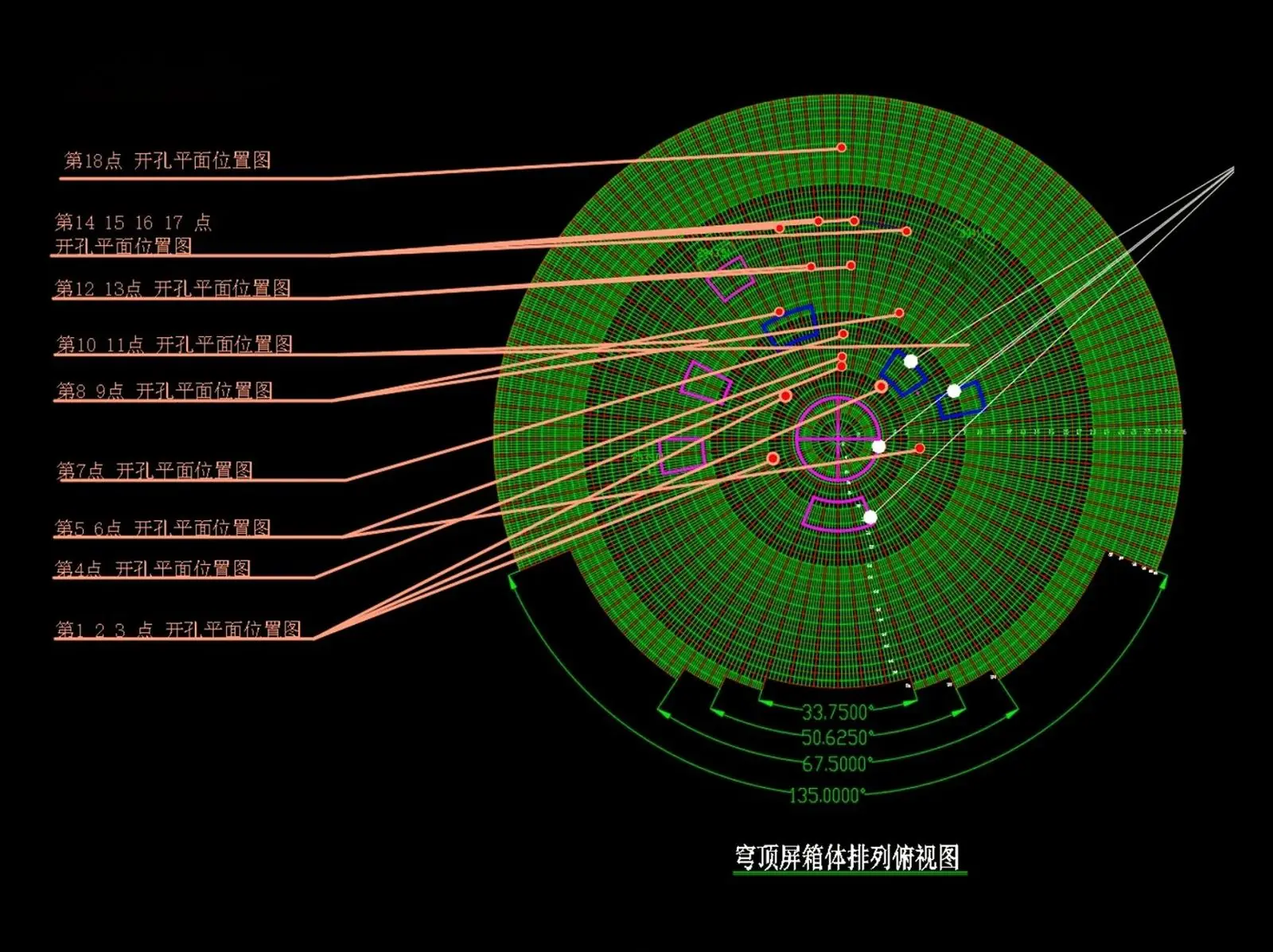
Diameter is a consequence of four numbers, not a preference. Get them in the right order and the dome designs itself.
Seat count and layout set the floor area, and the floor area sets the smallest dome that can cover every seat without a dead zone at the edge.
A dome is a hemisphere: its height is half its diameter. A 20 m dome needs 10 m of clear height above the springing line — a constraint that kills more projects than budget does.
Pixel pitch is chosen from the furthest seat. Push the last row back and the pitch has to tighten, which changes the panel count, the power and the heat load.
Once the geometry is roughly settled, we test it against the building. Column grid, floor loading, fire egress, the width of the delivery door and the capacity of the crane that can reach the site all feed back into the design — sometimes reducing the diameter, sometimes changing the erection method, occasionally moving the whole dome sideways in the room.
This is why we ask for drawings before we discuss configuration. A dome sized from a photo of a similar project is a dome that will be redesigned during construction.
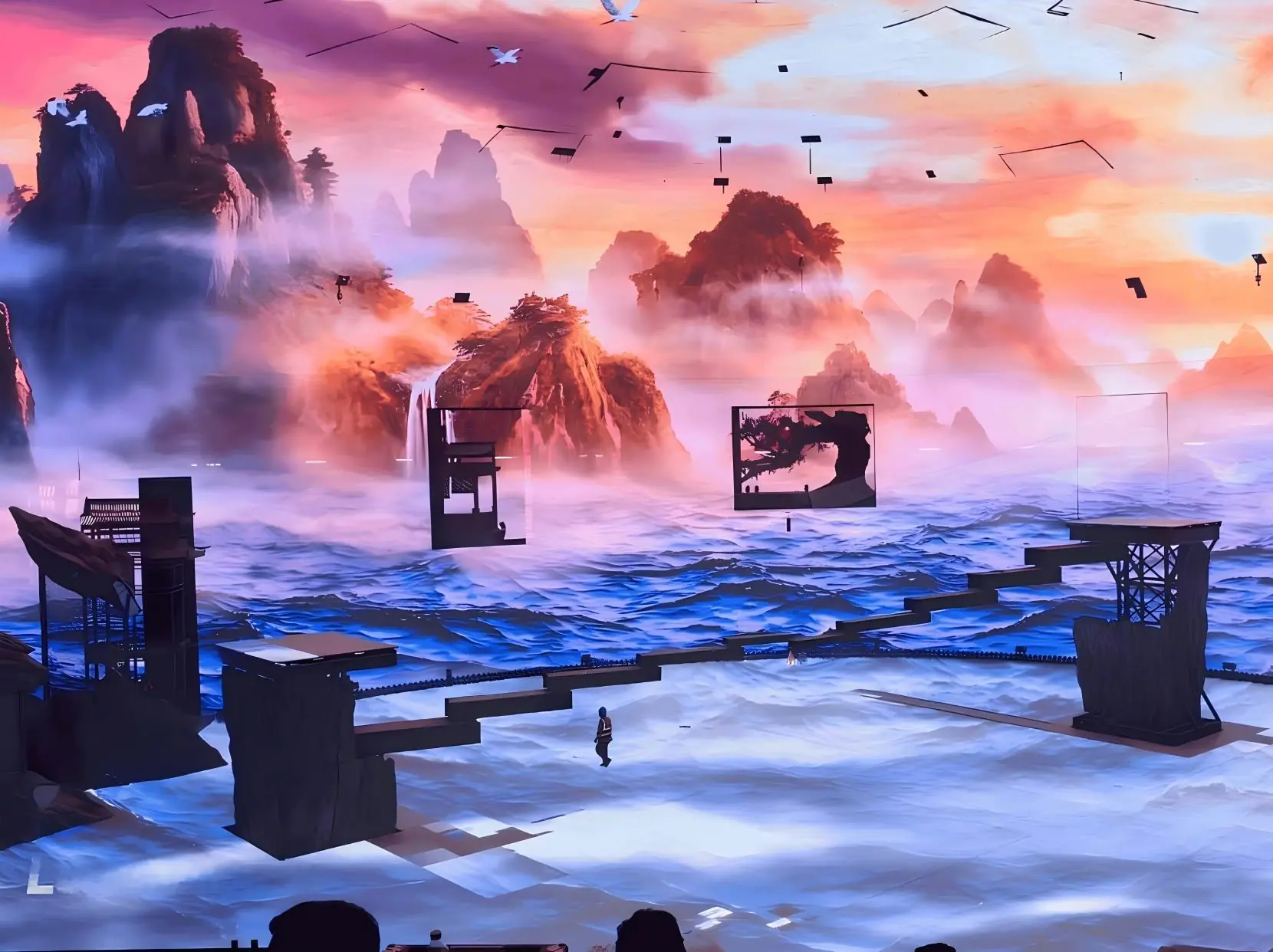
We have designed domes into new-build theaters, existing halls, exhibition centers and island venues. The same five constraints come up every time.
| Constraint | What it affects | How we resolve it |
|---|---|---|
| Clear height | Maximum diameter | Truncate the dome, lower the springing line or use a partial dome |
| Column grid | Structure type | Independent frame inside the columns, or suspension from the roof structure |
| Floor loading | Structure weight and base design | Lightweight frame plus load spreading; our 60 m dome runs 8.5 kg/m² of screen |
| Access route | Erection method | Segmented steel, assembled in place, or pre-assembled rings lifted in sequence |
| Maintenance access | Service strategy | Rear walkways and internal catwalks designed with the shell, not added later |
Domes rarely go into empty fields. They go into theme parks with an operating season, museums with a fixed opening date, and island venues where every truck has to arrive by ferry. The engineering has to account for the site, not just the shape.
A static dome is a screen. A dome with lifting screens, opening shells and mechanical doors is a stage machine — and the two have to be engineered together.
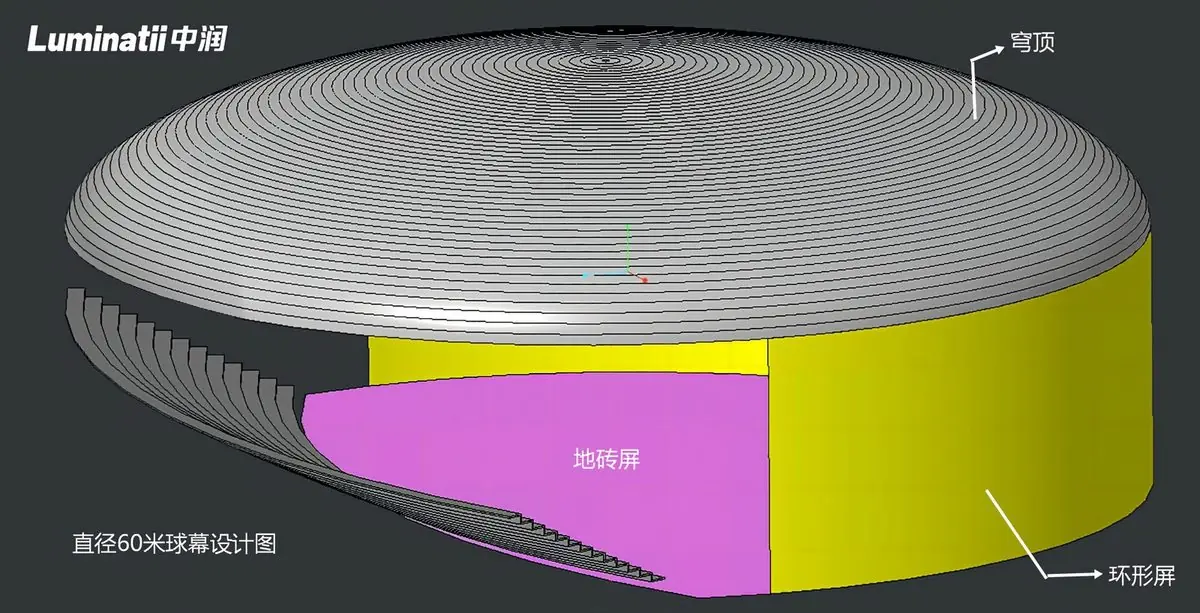
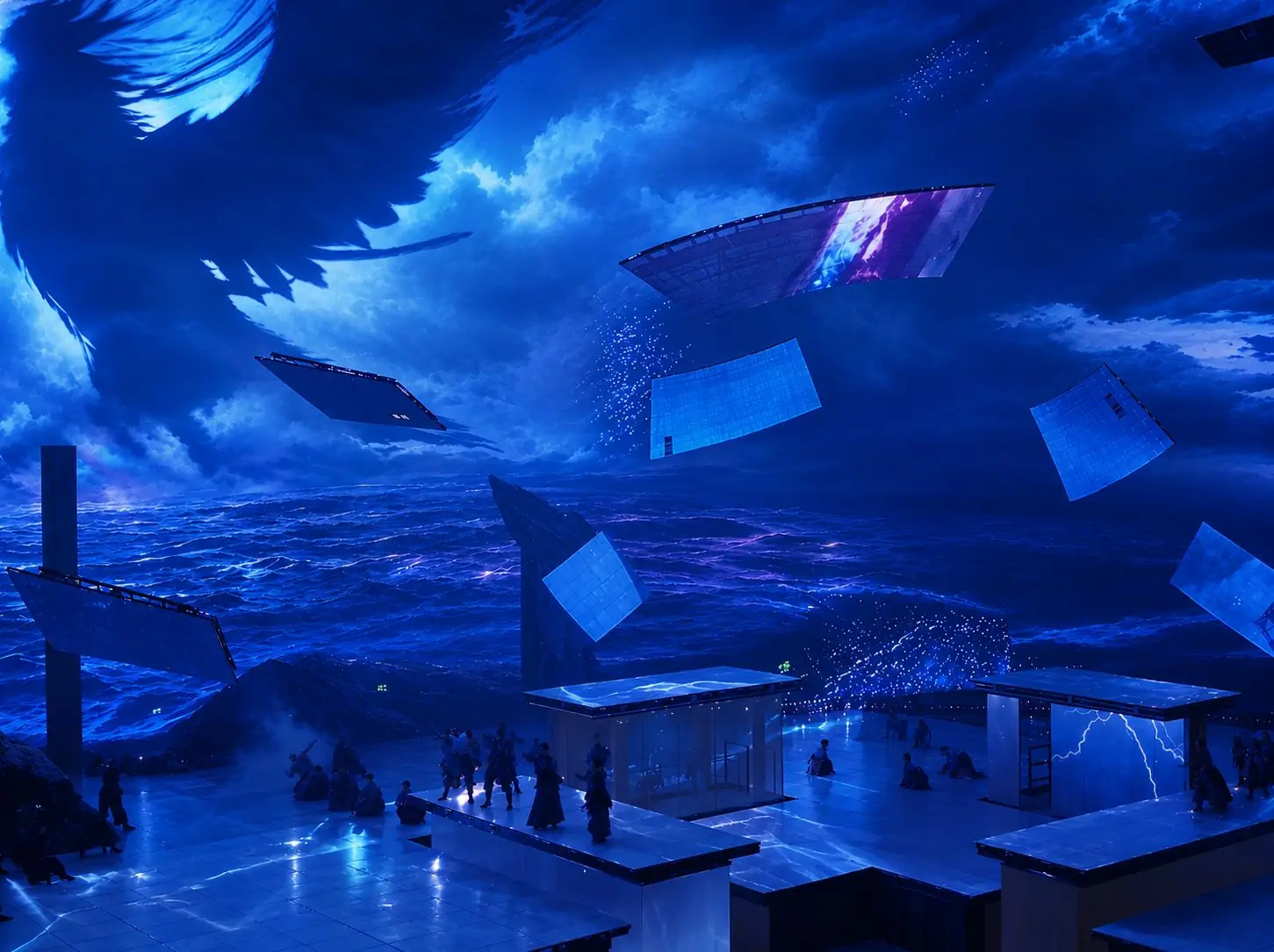
The 60 m dome on Kongtong Island is not a fixed surface. It carries 8 lifting and openable LED screens, 4 sets of 3D wire-rigging equipment, 6 mechanical doors and 10 lifting floor panels — all integrated with the dome structure and the show control system.
That changes the engineering fundamentally. A moving LED screen needs a cable management strategy that survives thousands of cycles, a load path that does not transfer shock into the fixed shell, and a control system that knows where every panel is at every moment of the show.
One contract, one tolerance chain, one party responsible for the seam between structure and screen.
| Package element | Included |
|---|---|
| 3D dome modelling and panel schedule | Yes — before quotation |
| Structural design and load calculation | Yes — dead load, wind load, seismic case |
| Steel structure fabrication | Yes — with weld inspection and acceptance records |
| LED modules, cabinets and power boxes | Yes — trapezoid and triangular geometry per band |
| Cable routing and termination design | Yes — internal routing, no exposed cabling |
| Playback, mapping and control system | Yes — including content mapping onto the sphere |
| Kinetic integration (lifting, doors, floors) | Optional — engineered with the dome |
| Site supervision and commissioning | Yes — our engineers, first light to handover |
| Operator training and handover file | Yes |
The same engineering method at both ends of the range — only the numbers change.
| Project | Diameter | What made it custom |
|---|---|---|
| Kongtong Island — Shandong | 60 m | 5,300 m², kinetic screens, mechanical doors, island logistics, salt-spray climate |
| Dinosaur Dream Factory — Huangshi | 22 m + 28 m | 720° dual-dome combination with a digital floor |
| Chengdu Happy Valley | 22 m | Flying theater: motion platform, audio and visual synchronized |
| Changzhi — Shanxi | 20 m | Acoustically transparent inner dome in an existing building |
| Guiyang — Guizhou | 14 m | Ethnic-culture content, compact footprint |
| Shenzhen flying theater | 7 m | Small volume, fine pitch, tight installation window |
| Beijing twin domes | 5 m / 8 m | Exhibit-scale domes with limited ceiling height |
LED dome screen technical platform → · About our factory and engineering team → · All delivered projects →
Yes. 60 m is our largest delivered dome, not our limit. Beyond that size the structure becomes a building and the engineering shifts to foundation, wind load and erection sequence — which we take on as part of the same scope. There is no fixed upper diameter.
That is most of our work. We design to the room: clear height, column positions, door widths, floor loading and the route the steel will travel to get inside. If the shell will not fit through the door, we design it to be assembled in place.
The dome does not have to be a full sphere. Truncated domes, partial domes, tilted domes and dome-plus-cylinder combinations are all buildable — the panel geometry is generated from the surface, so an irregular footprint is a modelling input, not a problem.
Yes. On Kongtong Island we delivered 8 lifting and opening LED screens, 6 mechanical doors, 10 lifting floor panels and 4 sets of 3D wire-rigging equipment as part of the same dome system. Kinetic elements are engineered with the screen, because a moving screen has different load and cable-management requirements.
A compact dome can be manufactured in weeks. The 60 m Kongtong Island dome took about 180 days from structure to first light. The schedule depends on the structural drawing approval and site readiness more than on the screen itself, so we commit to dates only after the drawing is signed.
Yes, and we prefer it. We supply the dome structure and screen engineering, interface with the base building design, and supervise installation. The clearer the interface drawings, the fewer surprises on site.
Send your venue drawings, dome diameter and content plan — our engineers reply within one business day with a tailored configuration.
Get a Free Quote