Factory-direct LED Dome & Spherical Displays — Shenzhen, China
✉ enquiries@luminatii.com
☎ +86 177 0402 4640

A 5,300 m² mechanically-transformable dome screen on a coastal island in Yantai, Shandong: eight lifting LED arrays, ten kinetic floor screens, six mechanical doors, 3D wire-flying performers and surround audio behind an acoustically transparent dome — delivered in about 180 days.
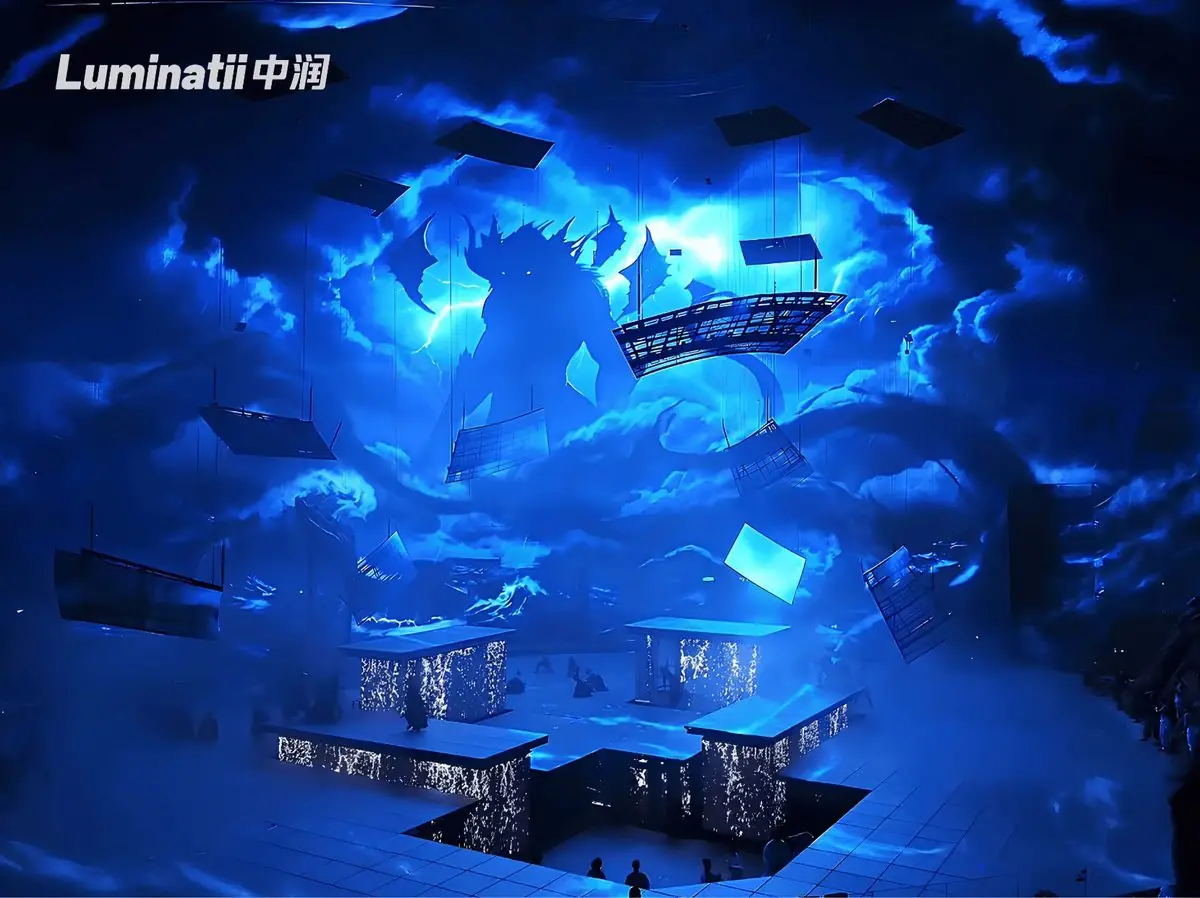
On Kongtong Island, Yantai, Shandong, we delivered the largest LED dome screen in Asia: 60 m in diameter, 5,300 m² of active LED surface, 8K resolution at a 7,680 Hz refresh rate. The screen is only the beginning — the venue is a machine, with eight lifting and openable LED screen arrays, ten tilting 360° floor screens, six mechanical doors, four 3D wire-flying positions and a full surround audio system hidden behind acoustically transparent panels, all synchronized at millisecond level.
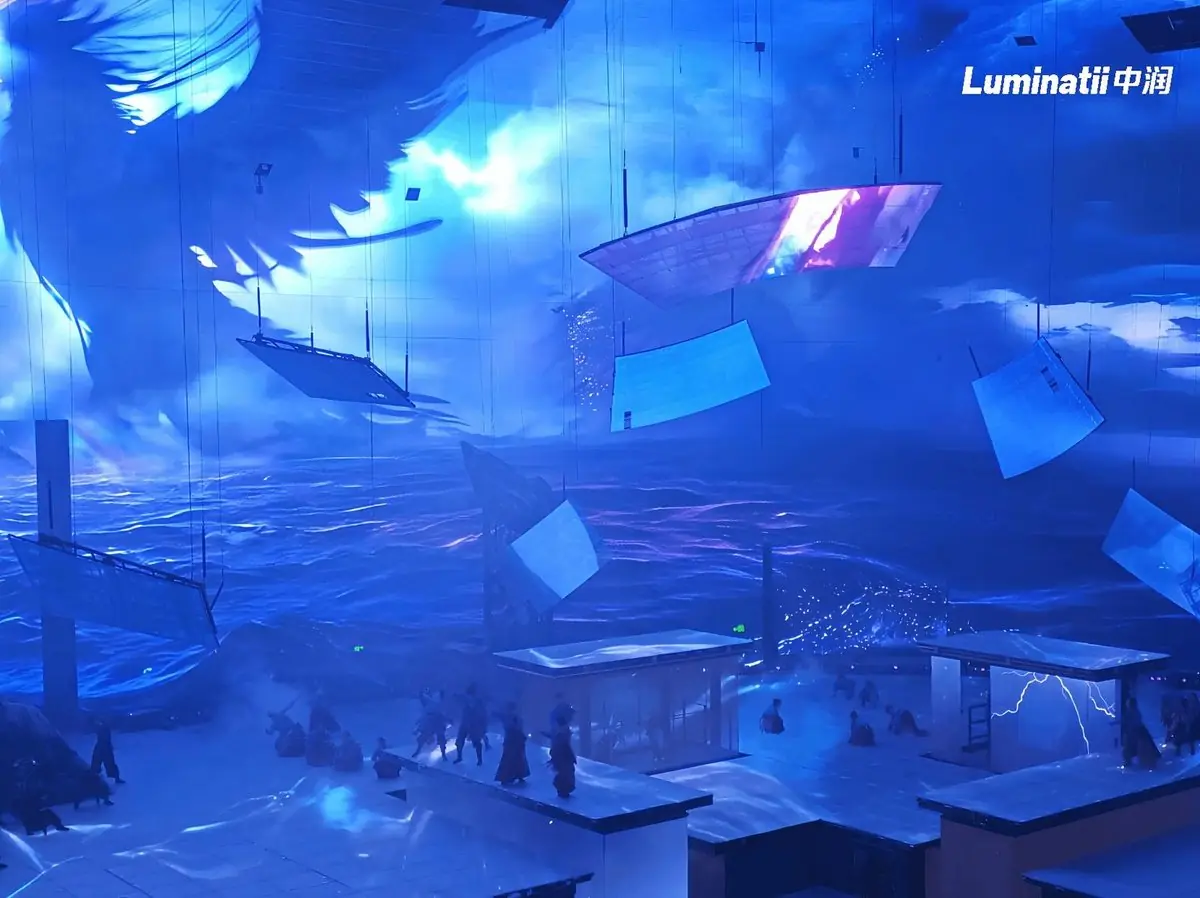
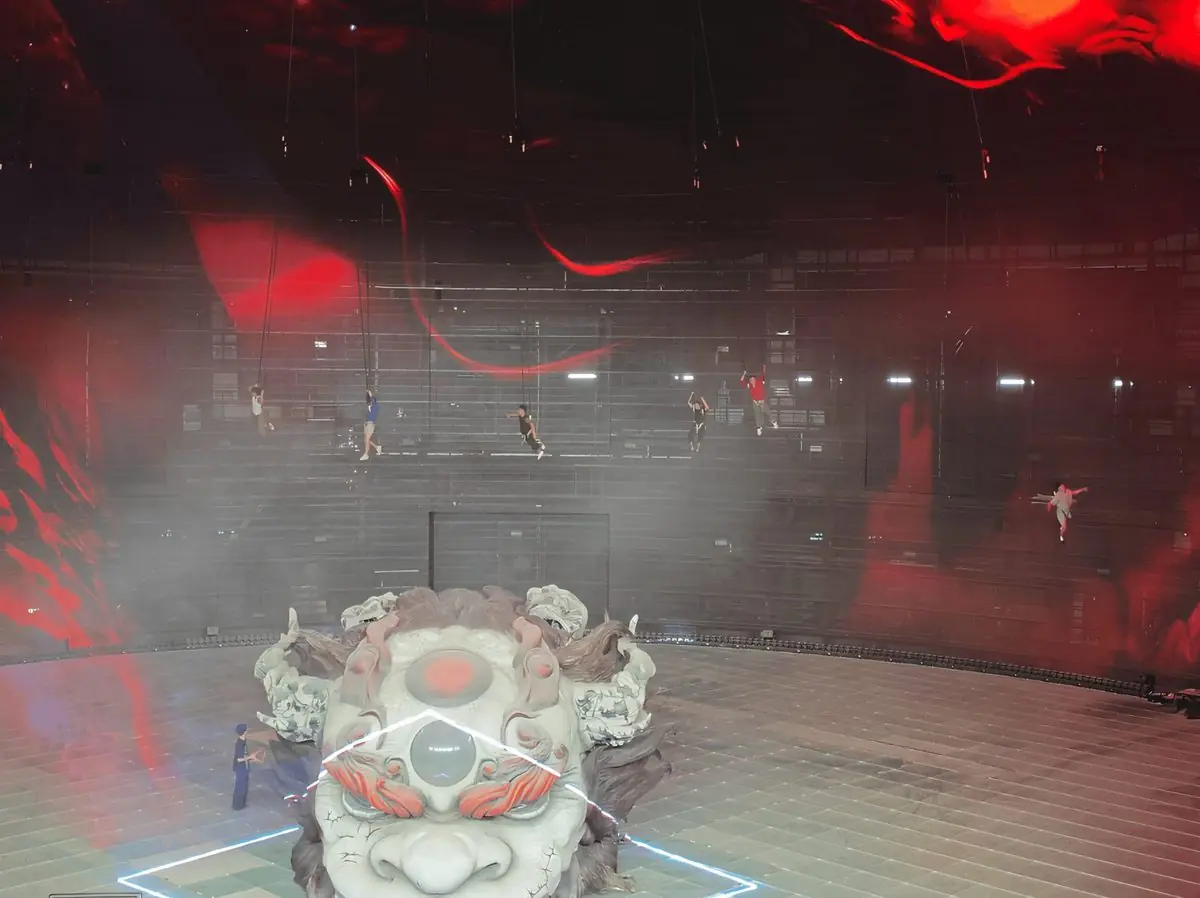
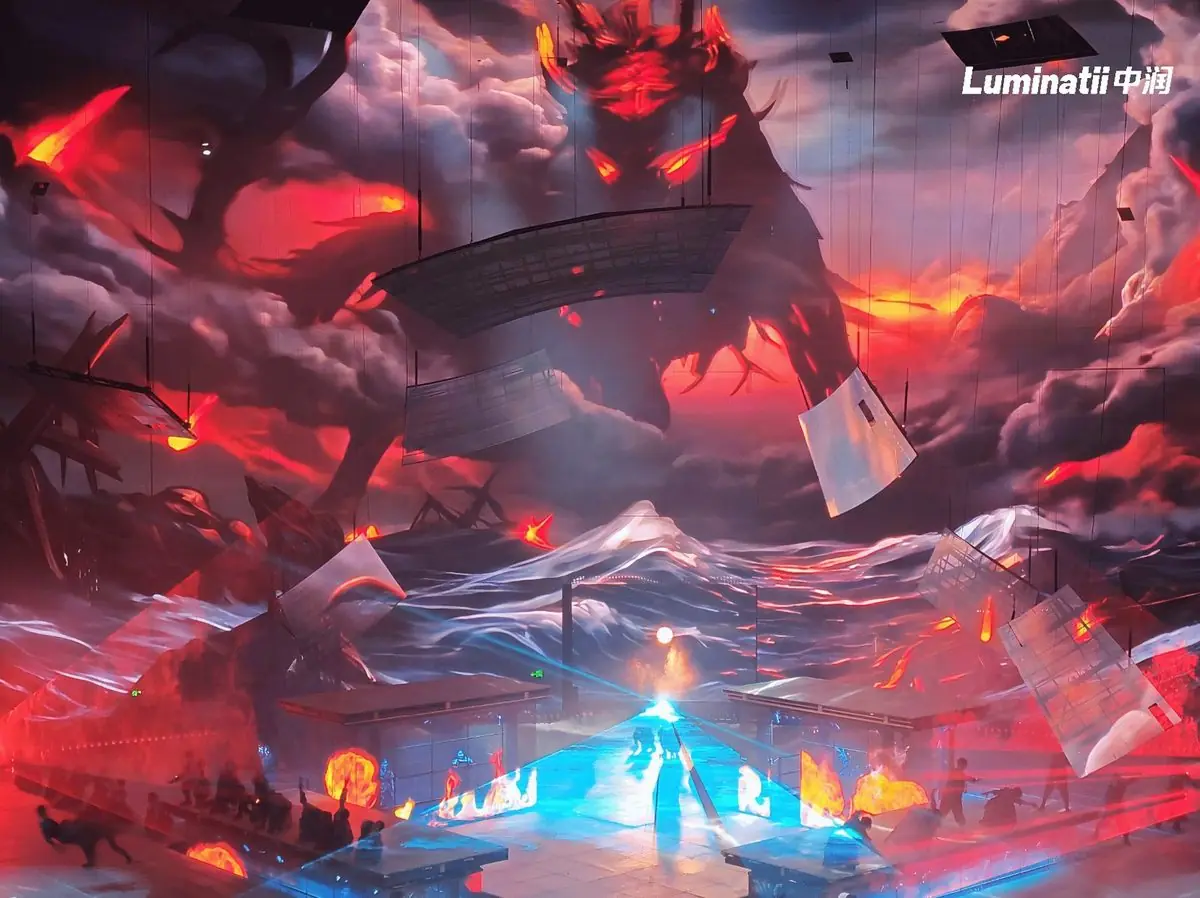
From the center floor, the image has no frame. It runs overhead, wraps down the walls, and continues underfoot as floor screens tilt and rise. Performers descend on 3D wire rigging through lifting screen openings. Doors in the dome open mechanically for set pieces. Between show modes, the eight screen arrays reconfigure the room's geometry entirely.
A dome of this scale is a construction project. It closed on schedule because the steel, the screen and the show systems were engineered as one model from day one — not sequenced as three separate contracts.
The full venue — steel shell, screen sectors, machinery, rigging — was modeled as one 3D engineering assembly before fabrication. Every panel position, every lifting track and every door opening was resolved digitally, so site work never paused for a drawing question.
Fabrication of the ring trusses started while mechanical systems were still in production. Rings lifted at night in sequence — the first three rings closed the crown, then work moved down and outward, with the north-side lift works running against the same critical path.
Every weld was non-destructive tested and accepted; welding consumables were witnessed and sampled; incoming wire rope was inspected before it touched the structure. Rebar planting into the existing island structures followed the same documented discipline.
Screen installation began sector by sector as each structural ring closed — panels never waited for "structure complete." Side screen steel, then panel mounting, then calibration ran as a moving front around the dome.
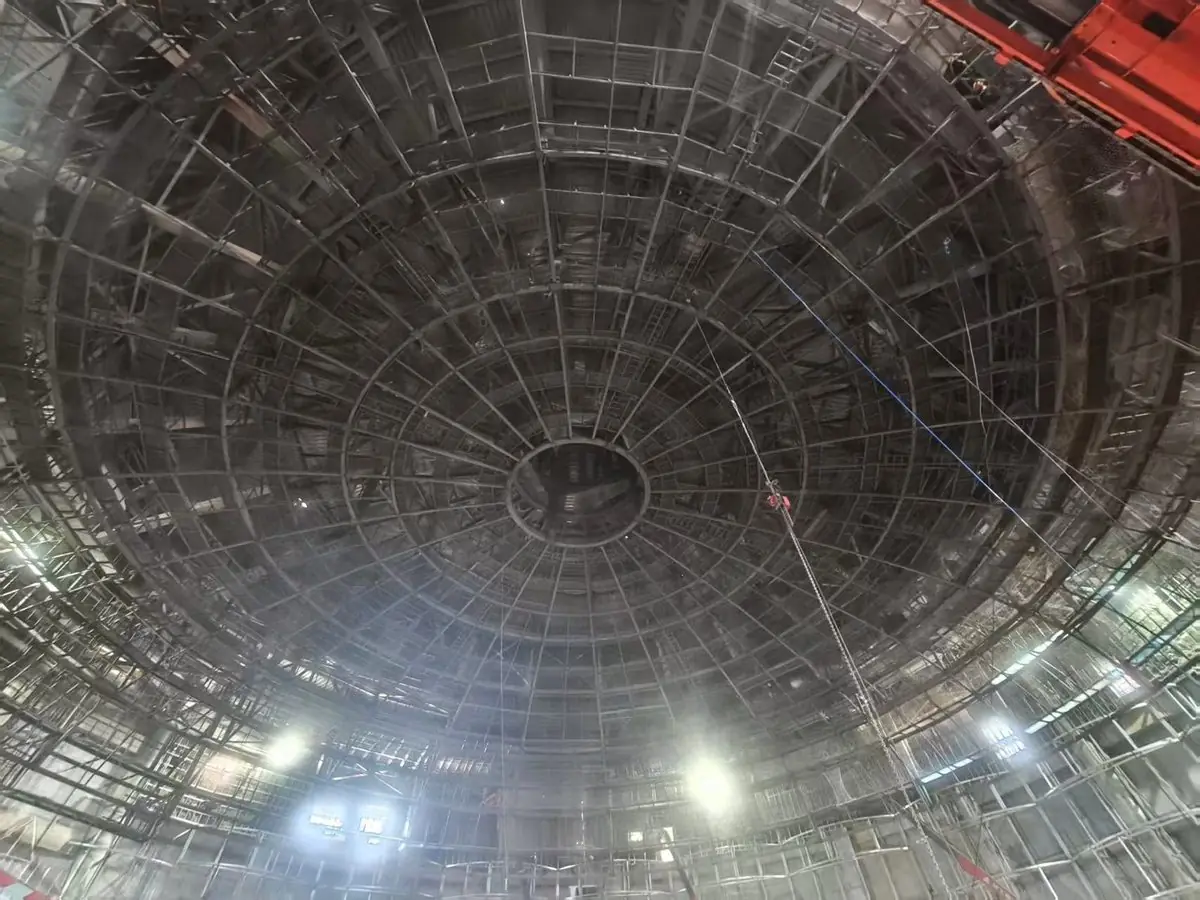
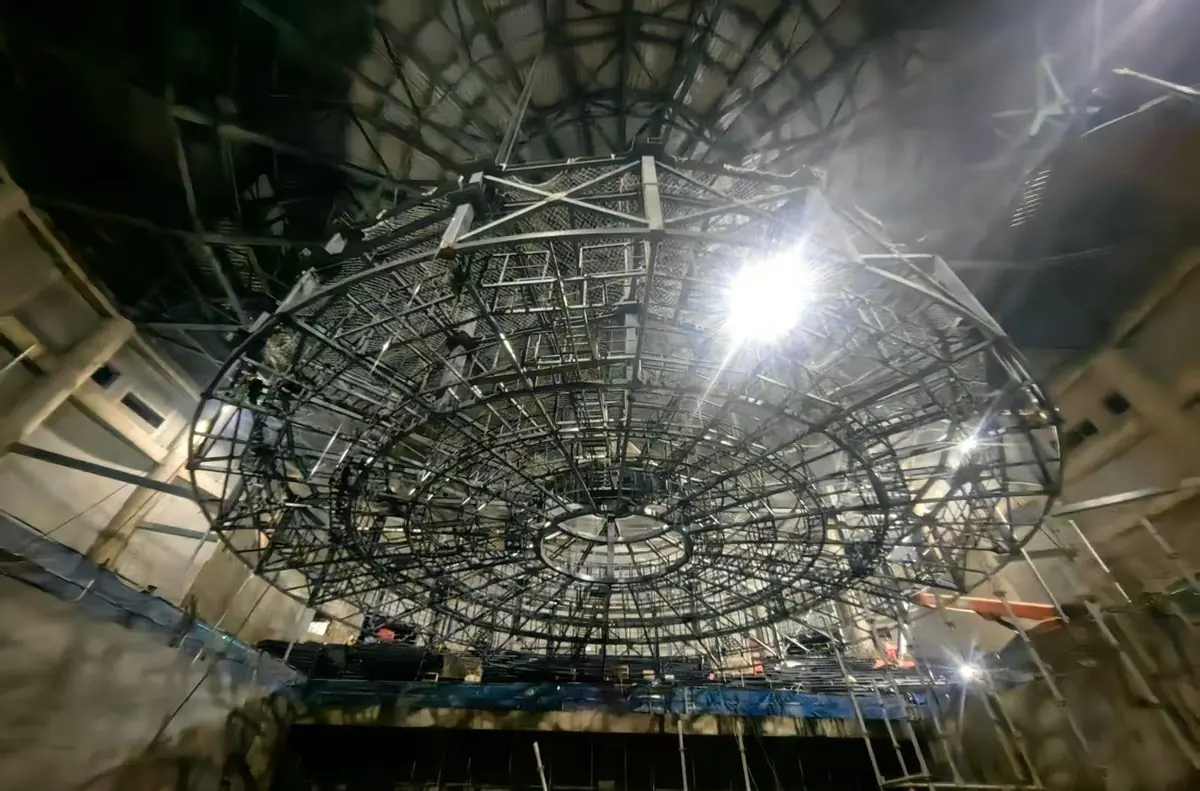
Three decisions made the schedule and the building possible, and all three transfer to any large dome.
| Decision | Specification | Why it mattered |
|---|---|---|
| Ultra-light panels | 8.5 kg/m² vs. the 15–25 kg/m² industry norm | Tens of tons removed from the steel structure; lighter rings lift faster and cheaper |
| XY-adjustable connectors | Independent X / Y adjustment at every panel joint | Absorbs real-world steel tolerance, keeping the 5,300 m² surface optically seamless |
| Acoustic transparency | Surround speakers behind the LED surface | Sound sources the image, not the walls; audio-video sync < 0.02 s |
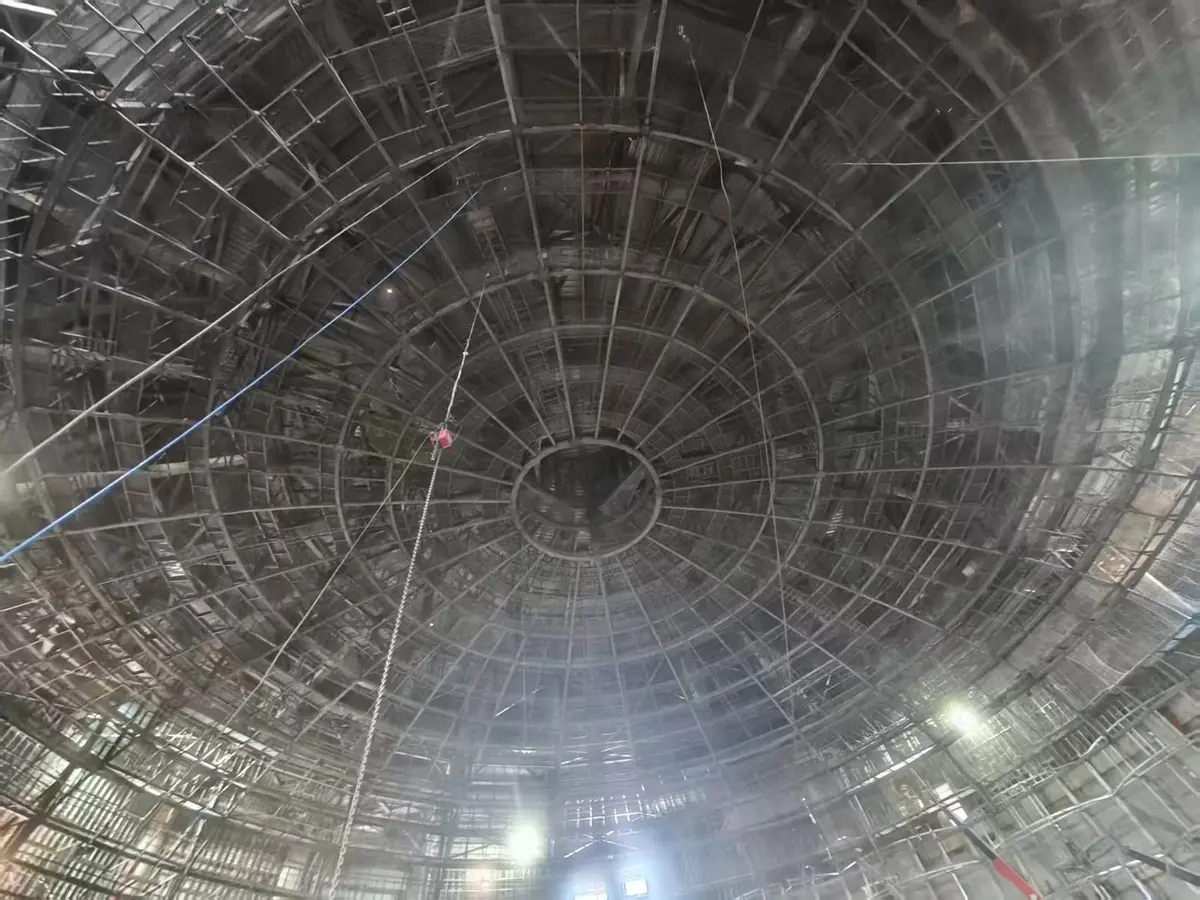
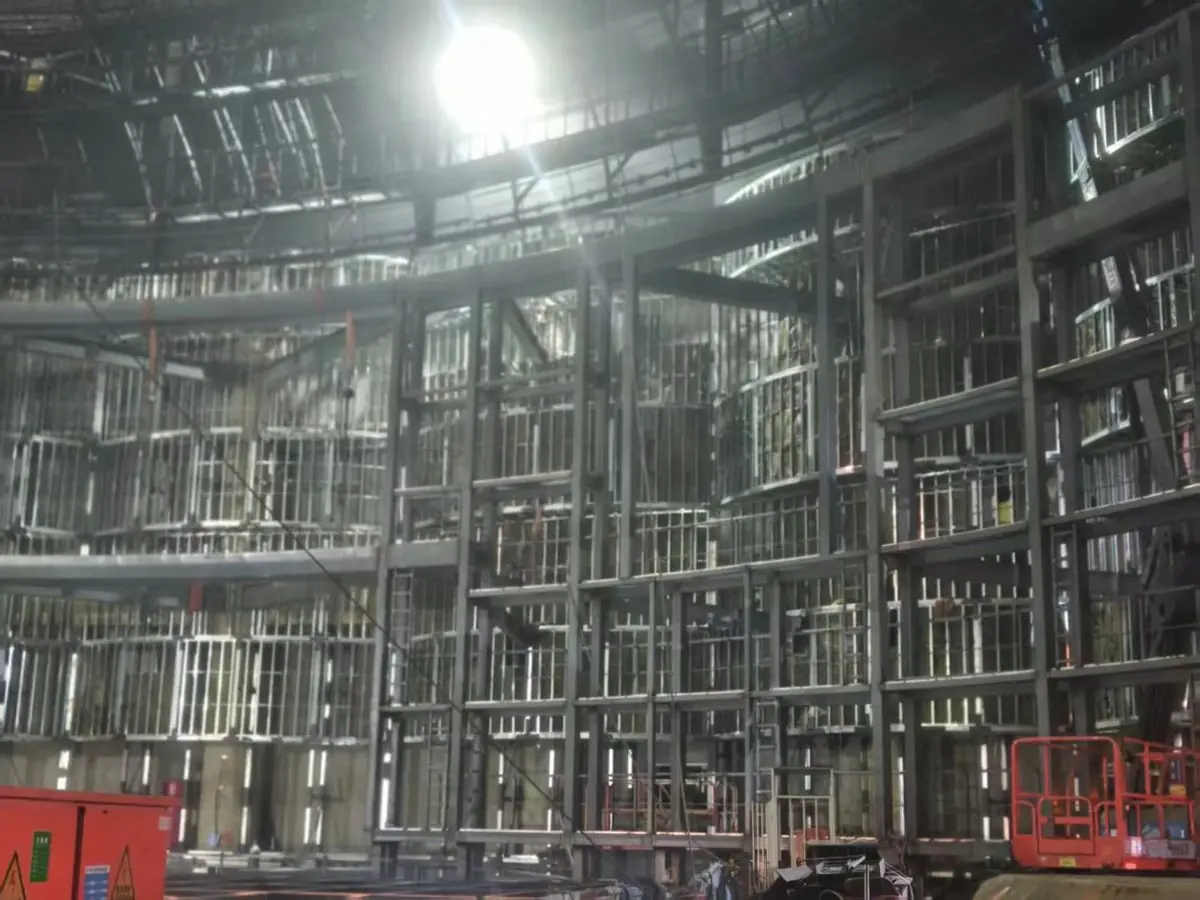
Serviceability was designed in, not added later: walkways run behind the screen surface so any module can be reached without scaffolding the dome — the same rear-access philosophy we apply on venues a tenth of this size. Custom dome engineering →
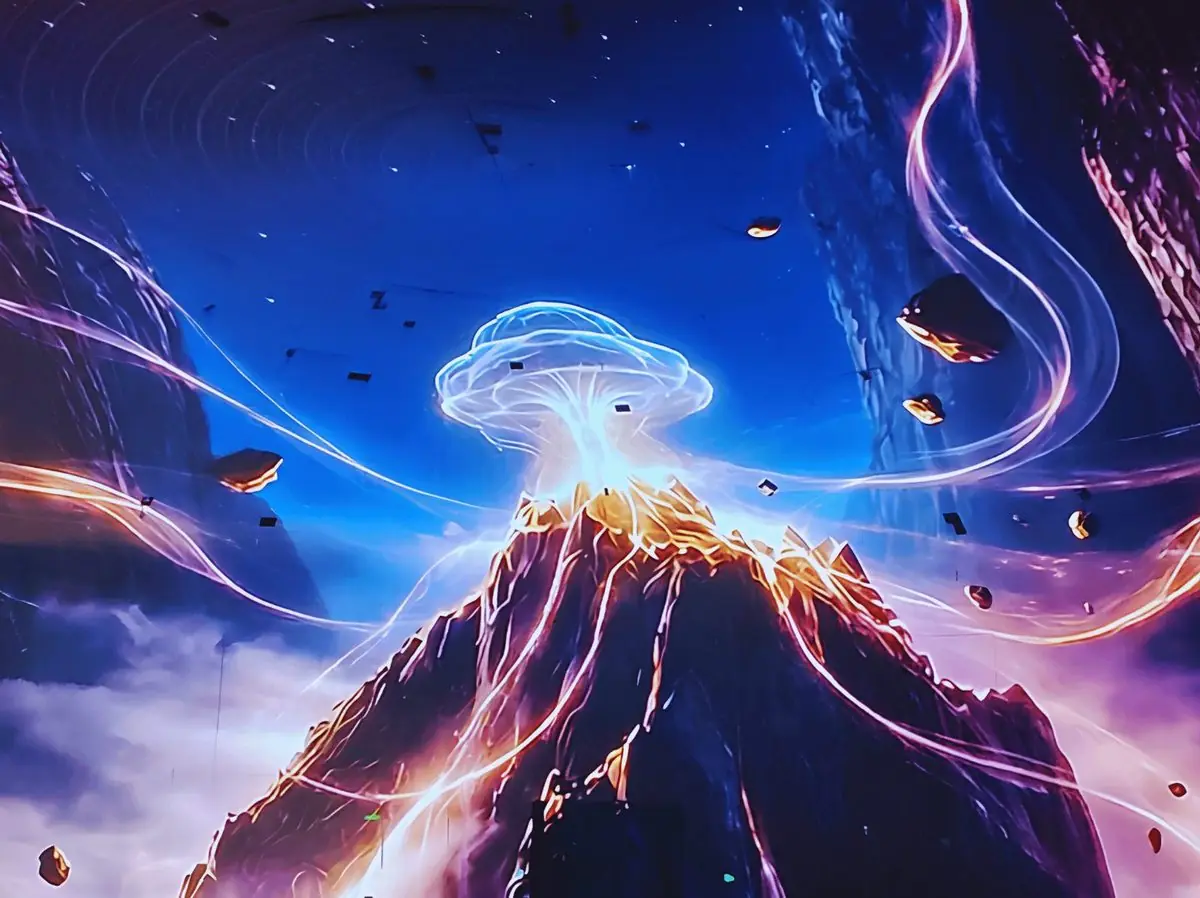
First light was a star field — 5,300 m² of night sky that let us calibrate uniformity across the full surface before any content arrived. Show content followed: a phoenix-themed production, a red-theme historical show, and 3D wire-flying choreography that sends performers through the lifting screen openings while the floor screens move beneath them.
The same integration logic — screens, motion, audio and performers on one timing system — is what we bring to flying theaters and theme park venues at any scale. Flying theater domes → · Theme park dome attractions →
A venue of this scale lives or dies on operations, and the systems that make daily shows sustainable were designed in from the start — not discovered in the first month.
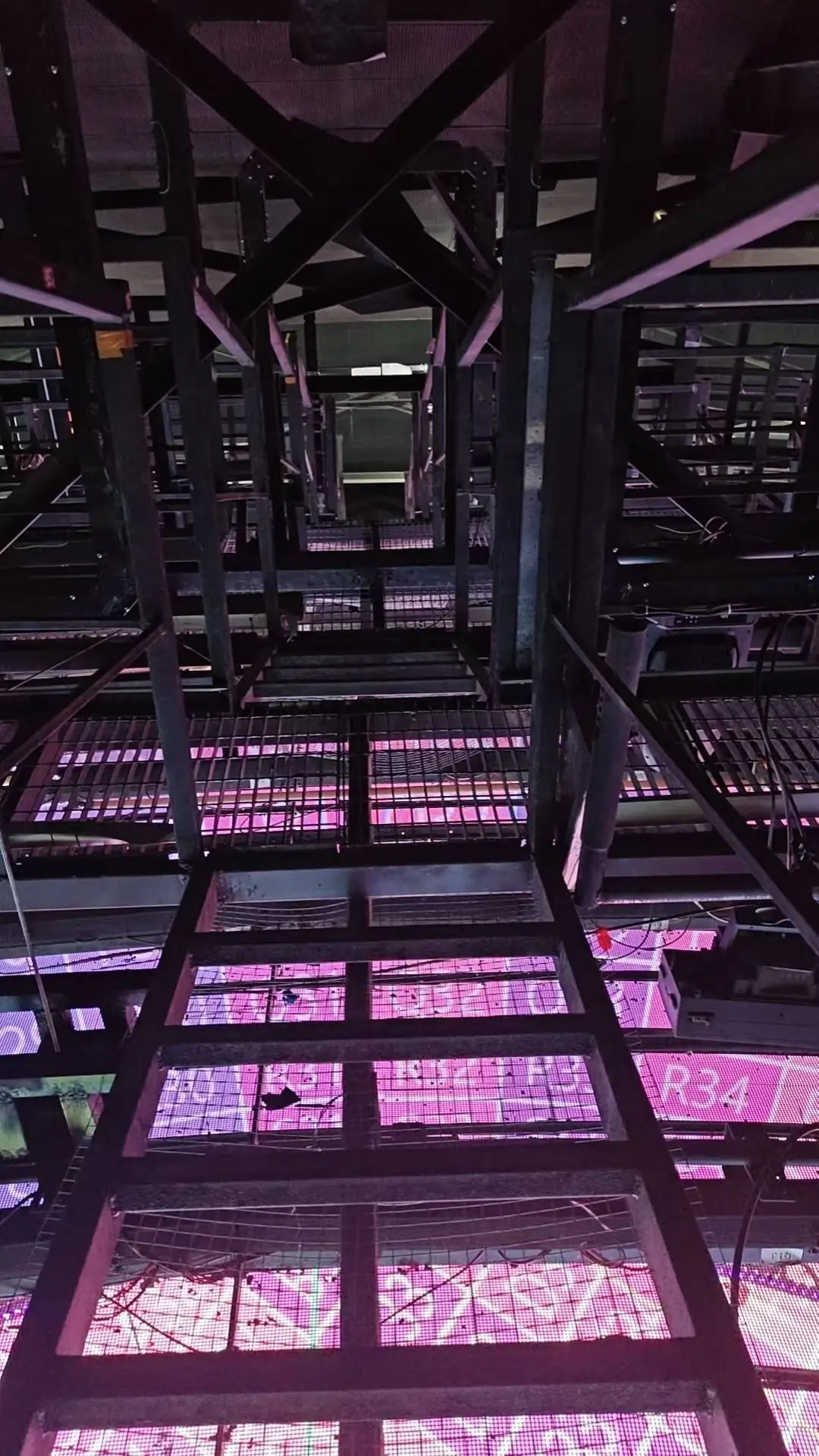
Rear walkways run behind the full 5,300 m² surface, so technicians reach any module from inside the structure — no scaffolding over seats, no dark day for a repair. Modules that dim are swapped in blocks during scheduled windows, and brightness is calibrated back rather than left to fade. This is the same rear-access discipline we ship on venues a tenth of the size, scaled to the building.
Monitoring is the other half: module health, power supplies and cabinet temperature report nightly, so the maintenance team plans a window instead of reacting to a visible defect in front of an audience.
The show calendar is equally deliberate. Multiple productions share the same hardware — the phoenix show, the red-theme historical production, daytime educational formats — because content turnover, not new hardware, is what keeps a venue selling second and third visits. The lifting screens and kinetic floors change the room's geometry between modes, so returning visitors see a different show in the same building. That is the commercial logic of a transformable dome, and it is the reason we argue for mechanical capability on any venue that needs repeat attendance.
You do not need a 60 m dome to benefit from it. Every method proven here scales down intact.
| Proven on Kongtong | What it means for your venue |
|---|---|
| One 3D model for steel, screen and show machinery | No interface gaps between suppliers; the schedule holds because the design is single-source |
| 8.5 kg/m² panel engineering | Smaller structure, faster steel, lower crane cost — on any diameter |
| Sector-by-sector installation | Screen work starts before structure closes, compressing the calendar |
| Documented QC (NDT welds, material sampling) | Your acceptance is evidence-based, and your insurer sees records, not promises |
| Rear-access service walkways | Maintenance never closes your venue |
Tell us your diameter, your show ambition and your site — we will show you which parts of this project transfer directly. Custom dome engineering → · Turnkey dome delivery → · More delivered projects →
Yes. At 60 m in diameter and 5,300 m² of active LED surface, it is the largest LED dome screen delivered in Asia. Scale alone was not the goal — the dome is also mechanically transformable, with eight lifting screen arrays and ten kinetic floor screens that reconfigure the venue between show modes.
From design freeze to completion was approximately 180 days, including the steel structure, panel installation, calibration and show commissioning. That pace came from parallel workstreams: steel fabrication started while the mechanical systems were in production, and screen installation began sector by sector as each ring of structure closed.
The dome panels weigh about 8.5 kg/m² — roughly a third of the 15–25 kg/m² typical for the industry. On a 5,300 m² surface, that difference removes tens of tons from the steel structure, which is one reason the building could close in 180 days.
No. The surround audio system sits behind acoustically transparent LED panels, so the audience hears sound from the image without seeing a single speaker. Audio and video are synchronized to under 0.02 seconds.
Serious buyers are welcome to audit the project: we arrange site visits, share the structural and QC documentation approach, and put you in direct contact with the engineers who delivered it. The same transparency applies to your own project records.
Send your venue drawings, dome diameter and content plan — our engineers reply within one business day with a tailored configuration.
Get a Free Quote