Factory-direct LED Dome & Spherical Displays — Shenzhen, China
✉ enquiries@luminatii.com
☎ +86 177 0402 4640

We do not resell modules. Luminatii engineers, manufactures and commissions complete inner LED domes — steel structure, acoustically transparent screen body and playback control — from a 5 m exhibit dome to the 60 m Kongtong Island mega dome. 20+ large dome projects delivered.
Most companies selling "LED domes" are selling flat modules and a drawing. A dome that works — no gaps, no dead pixels at the poles, sound that reaches the audience — is a structure problem, a geometry problem and a control problem at the same time.
An inner LED dome is a steel shell, several thousand individually shaped LED panels, and a playback system that has to map a flat video frame onto a sphere without visible seams. If those three are bought from three suppliers, the tolerance chain breaks at the joint — and the joint is exactly where audiences look.
We engineer all three. The steel structure is calculated for the project location, the panel geometry is derived from that structure in 3D, and the playback mapping is built from the same model. One model, one tolerance, one responsible party.
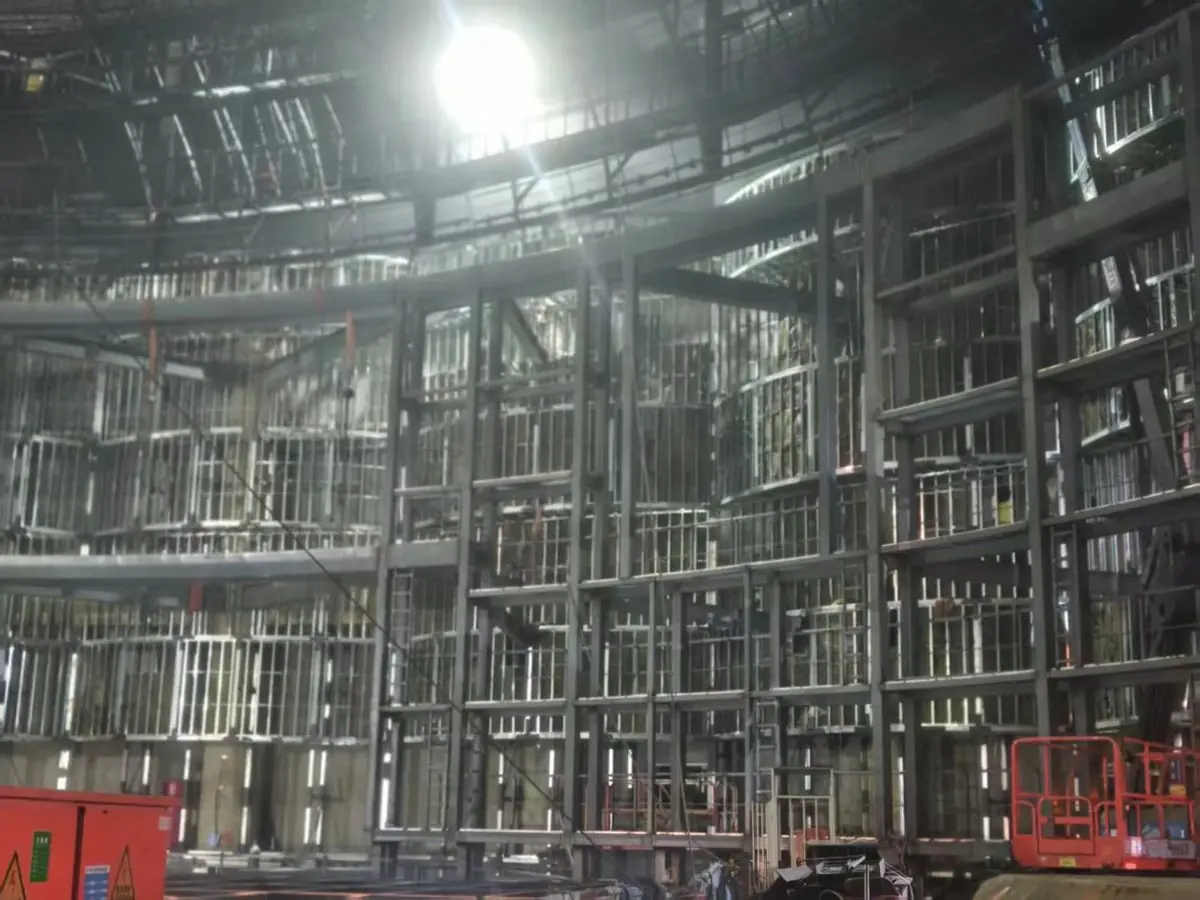
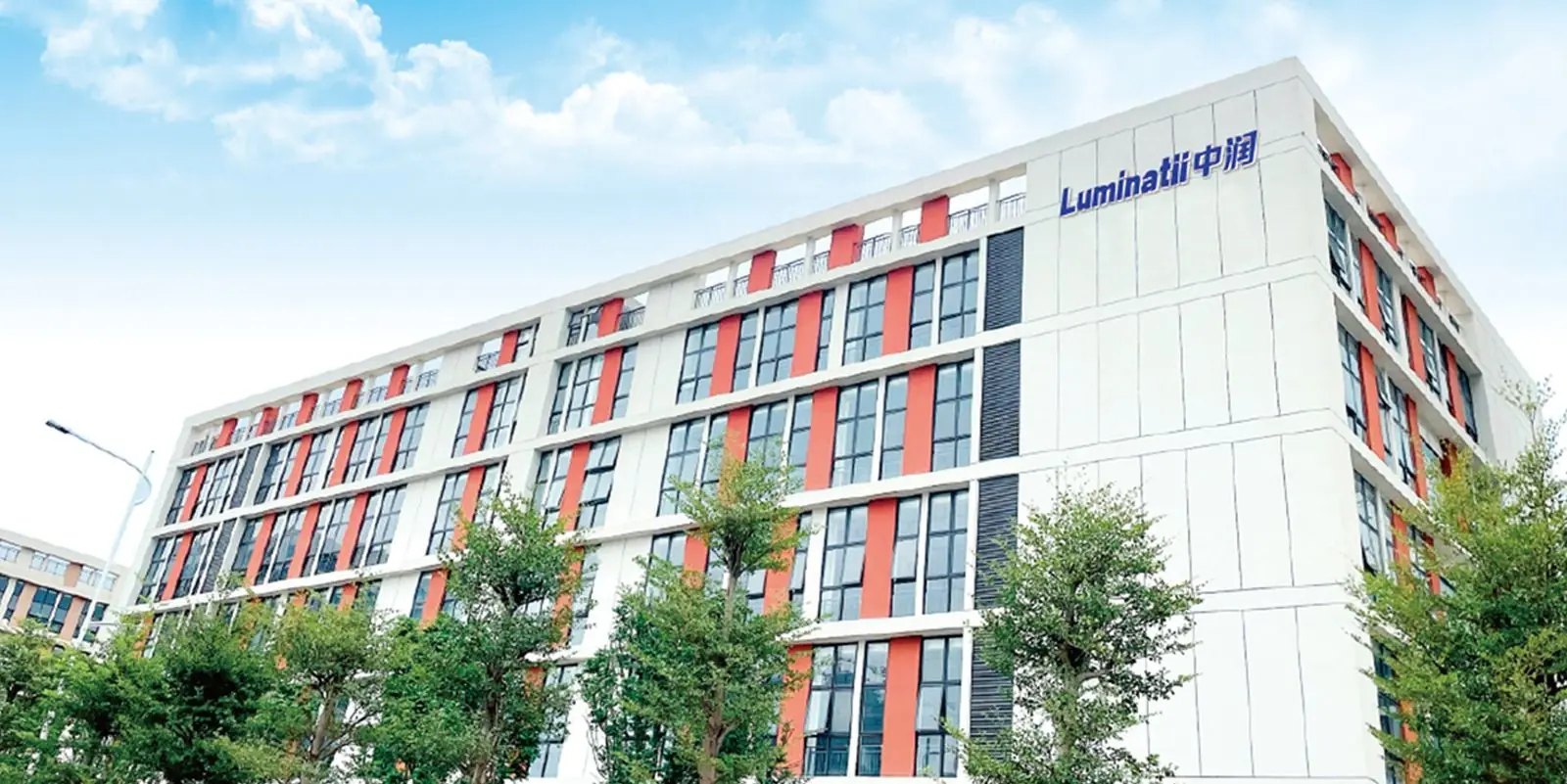
Shenzhen head office for engineering and project management, Huizhou production base for modules, cabinets and structural steel. Everything that touches the screen surface is made under our own roof.
Dome modules are not standard flat cabinets with the corners cut off. Each row of a dome has a different circumference, so each module has a different trapezoid angle. That is why the modules are assembled in-house: the shape is generated from the project model, not picked from a catalogue.
The same applies to the mechanical parts. The XY two-way adjustable connectors that let an installer close a 0.1 mm gap on a curved surface are machined to our own drawings, and the power boxes use an aluminium profile with a large buckle so a single technician can open one on a walkway 40 m above the floor.
Every production batch runs on an ageing rack and a calibration wall before shipment. Brightness uniformity is held to a deviation of 5% or less across the dome, color deviation to 2ΔE or less — measured, not estimated. Outdoor domes go through IP65 water and dust testing, and the screens are treated for humidity, dust and salt spray when the site is coastal.
That last point is not theoretical. Kongtong Island sits in the sea off Shandong, and the dome there has been through salt-spray treatment, wind load calculation and a 180-day build programme.
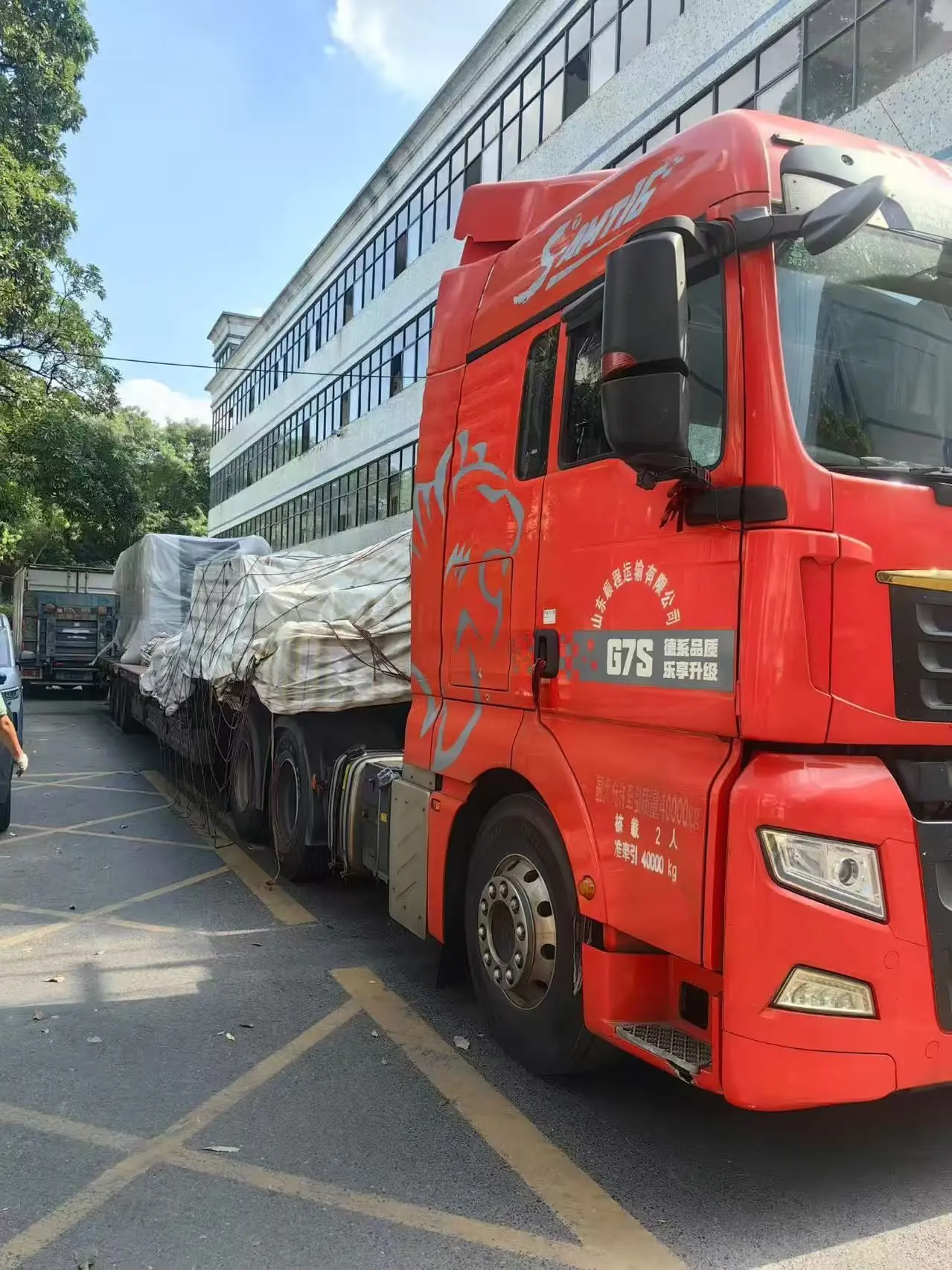
A dome is won or lost in the model. By the time steel is cut, every panel position, angle and pixel pitch has already been decided against your venue.
Your diameter, curvature and seat layout are modelled as a full sphere shell, divided row by row. Every panel gets a position and a wedge angle — this is the drawing the factory builds from.
Pixel pitch is chosen from the furthest seat, not from a price list. A 7 m flying theater runs P1.9; a 60 m dome covers 5,300 m² at a wider pitch and still resolves 8K.
Dead load, wind load and seismic case are calculated for the site. Welds are inspected and accepted, weld material is sampled under witness — as recorded on the Kongtong project.
A perforated dome is not a dome with holes drilled in it afterwards. The 50% open area has to be distributed so the screen still reads as a continuous surface while sound passes through with less than 5% loss in the speech and music bands. On our domes the surround speakers sit behind the screen, and the audio-visual sync error stays under 0.02 seconds.
That is what makes a flying theater feel like flight instead of like watching a very large television: the sound arrives from where the picture says it should.
Most dome inquiries in this industry are answered by traders who forward your drawing to a factory and add margin. These are the questions that separate the two — ask them of every supplier, including us.
| Question | Real manufacturer | Trading company |
|---|---|---|
| Who models the dome geometry? | An in-house engineering team, before quoting | Asks the factory to "check feasibility" |
| Who owns the trapezoid module tooling? | The factory, with the drawing on file | Unknown, usually a third party |
| Can they change the panel angle? | Yes — angle is a build parameter | No — they can only change the quantity |
| Who calculates the steel structure? | The same team that builds the screen | A separate local contractor, unconnected |
| Who commissions first light? | Their own engineers, on site | A subcontractor hired for the week |
| Can you visit the line? | Any time, with the project model on screen | A showroom, or a "partner factory" visit |
A practical test that costs nothing: ask for the maintenance walkway photographs of a dome they built more than two years ago. Anyone can photograph a render. Only a manufacturer can show you the back of a dome they still service.
Certificates are not marketing decoration — they are the electrical and management evidence your consultant, insurer and venue operator will ask for during handover.
| Certificate | Scope | Why the buyer needs it |
|---|---|---|
| CE — EMC | Electromagnetic compatibility | Required to energise the installation in the EU |
| CE — LVD | Low voltage directive | Covers the power and control cabinets |
| FCC | US electromagnetic compliance | Required for import and operation in the US |
| UL / IEC 62368-1 | Audio/video and IT equipment safety | Accepted by consultants and insurers worldwide |
| ISO 9001 | Quality management | Evidence of a controlled production process |
| ISO 14001 / 45001 | Environment / occupational safety | Increasingly required on public cultural projects |
Our baseline dome platform runs 1,200 nit at the screen face, a 10,000:1 contrast ratio, NTSC 90%+ color gamut and 7,680 Hz refresh with 16-bit grayscale. Uniformity deviation stays at or below 5% across the dome and color deviation at or below 2ΔE after calibration.
Those numbers are worth checking on a mock-up before you sign. We build sample domes and test walls so you can see the calibration screen yourself rather than reading a datasheet — the same wall we use for batch acceptance.
Seven stages, each with a deliverable you approve before the next one starts. No stage begins on a verbal instruction.
| Stage | What happens | What you receive |
|---|---|---|
| 1. Site review | Diameter, shell type, seat count, ceiling height, power and access route | Feasibility note with pitch and resolution options |
| 2. Concept design | 3D dome model, panel layout, structural concept | Renderings plus a panel-count schedule |
| 3. Engineering | Structural calculation, connection details, cable routing, control architecture | Approval drawing set |
| 4. Production | Modules, cabinets, steel, power boxes | Batch test report and ageing record |
| 5. Pre-assembly | Trial fit of a dome segment in the factory | Fit-up photographs and as-built dimensions |
| 6. Installation | Structure erection, panel sequence, cable termination | Site supervision by our engineers |
| 7. Commissioning | Calibration, mapping, show integration, operator training | First-light report and handover file |
Stage 5 is the one buyers underrate. A dome segment that has been fitted once in the factory arrives on site in the right sequence, and the crew is not improvising 40 m above a seating deck.
20+ large LED dome projects, from a 5 m exhibit dome in Beijing to the 60 m Kongtong Island landmark. Every one engineered, manufactured and commissioned by Luminatii.
| Project | Diameter | Configuration |
|---|---|---|
| Kongtong Island Dome — Shandong, China | 60 m | 5,300 m², 8 kinetic lifting screens, 4 wire-rigging sets, 6 mechanical doors, built in about 180 days |
| Dinosaur Dream Factory — Huangshi, Hubei | 22 m + 28 m | 720° dual-dome system with digital floor, operating since June 2024 |
| Chengdu Happy Valley flying theater | 22 m | Acoustically transparent inner dome, motion-platform synchronized |
| Changzhi immersive dome — Shanxi | 20 m | Acoustically transparent inner dome, P2 |
| Guiyang ethnic-culture dome — Guizhou | 14 m | Acoustically transparent inner dome, P3 |
| Shenzhen flying theater | 7 m | Compact inner dome, P1.9 |
| Beijing twin immersive domes | 5 m / 8 m | Exhibit-scale domes, P2 |
| Philippines full outer sphere | 26 m | Outdoor LED sphere, front and rear service |
A dome is a seven-figure decision for most venues. You should not make it on a catalogue and a video call.
If you cannot travel, we run the same walkthrough on video with the project engineer present, and we answer structural questions directly rather than routing them through a sales inbox.
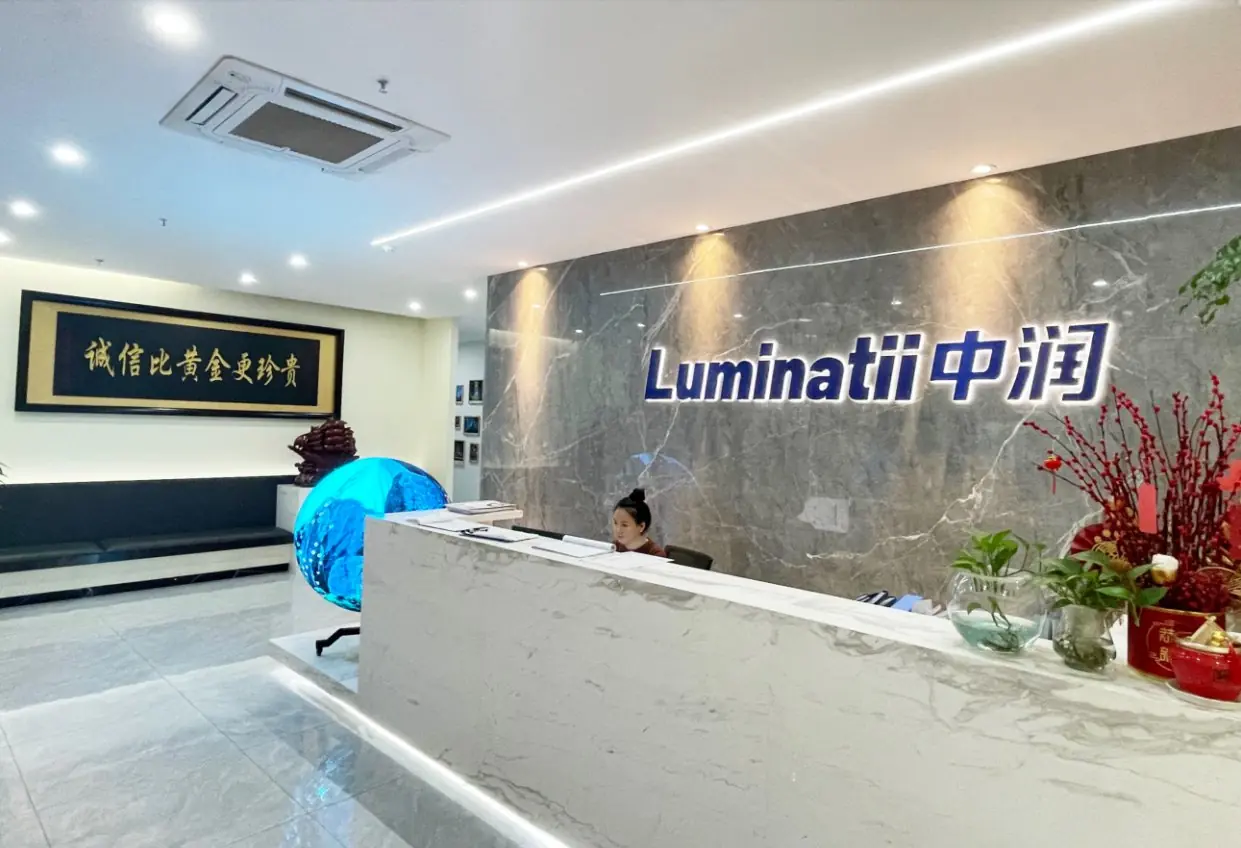
We are the manufacturer. Luminatii Technology Co., Ltd. is registered in Shenzhen, with its own production base in Huizhou and an in-house engineering team that models, calculates and commissions every dome. There is no intermediary between your drawings and our production line — which is why we can quote on structural changes, not only on screen area.
Our largest delivered dome is 60 m in diameter, 5,300 m² of screen surface, on Kongtong Island in Shandong. We have delivered inner domes from 5 m upward, and there is no fixed upper limit — beyond our delivered range every dome is designed from first principles against your shell geometry, wind load and seating layout.
Both. Structure, screen body and playback control are engineered together — we calculate dead load, wind load and seismic conditions for the project location, and the screen panels are designed around that structure rather than adapted to it afterwards. Delivering them separately is how domes end up with gaps and dead pixels at the joints.
Yes. Our engineers supervise installation and commissioning on site, and we ship with a panel-by-panel layout drawing so a local rigging crew can follow the sequence. For the Kongtong Island project, the dome was built in about 180 days from structure to first light.
CE (EMC and LVD), FCC, UL/IEC 62368-1 for the electrical design, and ISO 9001, ISO 14001 and ISO 45001 for the management system. Test reports and certificate copies are supplied with the project documentation, and we welcome third-party inspection before shipment.
It depends on diameter, structure type and whether the site is ready. A compact dome can be manufactured in weeks; the 60 m Kongtong Island dome took about 180 days from structure work to first light. We give a production schedule after the structural drawing is approved, not before.
Send your venue drawings, dome diameter and content plan — our engineers reply within one business day with a tailored configuration.
Get a Free Quote