Factory-direct LED Dome & Spherical Displays — Shenzhen, China
✉ enquiries@luminatii.com
☎ +86 177 0402 4640

You will not find a per-square-metre price list on this page, and that is deliberate. A dome is not a product you pick off a shelf — it is an engineered system whose cost is decided by diameter, pitch, structure and venue as much as by the screen itself. What we can do is show you exactly what a dome budget is made of, what pushes each component up or down, and what information turns an estimate into a firm, buildable number.
Ask for the price of a dome screen and the honest answer is a question back: which dome? Every LED dome we have built — from a 5 m research sphere to the 60 m, 5,300 m² Kongtong screen — was quoted against its own geometry, loads and use case. That is not pricing theater. The variables are real: a sound-transparent screen is engineered differently from a solid one, a P2 surface has more than four times as many LEDs as a P4 surface of the same area, and the structure that holds the screen can be a large or a small part of the project depending on the building it lands in. Publishing a single number would either be wrong or would be a bait figure that changes the moment real drawings arrive.
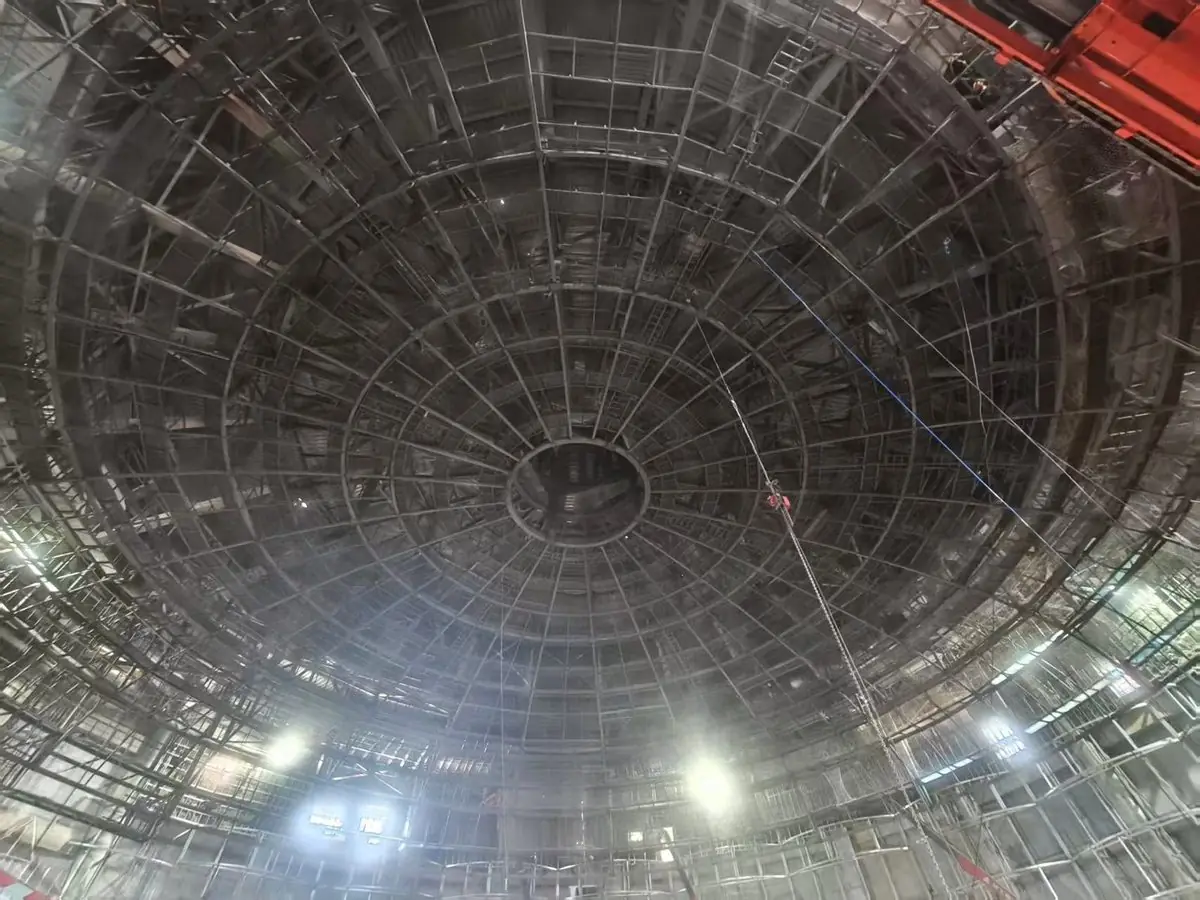
Every quote we issue decomposes into the same components. Understanding them — and what moves each one — is the most useful thing a buyer can know before comparing suppliers.
| Component | What it covers | What moves it |
|---|---|---|
| Screen system | Modules, power supplies, receiving cards, control system, cables | Pitch, area, sound transparency, brightness and grayscale specification |
| Supporting structure | Steel engineered for dead load, wind, seismic and maintenance loads at your site | Diameter, site conditions, how light the screen is — our screens run around 8.5 kg/m², well below the 15–25 kg/m² industry norm, which directly shrinks steel |
| Installation | Engineering plan, site crew or supervision, lifting and access | Venue height, crane access, whether the dome is built inside a finished building |
| Integration | Playback, content pipeline, show control, audio integration for transparent screens | Whether audio is part of the screen design (it should be agreed before fabrication) and what content system the venue already owns |
| Calibration & acceptance | On-site brightness and color correction, uniformity verification, content playback checks | Target uniformity (we hold ≤5% brightness deviation and ≤2ΔE across the sphere) and the number of measurement sessions |
| Support & spares | Operator training, spare modules, documentation, warranty terms | Service philosophy — front-and-rear access and single-person module swaps reduce lifetime cost more than any discount |
The screen is typically the largest single line, but the ratio between components shifts more than buyers expect. On the Kongtong 60 m project, engineering the screen to be light enough for the existing building concept was worth more than any negotiation on module price. On compact installations, integration and calibration deserve more attention than the module spreadsheet. This is why comparing two quotes on screen price alone answers the wrong question.
Most of a dome's cost is decided in specification, not in negotiation. These are the levers that actually move the number, in both directions.
Note what is not on the "down" list: cutting calibration, skipping spares, or accepting a screen without verified uniformity. Those are the savings that resurface as years of visible defects. Why calibration is not optional →
The quality of a quote is decided by the quality of the information behind it. This is the checklist that lets us price a dome accurately — most of it you already have.
| Information | Why we need it | If you don't have it |
|---|---|---|
| Diameter or venue geometry (plans, section, height) | Screen area, coverage and module layout all follow from geometry | Tell us the room; we will propose diameters that fit |
| Nearest viewing distance | Decides pitch — the biggest single cost lever | Seat layout or a sketch is enough |
| Intended use and content class | Planetarium starfields, cinema, live shows and exhibitions have different demands | Describe the show; we will translate |
| Audio requirement | Sound-transparent design must be decided before fabrication | Default to transparent-capable design for theaters |
| Site conditions | Structure loads, access, indoor/outdoor, coastal exposure | City and venue type is a workable start |
| Scope and timeline | Screen-only or turnkey; target opening date | We will propose both options |
Send even a partial version of this and we will come back with a structured quotation: each component priced, each assumption stated, so the first conversation is about the design rather than about decoding a number. Request a dome quotation →
When quotes arrive from different suppliers, the totals will not be comparable until you normalize them. Four checks catch almost every gap.
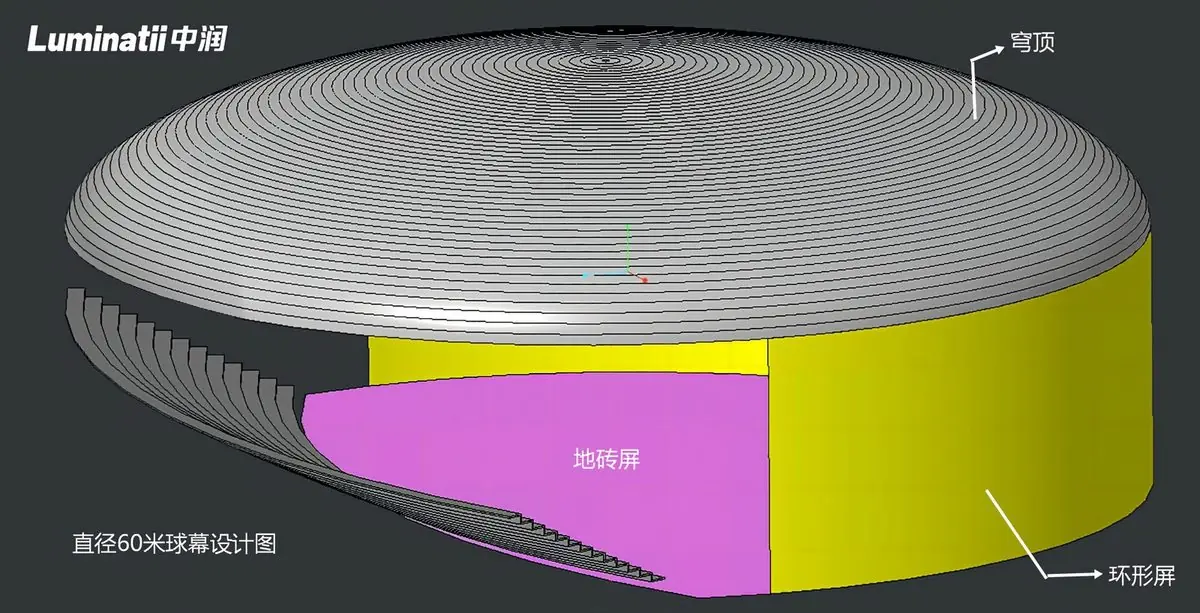
One more habit worth building: ask each supplier to state screen weight per square metre. It is a single number that quietly reveals how much thought went into the system — structure, installation and building loads all ride on it.
Bring us the competing quotes and we will walk through the differences honestly — including where our own proposal is heavier than another's and why. What turnkey delivery includes → · The dome product itself →
A straight answer: it depends on more than diameter. Pitch, sound transparency, module density, structure loads, and what the venue's building has to carry all change the engineering, and the engineering changes the cost. Two 20 m domes can differ substantially in screen area and specification — a full hemisphere versus a partial tilt, P2 versus P4. We quote against your geometry, not against a diameter table, because a diameter-based number is only useful for deleting serious suppliers from your list. The quote you get from us states exactly what is included, so you can compare it line by line.
No, and we encourage buyers to be skeptical of anyone who does. A flat per-square-metre rate hides the variables that actually move cost: trapezoidal and triangular module ratios, the percentage of sound-transparent area, connector adjustability, power and data architecture, and how much structure the design saves. A screen quoted cheaply per square metre can be expensive per project once the structure and integration are counted. We prefer to show the whole system's cost honestly.
The screen system (modules, power, data, control), the supporting steel structure designed for your site's loads, installation engineering and on-site installation support, calibration and content verification at handover, operator training, spare modules, and documentation. You can also buy the screen alone if you have your own integrator — the quote simply excludes the items you handle yourself, and we state the interface points so nothing falls between contracts.
Yes — most projects start that way. Send the diameter or the venue geometry, the intended use, the nearest viewing distance and your target opening date. We return an indicative budget allocation and the specification we would quote against. As your drawings mature, the number firms up. The important thing is that early budget figures are tied to a stated specification, so when the design changes you can see exactly why the price changed.
Because the visible image is the easy part. Behind it: whether the screen is sound-transparent (perforation ratio and acoustic design are engineered, not bought off a shelf), how the modules negotiate curvature, what the structure weighs and who carries it, whether brightness and uniformity are verified on site, and what happens in year five when a driver card fails. A quote that prices only the image is not a cheaper dome — it is an incomplete one.
Send your venue drawings, dome diameter and content plan — our engineers reply within one business day with a tailored configuration.
Get a Free Quote