Factory-direct LED Dome & Spherical Displays — Shenzhen, China
✉ enquiries@luminatii.com
☎ +86 177 0402 4640

A dome theater fails at the interfaces: steel says the screen is late, the screen says the structure moved, the audio vendor arrives last. We take the whole scope — 3D engineering, steel, LED, kinetic systems, audio, installation and training — under one contract, one schedule and one accountable party. The 60 m Kongtong dome closed in about 180 days this way.
Ask anyone who has run a multi-vendor dome project what hurt, and the answer is never the pixels. It is the seams: the steel contractor's tolerance that the screen vendor discovered on site; the audio rack that arrived after the ceiling closed; the show-control interface nobody owned until opening week. Each seam costs weeks, and some cost the opening date.
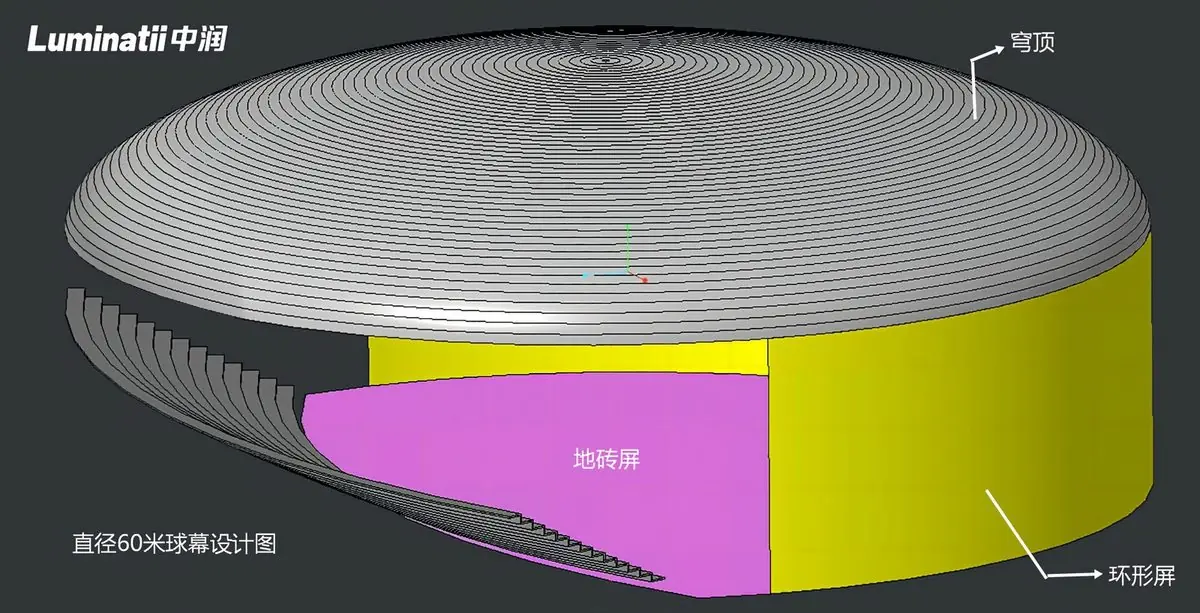
We hold one 3D engineering model for the entire venue — steel shell, screen sectors, machinery, rigging, audio and access. Every discipline designs into the same geometry, so interface conflicts are resolved in the model, not on site with a crane waiting.
Eight workstreams, one delivery team. Every line is quoted itemized, so your board sees the whole number — not a screen price with surprises attached.
| Workstream | Scope | Delivered proof |
|---|---|---|
| 3D engineering | Full-venue model: structure, screen, machinery, rigging, access | Kongtong 60 m — one model, no drawing-driven site stops |
| Steel structure | Fabrication, NDT weld inspection, witnessed material sampling | Kongtong ring lifts; documented QC records |
| LED dome screen | Manufacture, 8.5 kg/m² lightweight panels, XY-adjustable connectors | 60 m / 5,300 m²; 28 m & 22 m at Huangshi |
| Kinetic systems | Lifting screens, mechanical doors, kinetic floors, wire-flying | 8 arrays, 10 floor screens, 6 doors at Kongtong |
| Audio | Surround behind acoustic-transparent panels, < 0.02 s sync | Kongtong; Huangshi flying theater |
| Installation | Sector-by-sector methods, purpose-built access equipment | Huangshi dual delivery, zero incidents |
| Calibration | Uniformity, seam, color and audio-video sync commissioning | 8K surface calibrated across 5,300 m² |
| Training & handover | Operator training, recovery procedures, documentation | Huangshi venues run by park staff since June 2024 |
Working with an existing architect or ride-platform supplier is normal for us — their inputs enter our single model, so coordination happens in design, not in disputes. Flying theater integration →
Turnkey claims are only as good as the manufacturing behind them. Ours is a factory you can audit: panel lines, steel fabrication and module testing under one quality system, with pre-delivery testing walls where every screen sector runs before it ships.
Integration shows up in small details before it shows up in contracts. The screen's lightweight panel engineering exists because our structural engineers asked for it — lighter panels mean lighter steel, faster lifts and smaller cranes, and those savings only materialize when one team owns both numbers. The audio delay is tuned to screen latency at the factory, not negotiated between two vendors on site. Even the packing plan follows the installation sequence, so crates open in the order the crews need them. None of these details is dramatic; together they are the difference between a machine and a pile of good components — and they are impossible to buy across vendor boundaries.
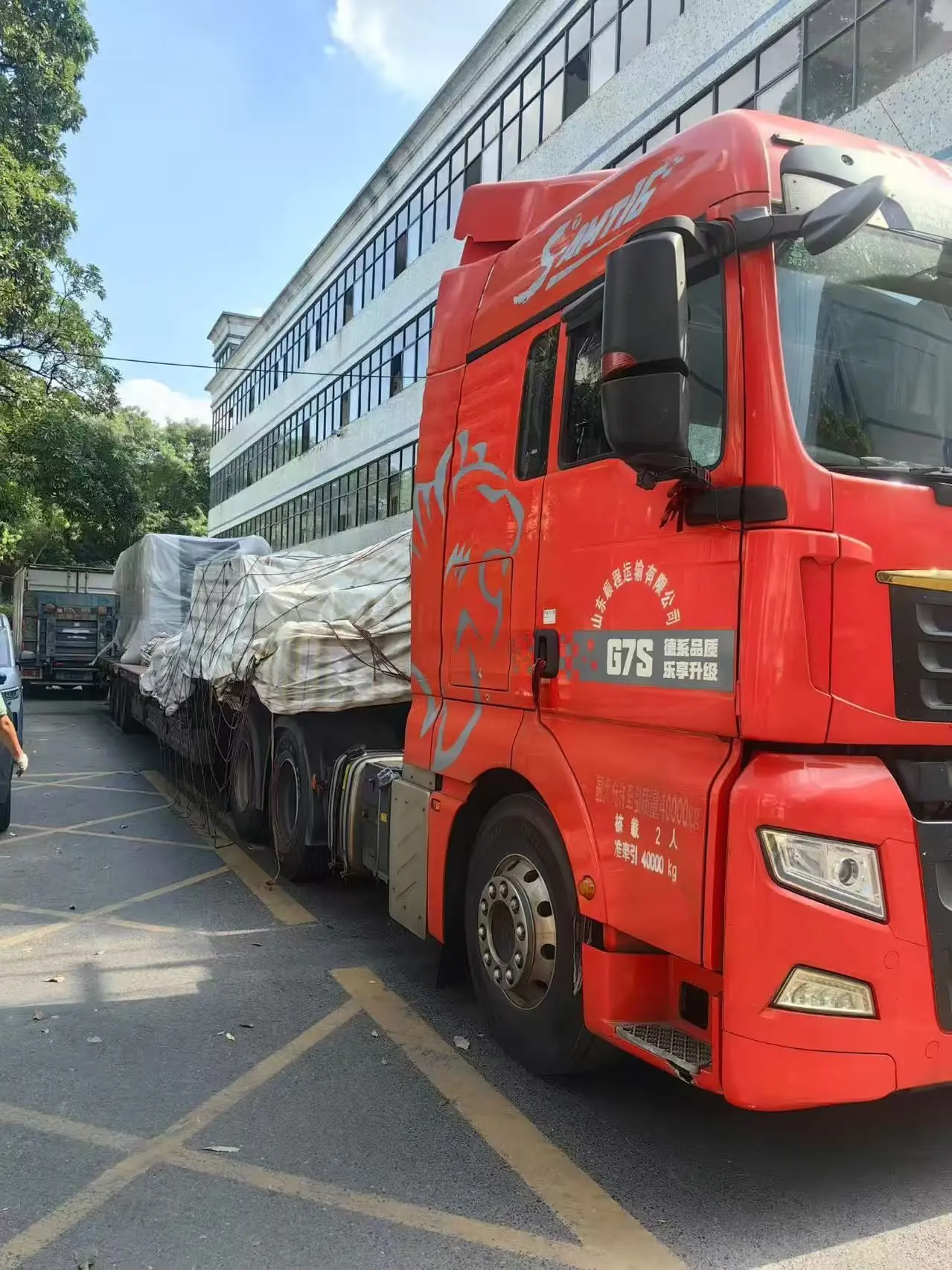
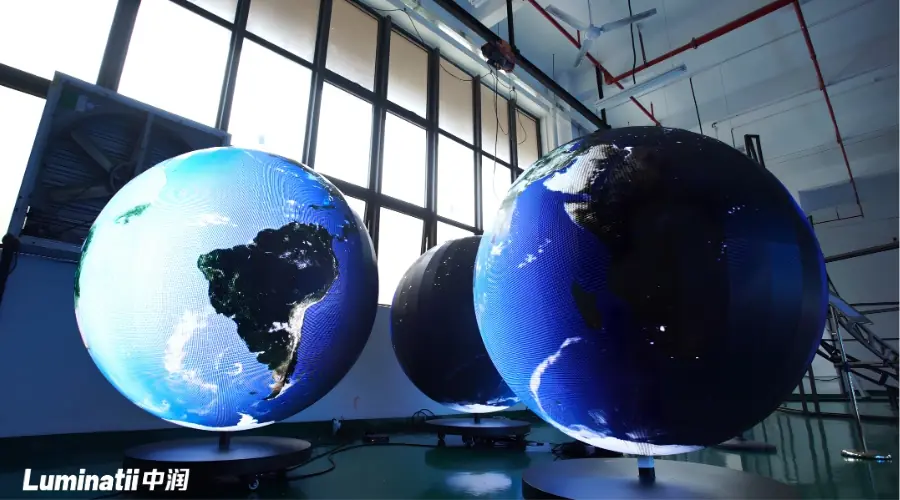
Buyers are welcome to audit the factory and, better, the delivered venues — the strongest reference in this document is a phone call or a site visit away. Dome manufacturer profile → · Sphere manufacturer profile →
The sequence below is not theory — it is the compressed version of how the Kongtong and Huangshi deliveries ran.
Site survey and loading data in, full-venue 3D model out. Diameter, format and pitch are fixed here, with your approvals path mapped onto the schedule.
Steel and panels manufacture in parallel; every screen sector runs on the test wall before packing. Long-lead items are ordered against the same critical path.
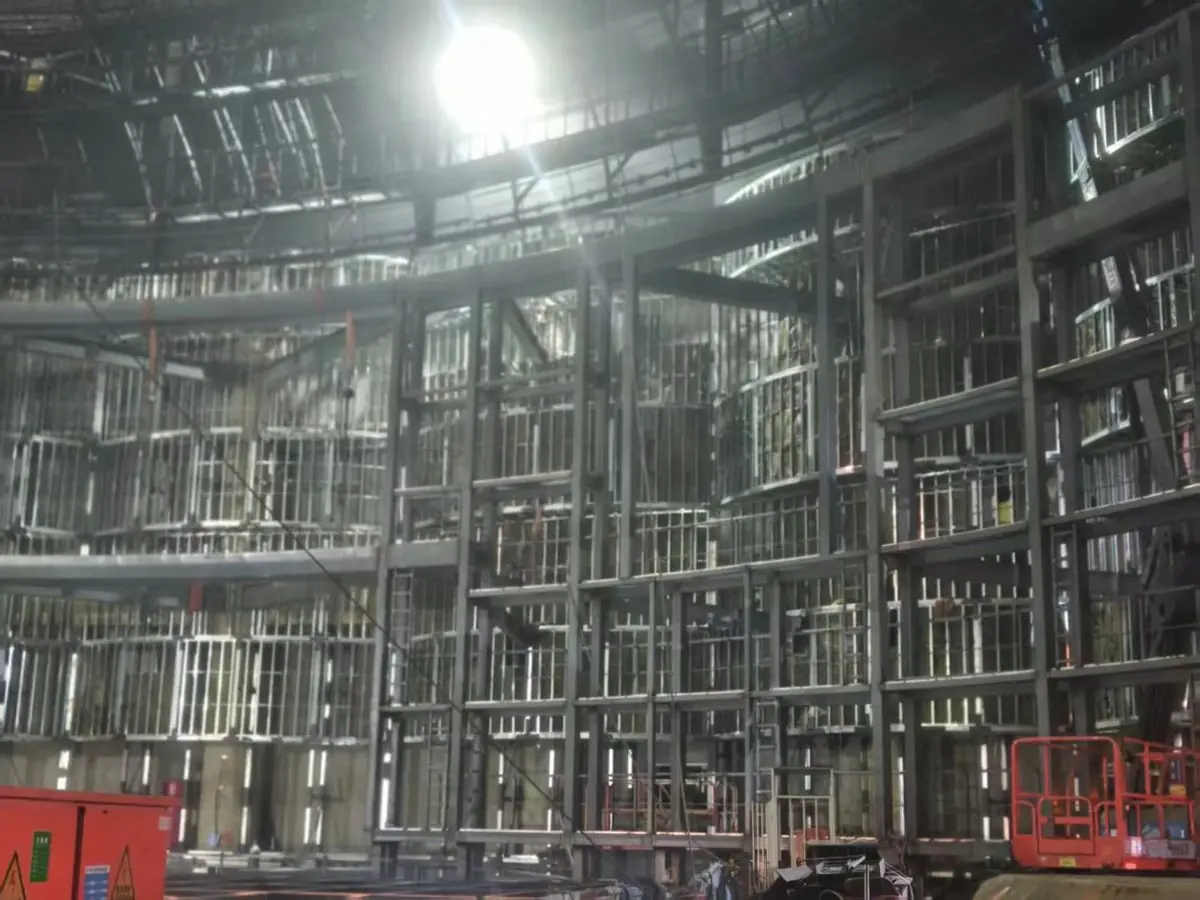
Sector-by-sector installation starts before structure fully closes — the method that let Kongtong finish in ~180 days. Calibration covers seams, uniformity, color and sync.
Your team runs the venue from day one: startup, scheduling, content swaps and recovery. Documentation, spares and remote support come with the keys.
Not every project needs full turnkey. These three situations are where splitting the scope costs real money, and where one contract pays for itself.
The moment screens move — lifting arrays, kinetic floors, mechanical doors — the screen, structure and machinery share one geometry and one timing system. Splitting that scope means three vendors designing one machine blind to each other. Kongtong is the proof of the integrated path.
If your opening date is an event — a park season, a national holiday, a leased building — parallel workstreams are the only way to hold the date. Sector-by-sector installation and factory pre-testing exist precisely so the calendar does not depend on perfect vendor sequencing.
If this is your organization's first dome, you have no in-house expert to referee vendor disputes — and a dispute is where budgets go to die. Single-source puts one experienced party in charge of every judgment call, with delivered venues you can visit before signing.
If your project is a single fixed screen inside a finished building, a screen-only contract may honestly serve you better — we will say so, and quote just that. The turnkey model earns its keep on integration-heavy venues, and we recommend it only when it does. Screen-only product range →
To quote a turnkey dome we need three things from you: the site (drawings or even a sketch), the audience (capacity per show, shows per day), and the ambition (cinema, ride, education or mechanical spectacle). Everything else — diameter, pitch, structure, schedule — comes back from us as a priced, dated plan.
Tell us the ambition and we will show you the closest delivered match, then price yours against it. Custom dome engineering → · Kongtong 60 m flagship case → · Huangshi dual-dome case → · Start with your site plan →
Site survey, 3D engineering of steel and screen as one model, steel fabrication, LED dome manufacture, kinetic and mechanical show systems, audio integration behind acoustic-transparent panels where required, on-site installation, calibration, operator training and documented handover. You add the building shell or site — we make everything inside it work as one machine.
Almost never, once you count real costs. Multi-vendor dome projects pay for interface meetings, redesign loops, schedule disputes and risk premiums from every party. A single-source model prices the whole machine once, and the 180-day Kongtong delivery shows the schedule value directly.
Site drawings or building plans, your target capacity and show ambition, and the local approvals status. From that we return a diameter, a format, a structural concept and a full delivery schedule with the quotation.
Yes. We regularly integrate with ride-platform suppliers and architects — the difference is that we hold the single 3D model, so their inputs enter one coordinated design instead of three competing ones.
Your staff. We train the operator team on startup, show scheduling and recovery procedures — including the source-failure scenario every venue eventually meets — and stay available for remote support and spares.
Send your venue drawings, dome diameter and content plan — our engineers reply within one business day with a tailored configuration.
Get a Free Quote