Factory-direct LED Dome & Spherical Displays — Shenzhen, China
✉ enquiries@luminatii.com
☎ +86 177 0402 4640

Packaging is the least visible layer of a dome screen and one of the most consequential. SMD places individual LED packages on the module surface; COB bonds the LED chips directly to the board and seals them under epoxy. Each has real advantages — and on a curved, hard-to-service screen installed high above an audience, the trade-offs shift away from where flat-screen brochures point. Here is the comparison for domes specifically, from a manufacturer that builds both around SMD and will explain why.
SMD gives each LED its own package and lens on the module surface. COB bonds bare chips to the board and seals them under a continuous resin layer. On a flat screen viewed up close, the comparison is mostly about surface properties. On a dome — curved, elevated, expected to run for a decade — the comparison moves to reliability, repair and how each route behaves behind geometry that cannot be reached easily.
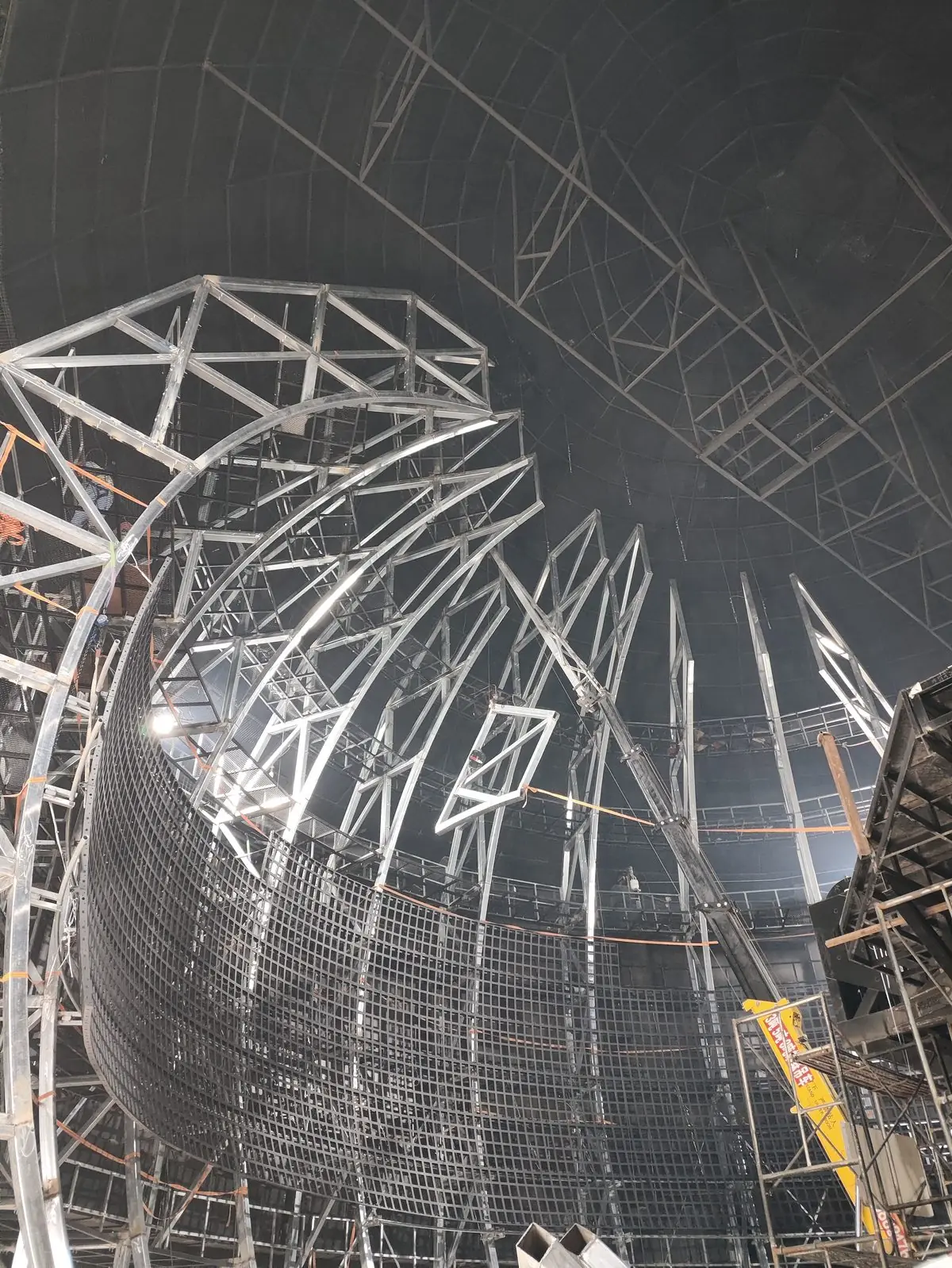
Flat-screen comparisons reward COB on surface properties. Dome-screen comparisons reward the route that stays serviceable behind geometry. Rows below are ordered by what actually bites dome operators.
| Factor | SMD | COB |
|---|---|---|
| Repair unit | Single module; one technician, front or rear access | Larger sealed panel; more material replaced per fault |
| Fault isolation | Parallel drive: one failed LED leaves neighbors intact | Sealed array; faults handled at panel granularity |
| Surface robustness | Exposed packages; fine behind maintenance access | Sealed resin; resistant to contact and touch |
| Moisture protection | Engineered at module/enclosure level (IP65 with salt-fog spec) | Protected at packaging level; still needs enclosure engineering outdoors |
| Image at dome distances | Proven from 5 m to 60 m; 7,680 Hz refresh, 16-bit grayscale | Strong close-up uniformity; large-format dome references fewer |
| Track record on domes | The installed base of large LED domes worldwide runs predominantly SMD | Growing niche; strongest in small interactive spheres |
Read the repair row twice. On a flat wall, a module swap is routine. On a dome, every repair happens behind geometry — on scaffolding or from service platforms — and the difference between "one module, one technician" and "one sealed panel, two people" compounds over a decade of operation. How dome maintenance is engineered →
A packaging claim is a component claim. Screens survive or fail at the system level, and this is where engineering effort — ours included — actually goes.
This is why the honest framing is not "SMD is better than COB" but "choose packaging as part of a service design." A COB sphere in a children's museum where hands touch the surface: sensible. A 60 m dome repaired from walkways: SMD's serviceability wins, and the delivered installed base reflects it.
A dome changes the physics a packaging choice has to survive. Three effects matter more on a curved, elevated screen than on any flat installation.
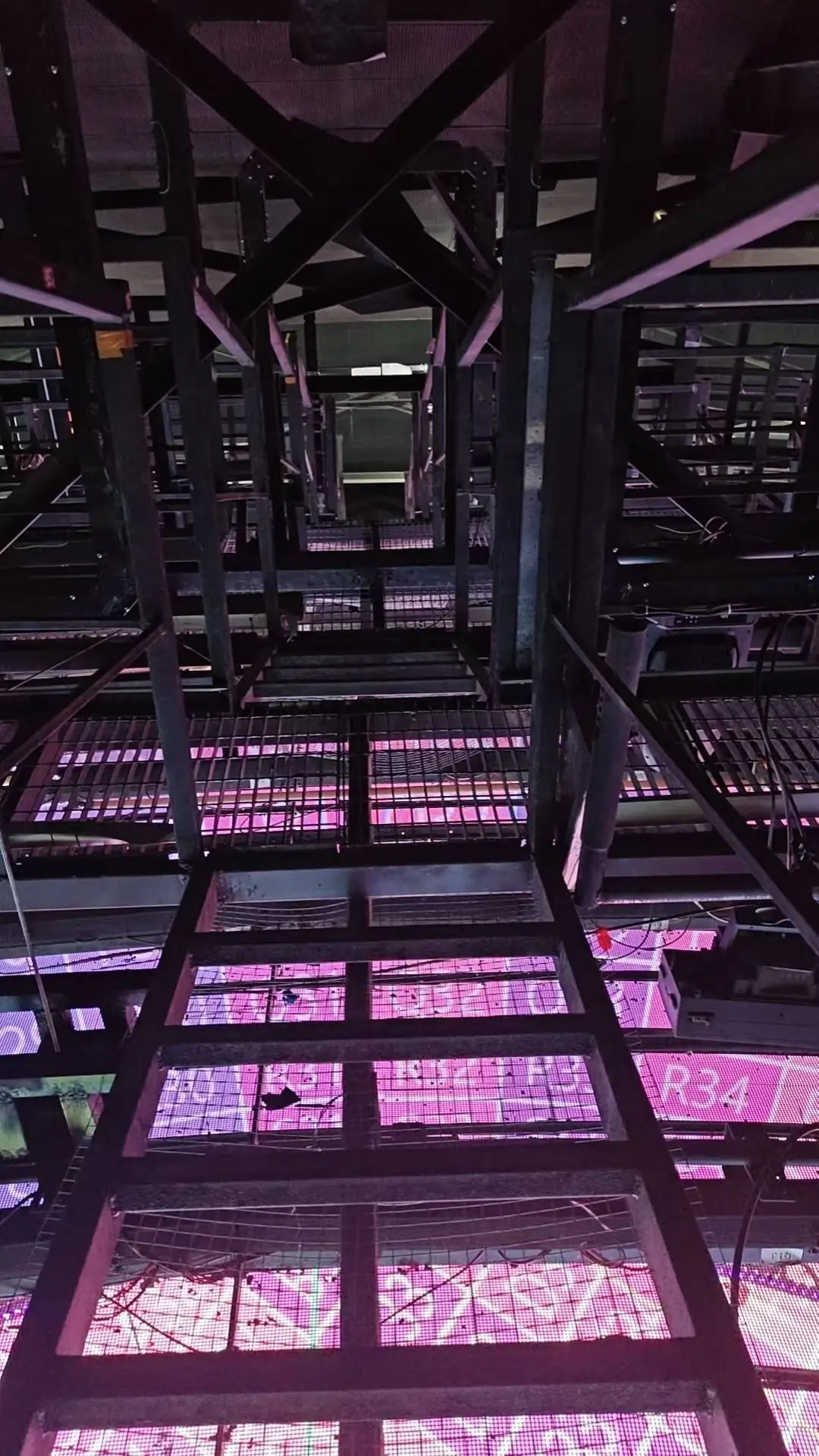
None of this forbids COB — it reframes the question. Choose packaging for the geometry it will live on and the way it will be serviced, and most dome projects land on SMD with a well-engineered system around it.
A final note for buyers comparing bids that mention both routes: insist on seeing the same measurement from both — uniformity data from an installed screen of comparable diameter, not a lab panel. Curvature exposes packaging differences that flat test benches hide, and the installed data is the only kind that predicts what your audience will see.
Where each route is genuinely the right call, based on how the screen will live — not on brochure tables.
| Installation | Lean toward | Why |
|---|---|---|
| Large immersive dome, theater or planetarium | SMD | Serviceability behind geometry, parallel drive, proven at scale |
| Outdoor landmark sphere, coastal site | SMD + engineered sealing | System-level IP65 with salt-fog materials beats packaging-level claims |
| Small interactive exhibit sphere, touched by visitors | COB worth evaluating | Sealed surface resists contact in hands-on settings |
| Very close viewing, fine text | Evaluate both | Surface uniformity matters more as distance shrinks |
Ask every bidder the four system questions — repair unit, in-situ uniformity, environmental spec, delivered references — and the packaging debate mostly answers itself. Our dome screens → · Module geometry → · Talk to the dome team →
SMD (surface-mounted device) uses discrete LED packages — each with its diodes and lens — soldered onto the module. COB (chip-on-board) mounts the bare LED chips directly onto the PCB and covers the array with a sealed epoxy layer. The visible consequence: SMD presents discrete light points; COB presents a continuous resin surface. The engineering consequences run deeper — in how each handles moisture, physical contact, heat and, critically for domes, how each is repaired.
Because serviceability dominates on a dome. Our SMD architecture supports parallel drive — a failed LED does not affect its neighbors — and front-and-rear access where a single technician swaps one module without dismantling the screen. At dome viewing distances, SMD's picture quality is fully competitive, and the maintenance model has been proven across projects from 5 m to 60 m. COB's sealed surface is attractive, but repairing a sealed array means replacing larger units, and on a curved screen installed overhead, that trade costs more than it saves in most venues.
COB's strengths are physical robustness and a sealed surface: no exposed packages to catch, dent or corrode, which is attractive for touch-prone installations, very close viewing, and harsh environments. Small-format spheres in interactive exhibits — where visitors touch the surface — are a legitimate COB use case. For large immersive domes viewed from meters away, those advantages matter less than serviceability and proven brightness behavior.
The sealed resin surface does protect the LED array directly, which is why COB is often marketed on moisture and corrosion resistance. Our answer at the system level: outdoor protection is engineered across the module — sealing, connector design, salt-fog-rated materials and drainage — not delegated to packaging alone. Our outdoor screens are specified IP65 with salt-fog protection and verified in testing. Well-engineered SMD survives coastal service; poorly-sealed COB does not make a screen outdoor-grade by itself.
Four things. First, repair unit: what is replaced when LEDs fail — a module or a sealed panel — and who does it. Second, uniformity verification: is brightness and color (≤5% / ≤2ΔE on our screens) measured on the assembled sphere, in situ. Third, environment spec: is IP65 with salt-fog protection stated in materials, not implied by packaging. Fourth, real references: domes of comparable diameter actually delivered and operating. Packaging is a component decision; these four are system decisions.
Send your venue drawings, dome diameter and content plan — our engineers reply within one business day with a tailored configuration.
Get a Free Quote