Factory-direct LED Dome & Spherical Displays — Shenzhen, China
✉ enquiries@luminatii.com
☎ +86 177 0402 4640

Every dome project reaches this fork: a projected image on a coated shell, or a direct view LED dome where the surface is the display. The right answer depends on how the venue operates, not on which technology is newer. Here is the comparison we give clients before they commit.
Almost every practical difference between an LED dome and a projection dome follows from that single physical fact.
A projection dome is a screen. Light from one or more projectors hits a coated surface and bounces toward the audience. Everything about the venue is organized around protecting that light path: the shell coating, the blackout, the projector position, the cooling, the alignment. When the alignment drifts, the whole dome drifts with it.
This approach has real advantages. The projector can be replaced independently of the shell, the resolution is not fixed by the module pitch, and for a small dome in a controlled dark room the entry cost is lower.
A direct view LED dome has no projector. The shell is made of LED modules that emit light toward the audience, so brightness, contrast and color are properties of the surface itself. There is nothing to align across the room, nothing to shield from ambient light, and no lamp to age.
The trade-off moves to the front end: the dome becomes a structure plus a display plus a content pipeline, and the initial investment is higher for the same diameter.
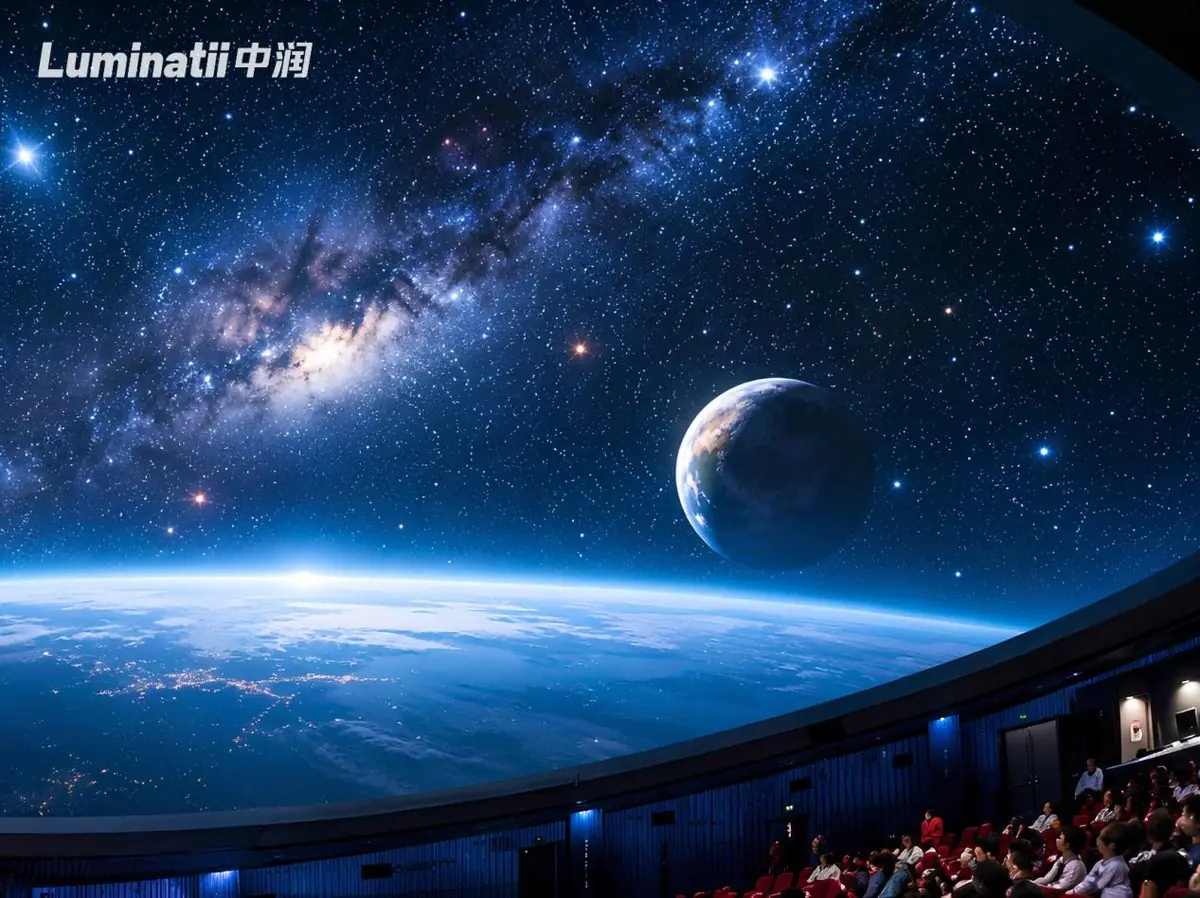
This is the table we walk through with clients in the first meeting. It is deliberately about operation, not about specifications on a brochure.
| Criterion | LED dome | Projection dome |
|---|---|---|
| Brightness | Emissive, 1,200 nit on the screen surface | Reflected, falls off with ambient light and screen gain |
| Contrast | 10,000:1, set by the LED and the driver | Set by the room; ambient light lifts the black level |
| Room lighting | Works with partial house lights | Requires near-total darkness |
| Alignment | Fixed at installation, no optical realignment | Multi-projector blending needs periodic recalibration |
| Consumables | None; LED lifetime over 100,000 hours | Lamps or laser sources age and are replaced |
| Failure mode | Module-level; one module can be swapped from the front | System-level; a failed projector takes a section of the dome |
| Resolution | Set by pixel pitch and dome size, up to 8K on our 5,300 m² project | Set by projector count and blending |
| Structure | Steel shell plus display, designed together | Shell plus projector mounts and optical path |
| Initial cost | Higher for the same diameter | Lower for the same diameter |
| Ten-year cost | Power, spares and content; no lamp programme | Sources, recalibration and dark-room discipline |
For the engineering side of the same comparison — pixel pitch, viewing distance and how the modules close on a curve — see LED dome pixel pitch and our technical comparison of dome technologies.
We manufacture LED domes, and we still tell clients to use projection when the project genuinely fits it. Recommending the wrong technology costs us more in the long run than losing a sale.
If the venue is a dedicated astronomy dome running star fields in near-total darkness, a projected sky can look excellent, and the projector can be upgraded later without touching the shell.
At exhibit scale, with a controlled room and short daily operating hours, the lower entry cost of a projector is a legitimate reason to choose it. LED becomes compelling once the dome is large enough that projector count multiplies.
Where the dome has to move every season, a projection setup on a temporary shell is easier to dismantle than a steel-and-module LED structure.
The moment daily show counts rise, the calculation changes. A dome running eight shows a day, every day, needs a surface that does not drift, does not need a dark-room ritual before every session, and does not consume lamps on a schedule. That is the operating profile of most tourism, theme park and science center domes — which is why most of our projects are LED.
Ambient light is the other decisive factor. A dome inside a mall, a museum with an open circulation route, or a venue with fire-egress lighting that cannot be fully dimmed will never give a projection system a fair chance.
The term appears in every tender document and is rarely defined. Here is the definition we work to.
A direct view LED dome is a hemispherical or partially spherical display assembled from LED modules that face the audience directly. There is no projection surface, no projector array and no optical path. The image exists on the dome itself.
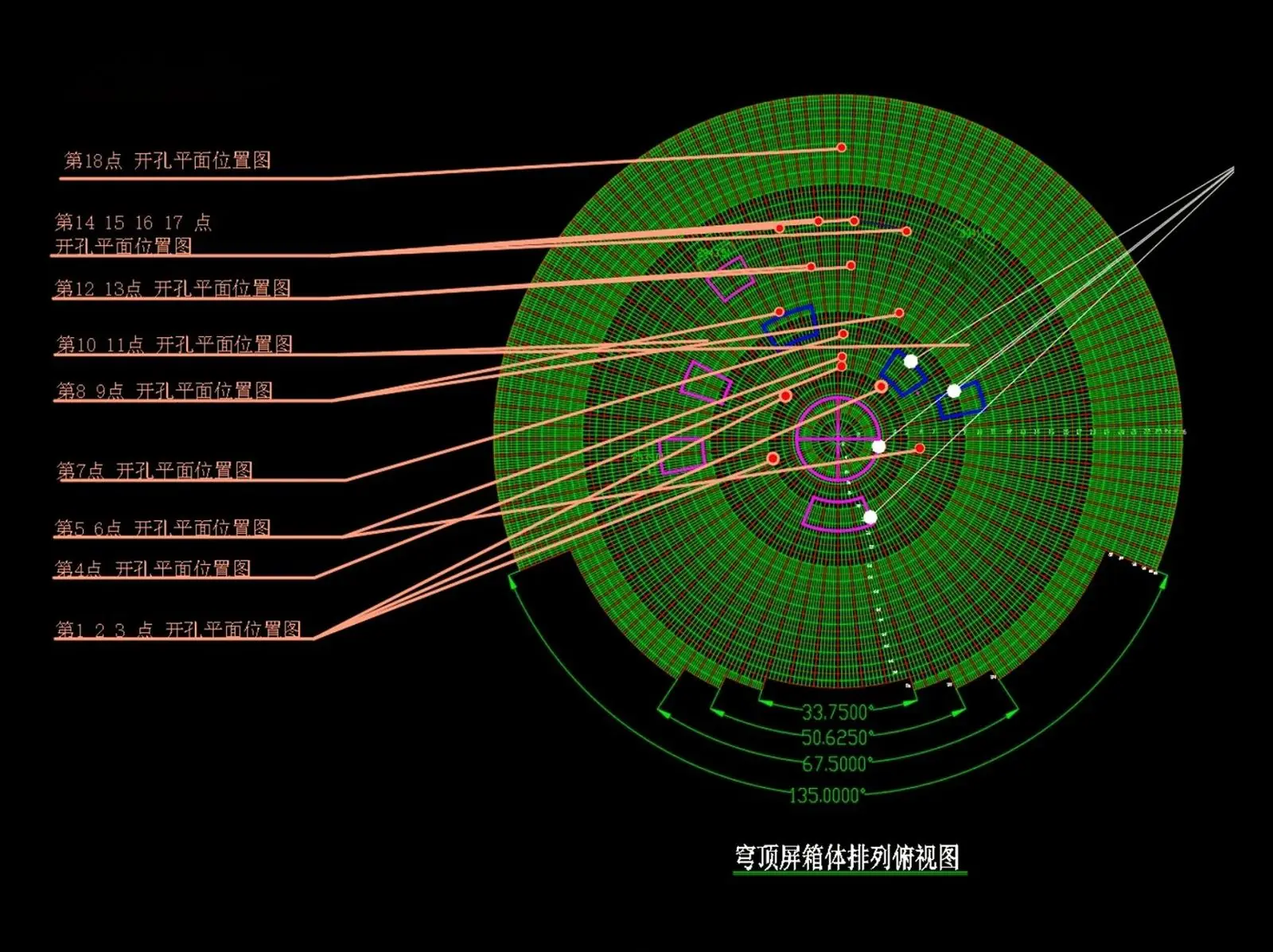
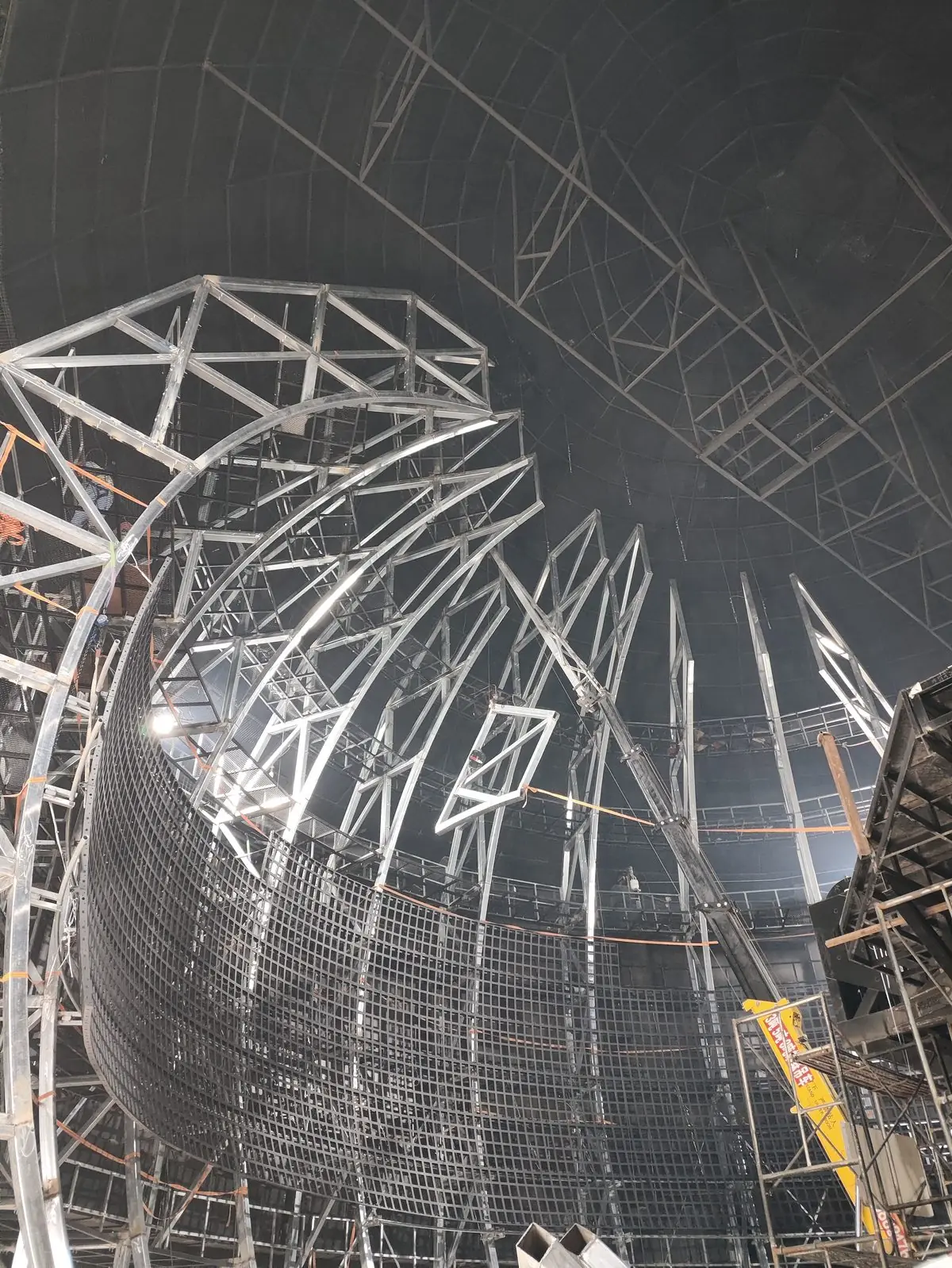
Three engineering conditions have to be met for it to work. The modules must be cut to the geometry of each latitude band, they must be adjustable in angle so the surface closes without faceting, and the structure must hold tolerance tightly enough that the seams stay closed through seasonal movement.
An LED dome and a projection dome are rarely compared like for like, because the quotes cover different things. Normalize the scope first.
| Cost line | LED dome | Projection dome |
|---|---|---|
| Display surface | LED modules and cabinets | Coated projection screen |
| Image source | Playback and mapping system | Projectors, mounts, blending software |
| Structure | Engineered steel shell with display interface | Shell with projector mounting and optical clearance |
| Room treatment | Standard | Blackout, light control, dark surfaces |
| Cooling and power | 150 W/m² at full white peak | Projector cooling plus lamp or laser power |
| Recurring cost | Spares and cleaning | Sources, filters, recalibration labor |
We do not publish prices, because two 20 m domes can differ by a factor of two on structure and access alone. What we do is quote the full scope line by line, so a projection quote can be compared against it on the same basis. What drives LED dome screen cost →
Answer these before the first design meeting and the technology choice usually makes itself.
If you are still at the feasibility stage, send the room dimensions, the ceiling height and the intended show schedule. We will tell you which technology fits — including when it is not ours.
Ask for a technology recommendation → · How a turnkey dome project runs →
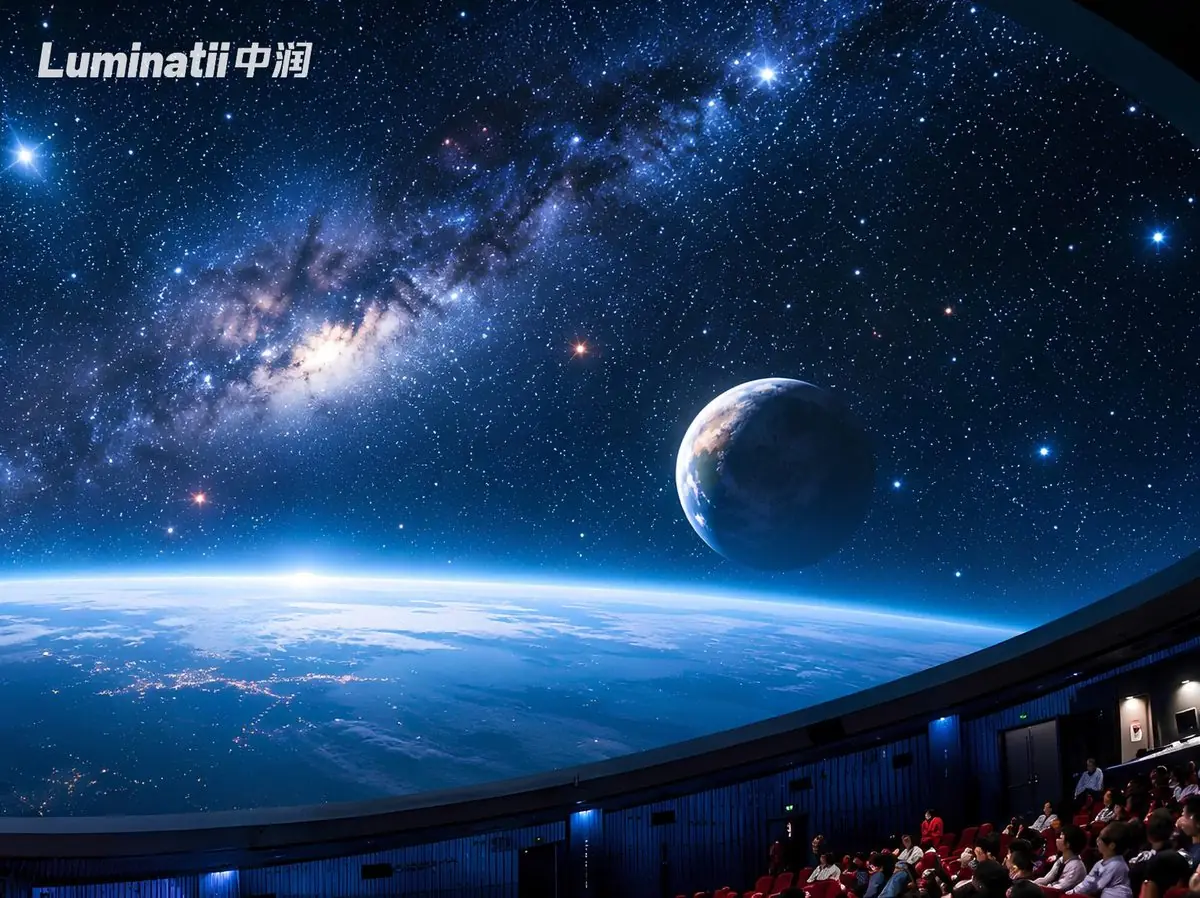
Yes, by a wide margin, and the difference is structural rather than incremental. A projection dome reflects light onto a coated surface, so the image loses brightness the moment ambient light enters the room. An LED dome emits its own light at 1,200 nit on the screen surface with 10,000:1 contrast, so the picture stays readable with the house lights partly up and with daylight leaking in.
The initial purchase of a projection system is usually lower for the same diameter, and the initial purchase of an LED dome is higher. Over a decade of daily operation the comparison often reverses, because a projected dome needs lamp or laser replacement, recurring recalibration and a strict dark-room discipline, while an LED dome runs for over 100,000 hours with module-level service. We quote both structures honestly and let the venue's operating hours decide.
Yes, and it is one of the most common requests we get. The building already exists, the seating is already there and the dome shell may already be in place. We survey the structure, the clear height, the power capacity and the access route, then engineer the LED shell and its support frame to fit the existing room rather than the other way around.
No. That is the main operational difference. A projection dome is designed around darkness; an LED dome works with partial house lighting, which matters for audience safety and for venues that run other activities in the same hall.
A direct view LED dome is a dome-shaped display built from LED modules that emit light directly toward the audience, with no projector and no projection screen. The curved surface is tiled with trapezoid and triangular modules whose angles are adjusted per band so the image stays continuous across the full hemisphere.
Yes. Some venues use an LED dome for the main show and keep projection for a separate planetarium or presentation mode. Others use LED for the lower dome and projection for a specialized astronomy dome. Hybrid designs are engineered case by case rather than offered as a standard package.
Send your venue drawings, dome diameter and content plan — our engineers reply within one business day with a tailored configuration.
Get a Free Quote