Factory-direct LED Dome & Spherical Displays — Shenzhen, China
✉ enquiries@luminatii.com
☎ +86 177 0402 4640

VR delivers immersion to one person at a time through a headset. A dome theater delivers it to an entire audience at once, through a screen that closes the visual field overhead. Both are legitimate answers to the same demand — the question is which business you are running: an attraction that moves crowds through a shared experience, or stations that isolate visitors in individual ones. This page compares the two honestly, including where VR genuinely wins.
Both formats sell the same promise — leave the room behind. But a dome sells it to 80 people at once and a headset sells it to one. Every practical difference below — throughput, comfort, hygiene, staffing, content economics — follows from that split.
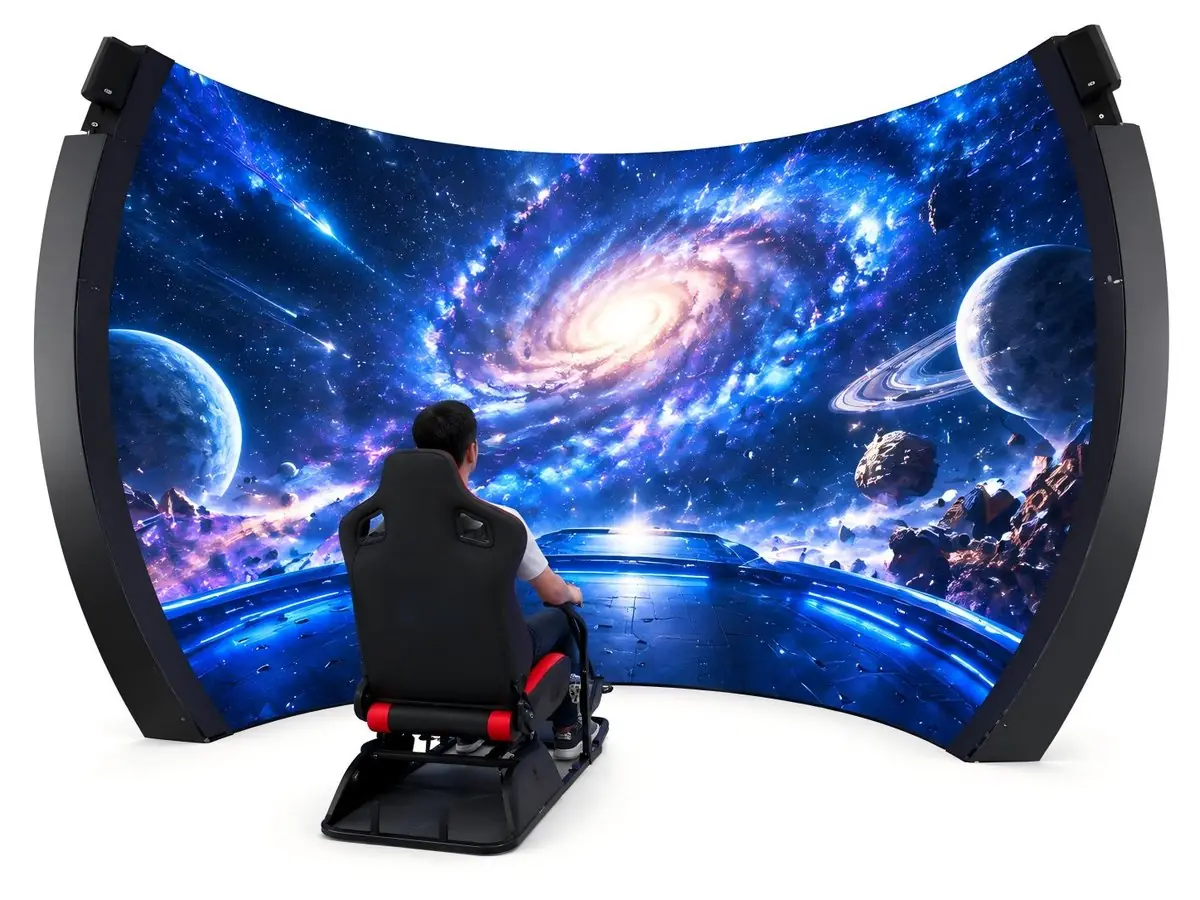
Neither format wins on every row. The right question is which rows your business actually depends on.
| Factor | Dome theater | VR headsets |
|---|---|---|
| Visual coverage | Closes the field overhead; shared canvas | Full per-user coverage; interactive depth |
| Throughput | Whole audience per show (80+ per session; 480+/hour class) | Scales with headset count; sanitation between sessions |
| Comfort | Nothing on the visitor; reclined seating | Headset weight, session-length limits, motion sensitivity |
| Hygiene | Visitor touches nothing | Daily sanitation labor; liner and strap wear |
| Shared experience | The group reacts together — laughter, gasps, applause | Isolated; shared only through footage afterward |
| Maintenance | Screen and systems; engineered access | Fleet of devices with finite lives and battery cycles |
The throughput row deserves emphasis because it quietly decides the business model. Attractions live on visitors-per-hour; a format that isolates each visitor into a private session has to multiply hardware to multiply revenue, while a dome multiplies revenue by filling seats. Flying theater domes →
One more operational note belongs beside the ledger: staffing. A dome runs with the venue's existing front-of-house team — ushering, seating, one show operator. A VR fleet adds technical staffing per station during peak hours, because headsets need fitting, batteries and supervision. Neither is prohibitive, but the dome's staffing profile scales with the building rather than with the visitor count, which is what high-traffic operators notice on their rosters.
A dome cannot match a headset's per-user coverage — and does not need to. What it must deliver is an image convincing enough at venue scale that the room disappears. Four things decide whether it does.
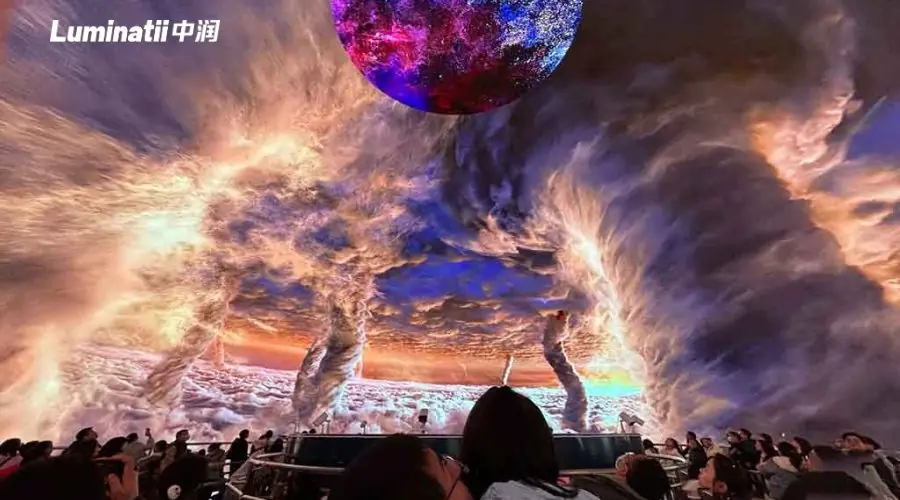
Get those four right and the dome delivers what VR promises in a different currency: presence shared with a full room, with nothing worn on the face.
Purchase price is the smallest line in the five-year ledger. What follows is the cost anatomy of each format as operators actually experience it — qualitative, because every venue differs, but consistent in shape.
The strategic difference: a dome is a fixed asset whose utilization you grow; a VR fleet is a consumable asset you continuously renew. High-traffic venues feel that difference within the first year. Low-traffic, high-ticket venues may never feel it at all — which is exactly why neither format is universally right.
A decision table built from how venues actually deploy both formats.
| Your brief says | Lean toward | Why |
|---|---|---|
| "High-throughput signature attraction" | Dome | Whole audience per show; per-visitor cost falls as seats fill |
| "Premium interactive sessions, low volume" | VR | Interactivity and per-session pricing favor small fleets |
| "Families, tour groups, school visits" | Dome | Shared experience, no headset hygiene concerns, all ages |
| "Enthusiast gamers / esports crossover" | VR | Interaction depth is the product |
| "Anchor attraction plus premium add-on" | Both | Dome fills the schedule; VR monetizes enthusiasts |
We build domes, not headsets — so read the VR column here as genuine respect, not straw-manning. For venues whose economics run on visitors per hour, the dome remains the strongest immersive machine per square metre of building. LED dome screens → · A dual-dome park in operation → · Talk to the dome team →
It offers different immersion. A high-end headset covers more of the visual field than any dome and adds interaction and parallax that a shared screen cannot. But it charges for that in comfort and throughput: headset weight and fatigue limit session length, motion can trigger discomfort in a meaningful share of users, and each visitor is sealed into a private experience. A dome trades individual interactivity for a field of view that closes overhead with zero equipment on the visitor's face — and for an audience that shares the moment.
This is the operational heart of the decision. A dome theater runs an entire audience per show — a typical flying-theater configuration runs 80 guests per session and 480 guests per hour — and every seat experiences the full experience simultaneously. VR stations throughput scales with headset count: every additional visitor-hour requires another headset, another operator minute, another sanitation cycle and another charged battery. For high-traffic venues, the dome's per-visitor operating cost usually wins; for low-traffic premium experiences, VR's per-session pricing can work.
A dome's maintenance target is the screen and systems — engineered for front-and-rear access and single-person module swaps, with nothing touching the visitor. VR headsets sit on every visitor's face all day: liners, sanitation between sessions, strap wear and battery cycles are daily operating reality, and headsets have finite service lives measured in years. Venue operators we speak with consistently cite sanitation labor as the hidden cost of headset fleets.
Increasingly, yes — and it is the most interesting answer. Domes and headset-based experiences attract overlapping audiences with different willingness-to-wait: families and tour groups fill dome shows; enthusiasts pay premiums for interactive sessions. Some venues run both, with the dome as the high-throughput anchor and VR as a premium add-on. The technologies are complementary at the business level even though they compete for the same word: "immersive."
Both need professional content, but the economics differ. Dome shows are produced for a shared canvas and amortized across every seat and every show — a single production serves the whole venue for years, and the same film can license across many domes. VR content must be authored for interaction and typically offers shorter engagement per piece; it is updated more often to keep repeat visitors interested. Content strategy should be part of the format decision, not an afterthought.
Send your venue drawings, dome diameter and content plan — our engineers reply within one business day with a tailored configuration.
Get a Free Quote