Factory-direct LED Dome & Spherical Displays — Shenzhen, China
✉ enquiries@luminatii.com
☎ +86 177 0402 4640

Buyers ask for a digital dome, an immersive dome, a video dome or a full dome display. They usually mean the same product. What actually differs is geometry, environment and how the surface closes — so that is how this page is organized.
Search for an LED dome display system, an LED video dome, an LED digital dome, an LED immersive dome an LED full dome display or a panoramic LED dome and you will find the same class of product described six different ways. The vocabulary comes from whichever system the buyer is replacing.
LED video dome is the phrase used by people moving off projection: the dome used to be a video surface fed by projectors, and the LED version inherits the name. LED digital dome comes from the planetarium world, where a digital dome is a dome with a digital image source. Full dome LED display and full dome cinema come from the fulldome content world, where a show is authored for the whole 180° field. Panoramic LED dome and LED immersive dome come from attractions and exhibitions, where the selling point is the sensation rather than the technology.
A digital dome display is the planetarium-industry name for the same surface, and LED immersive screen is what attraction developers call it when the room, not the screen, is the product. Underneath the language, the product is an LED screen whose modules are built on a spherical geometry and mounted on a structural shell: an LED dome screen. Calling it an LED hemispherical display tells you the coverage is 180°. Calling it an LED dome theater screen tells you who sits in front of it. And an LED dome screen system is the same surface bought as a package, with structure, playback and installation in one scope. None of the names changes how it is engineered.
This matters when you write a specification. If the tender says "video dome" and the supplier quotes a flat curved wall, the word was doing work that the geometry was not.
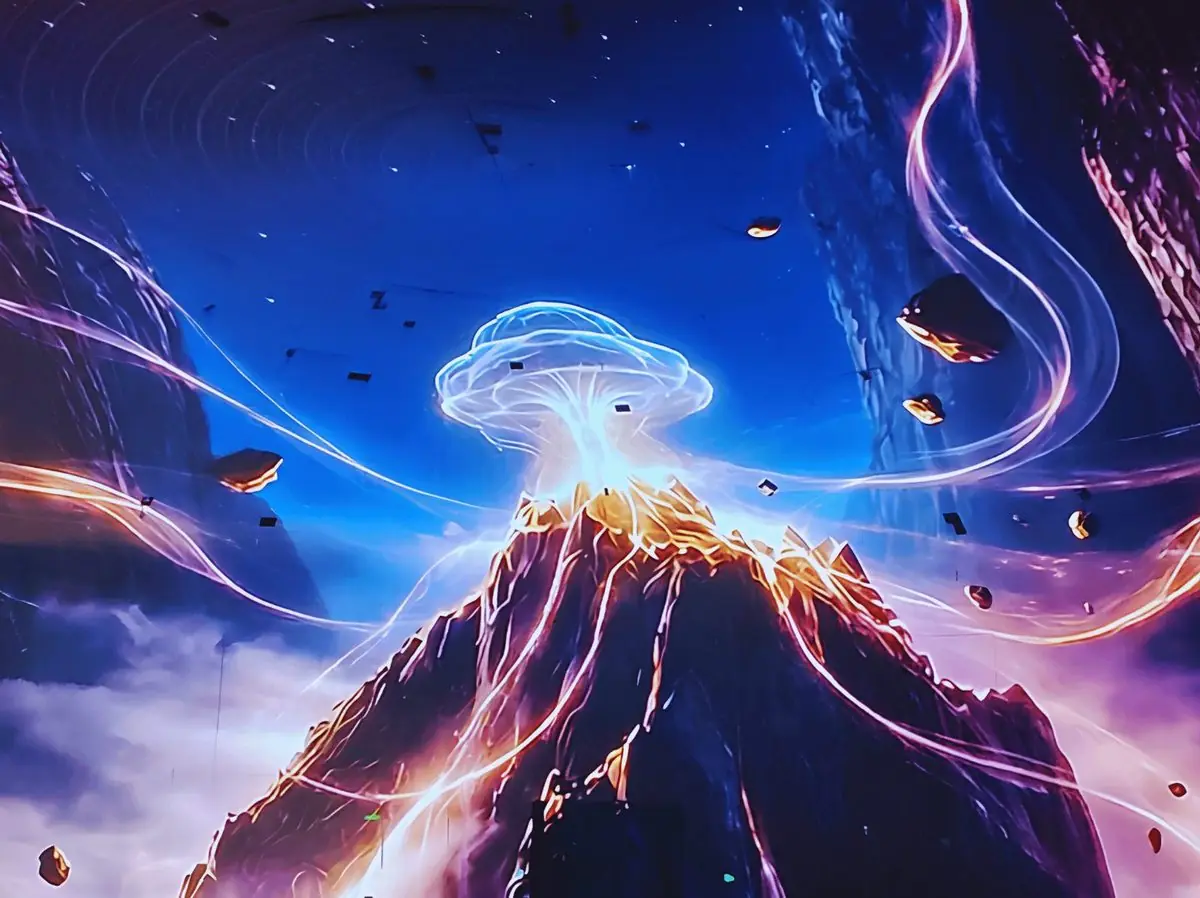
Each row below is a real configuration we engineer, not a marketing variant. The last column is the part that changes the engineering.
| Type | Geometry | Where it fits | What changes technically |
|---|---|---|---|
| Indoor hemispherical | 180°, seated audience below the equator | Planetariums, dome cinemas, science centers | Weight and structure ties into an existing roof; acoustic transparency if audio sits behind the screen |
| Full dome interior | Beyond 180°, audience inside the sphere | 720° theaters, dome-in-dome attractions | Pole closure, band count, floor interface and service access all increase |
| Outdoor dome | Any coverage, exposed shell | Landmarks, theme parks, coastal sites | IP65 modules, salt spray and humidity protection, waterproof structure detailing |
| Curved dome segment | Partial cap, not a full hemisphere | Retrofits, stage backdrops, simulators | Cut lines and edge finishing; the open edge becomes a design element |
| Modular dome | Bands of interchangeable modules | Large spans, long-life venues | Module taper by latitude, address mapping per band, spares commonality |
| Seamless dome | Same geometry, tighter tolerance | Camera-facing and premium venues | XY two-way adjustable connectors, tolerance report before screen start |
| 3D dome | Dome plus active or passive 3D pipeline | Attractions, specialty cinema | Refresh headroom, sync between left and right eye, content mastered in 3D |
| Geodesic retrofit | Existing triangular frame | Domes with a shell already standing | Mounting adapters to the existing nodes, plus a survey of what is actually round |
Diameter is a separate decision from type. How dome diameter maps to area, clear height and use →
The single most consequential split is whether the screen sees weather. It changes the module, the structure and the maintenance plan.
An indoor LED dome screen lives or dies by two constraints: the roof you already have and the audio you want to keep. A sound-transparent dome is built from a perforated screen with 50% open area and under 5% sound transmission loss, so the surround system sits behind the image instead of around it. Screen weight matters because it hangs from an existing or new shell: the 60 m Kongtong Island dome runs at 8.5 kg/m² where conventional builds run 15–25 kg/m².
An outdoor LED dome screen becomes a facade. IP65 sealing, salt-spray and humidity protection, drainage detailing and a structure designed for wind and thermal movement all come before picture quality. Brightness has to survive daylight, which is a power and cooling question as much as an LED question. Outdoor and IP65 engineering →
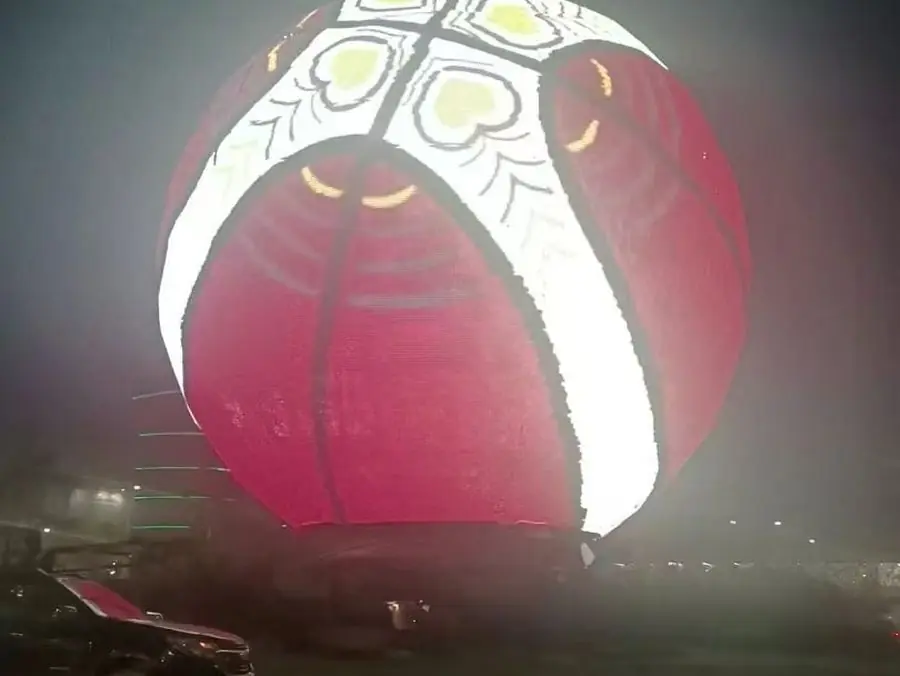
Three words that get used interchangeably in RFQs and mean three different surfaces.
A true hemisphere: an LED hemispherical display covers the upper half of a sphere and meets the floor or a low wall at the equator. This is the default for planetariums and dome cinemas because it matches a seated audience's field of view.
A curved LED dome screen that stops before the equator. Cheaper per seat, easier to fit into a low room, and it leaves the front of the venue open for a stage or a ride vehicle.
Coverage past the equator, with the audience inside. Band count, pole closure and access walkways dominate the design, and content has to be mapped in spherical coordinates rather than projected.
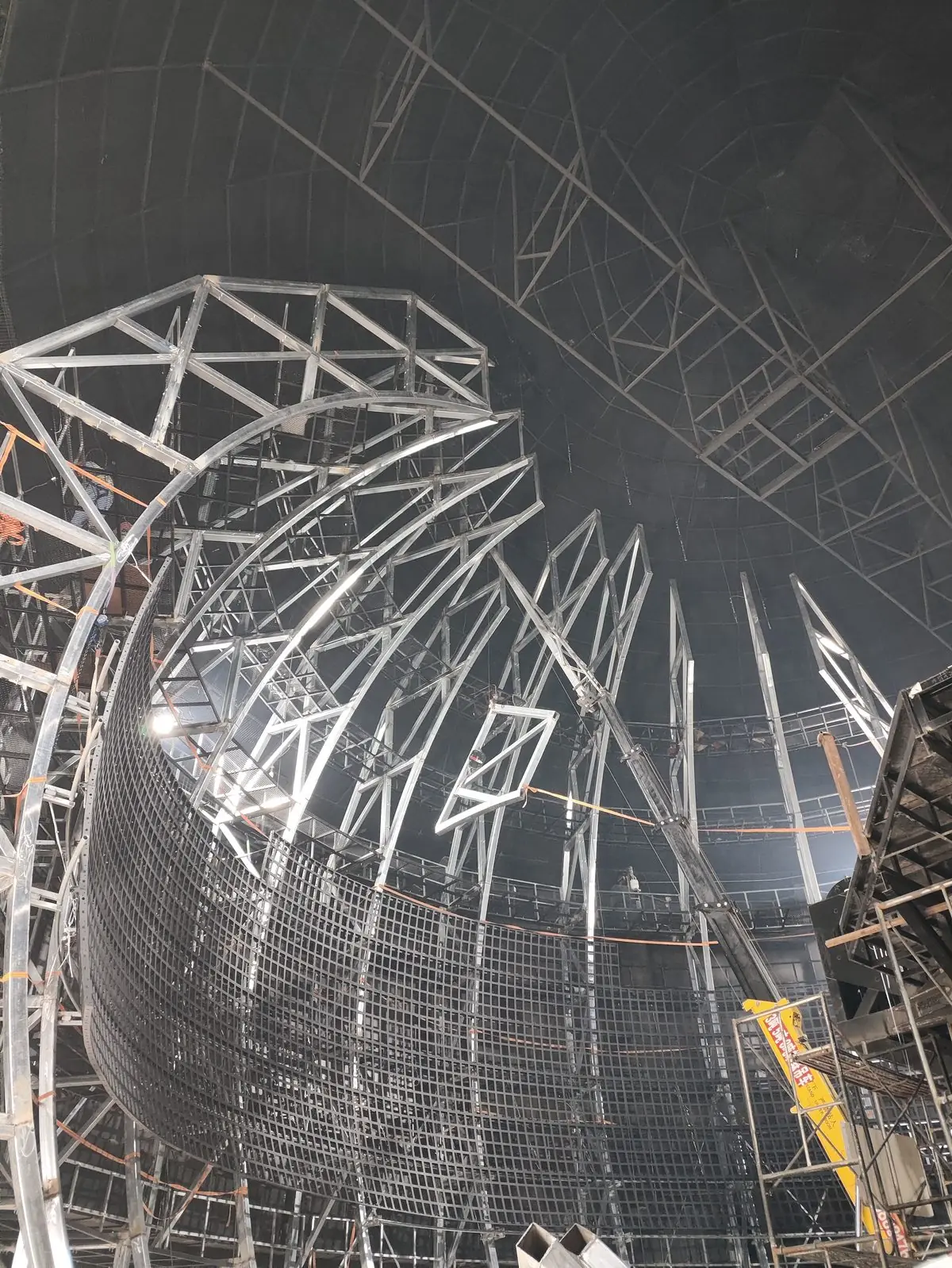
A curved LED wall bends in one axis: every cabinet is identical and the radius is the same at every height. A dome bends in two axes, so the horizontal circumference shrinks as you climb toward the pole. Modules have to taper, and the closer to the pole, the sharper the taper.
That is why we build domes from triangular and trapezoidal modules with independently adjustable angles rather than from rectangular cabinets. It is also why the seam pattern on a dome follows latitude bands instead of a grid. Trapezoidal and triangular modules →
Coverage, diameter and viewing distance decide the pixel pitch together. Choosing a dome pixel pitch →
"Seamless" is the most over-promised word in this category. On a dome it is a measurable tolerance, not an adjective.
A modular LED dome screen is one where the surface is assembled from interchangeable bands of modules, each labeled with its position and each replaceable on its own. The practical benefit appears at year five, not at handover: a failed module is swapped front and rear by one technician instead of triggering a screen-wide intervention.
A seamless LED dome display is defined by the tolerance that comes out of the interface between screen and structure. Our connectors are XY two-way adjustable, which absorbs accumulated steel tolerance in two directions; the structure is surveyed and a tolerance report issued before the first module goes up. On the Kongtong Island project that discipline is what allowed 5,300 m² of screen to close without visible seams at 60 m diameter.
Two more things follow from modularity: brightness and chroma are calibrated band by band to within 5% uniformity deviation and 2ΔE chroma deviation, and the address map is written per module so a replacement keeps its identity in the playback system.
Dome calibration and mapping → · Steel structure and tolerance →
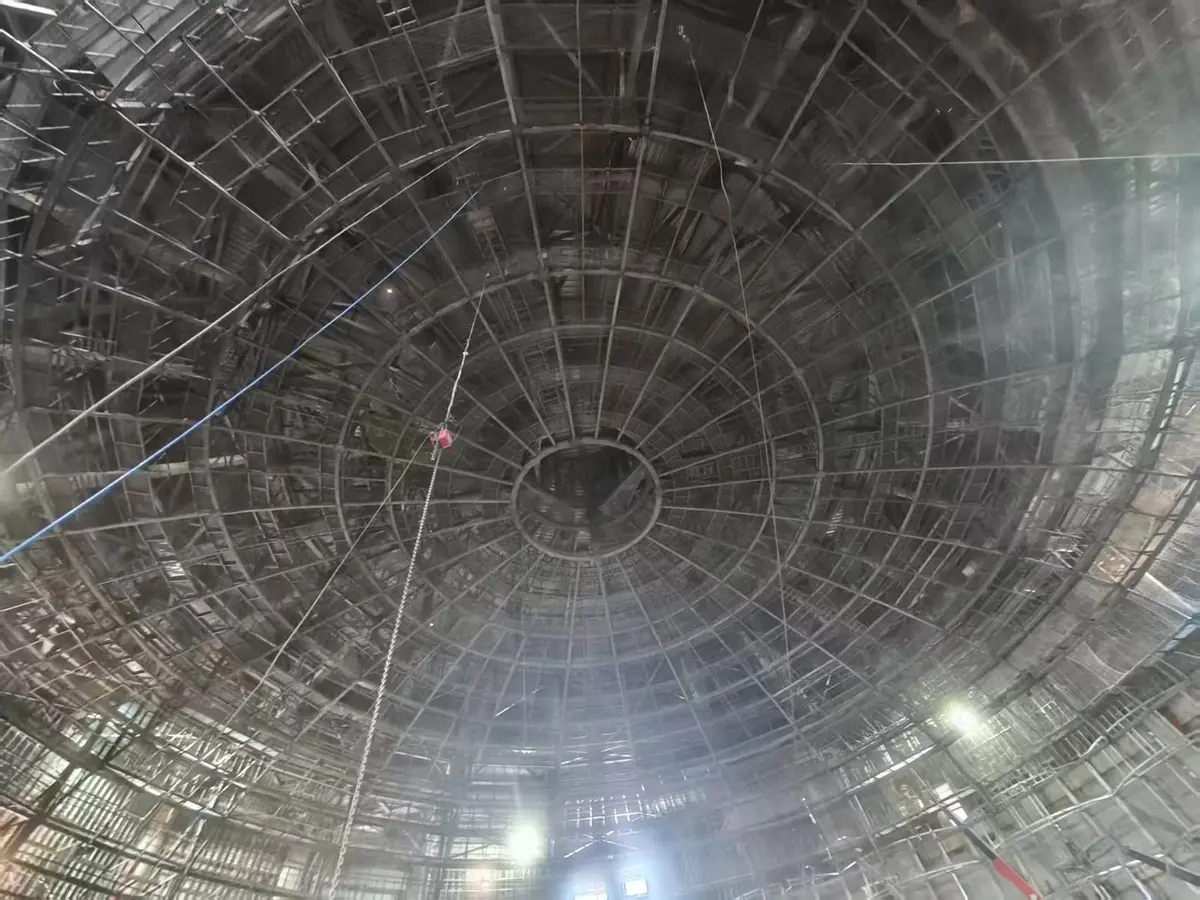
Two configurations that come up constantly in renovation projects, for opposite reasons.
A 3D LED dome screen is a dome plus a stereo pipeline. The screen itself is the same product; what changes is refresh headroom, the sync between left- and right-eye frames, and the fact that the content has to be mastered in 3D rather than converted. At 7,680 Hz refresh and 16-bit grayscale processing the display has the headroom, but the glasses, the emitter placement and the seating geometry decide whether the effect works.
When a geodesic dome already stands, the screen adapts to it rather than the other way round. The job starts with a survey of the nodes and the actual radius, which is rarely the nominal one after years of settlement. We then design mounting adapters to the existing frame and treat the triangular facets as fixed geometry that the modules must respect — which is what an LED geodesic dome display means in practice.
Retrofit is usually cheaper than new build and usually less predictable, because the existing structure sets tolerances you did not choose. Budget a survey before you budget a screen.
Custom dome engineering → · Installation process and site requirements →
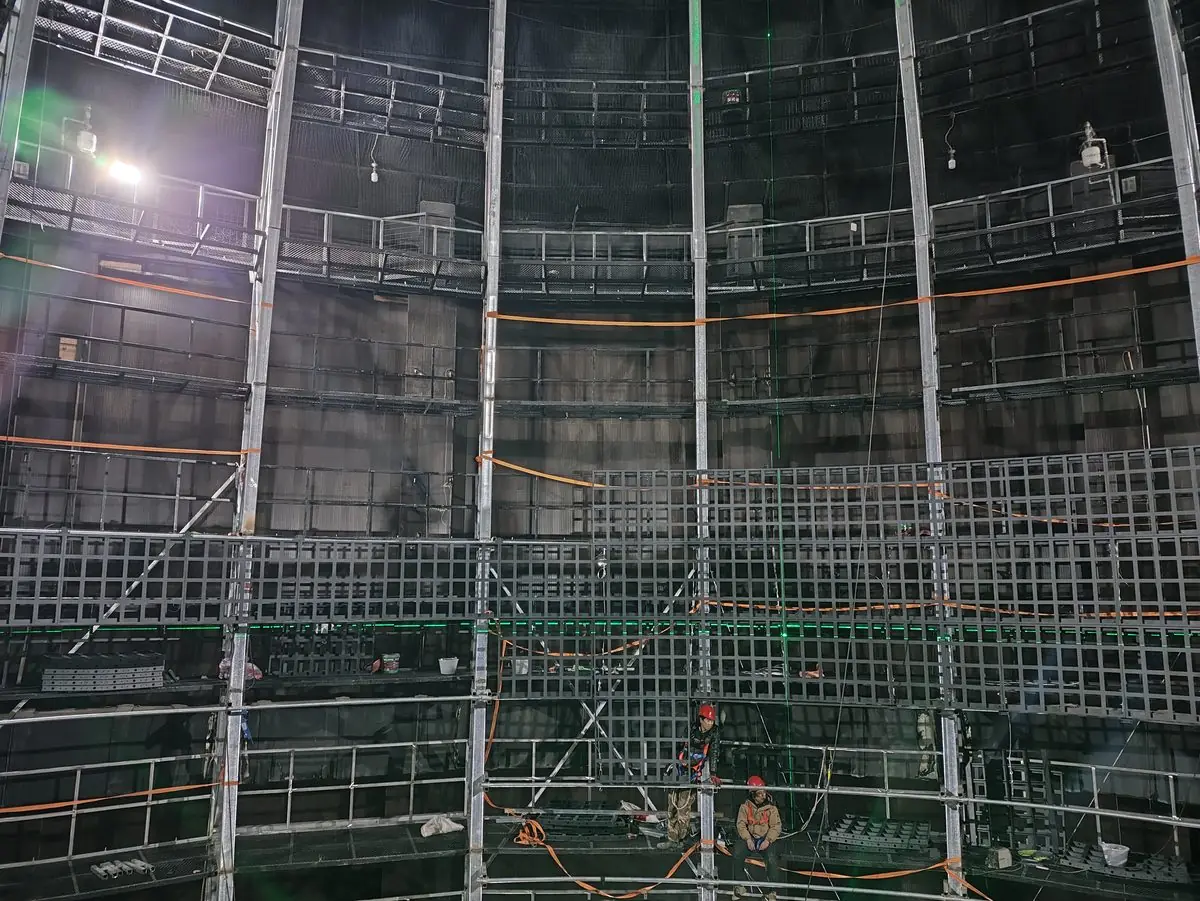
Answer these five questions in order and the type selects itself.
Diameter is decided last, because it follows from audience size, clear height and content field of view rather than from ambition. Domes delivered to date run 5 m to 60 m in diameter; 60 m is our largest reference, not a ceiling, since each span is engineered to the project's geometry and built from our own tooling and structure team.
Send a drawing and get a geometry review → · Building a sphere instead? Sphere types →
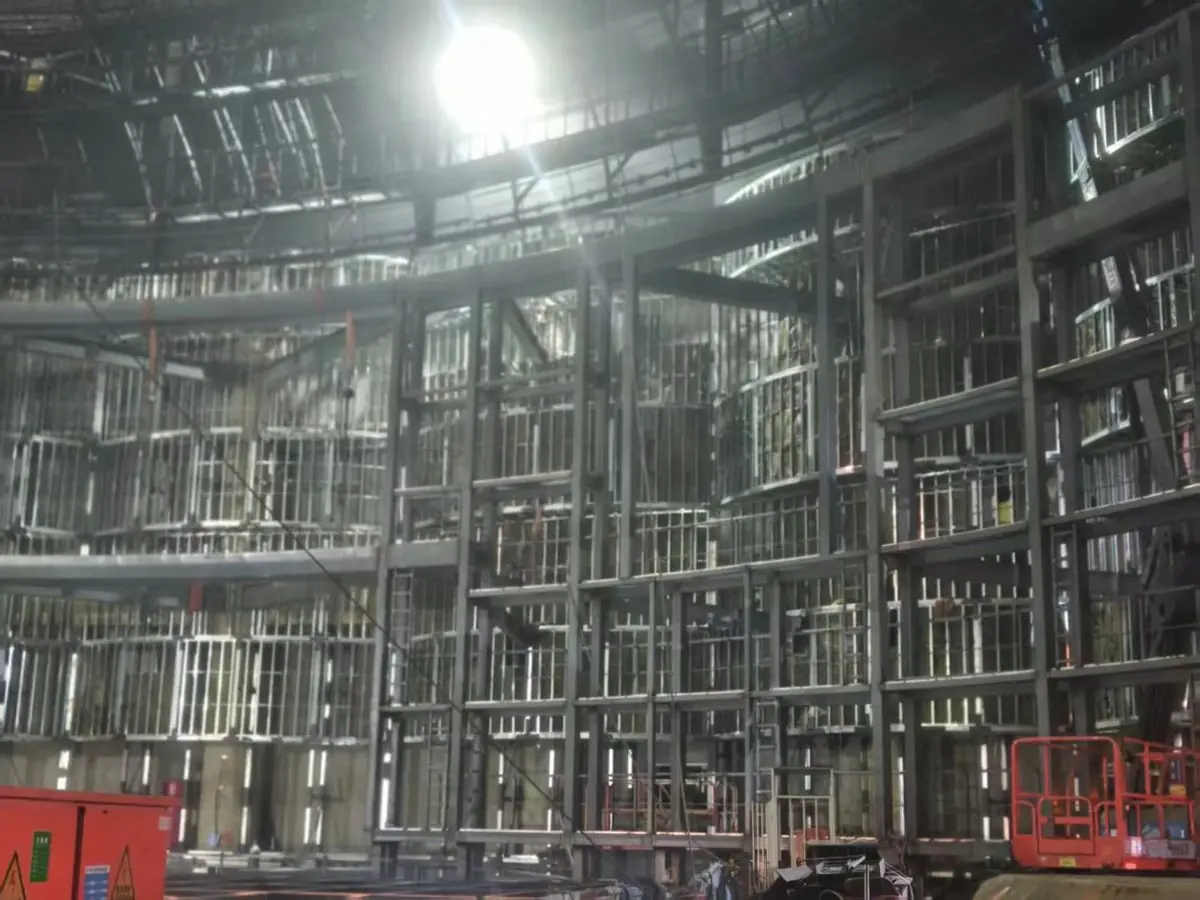
A hemispherical indoor dome between 6 m and 30 m diameter is the most common configuration, because it fits a building that already exists and gives a 180° field of view from a seated audience. Outdoor landmark domes and full-sphere interiors are larger projects and less frequent.
A curved LED screen bends in one direction, like a section of a cylinder. A dome curves in two directions at once, so the modules have to taper toward the pole and every seam follows a latitude band. A curved wall can be built from standard cabinets; a dome cannot.
Yes. Outdoor domes use IP65 rated modules with salt-spray and humidity protection, which is how the 26 m outdoor sphere in the Philippines operates on a coastal site. The structure, not the screen, is usually the limiting factor outdoors.
No. Coverage is a design decision: 120°, 160°, 180° and beyond are all built, and the 720° dome-in-dome projects combine more than one surface. More coverage means more screen area and a longer structure, not a different product.
Send your venue drawings, dome diameter and content plan — our engineers reply within one business day with a tailored configuration.
Get a Free Quote